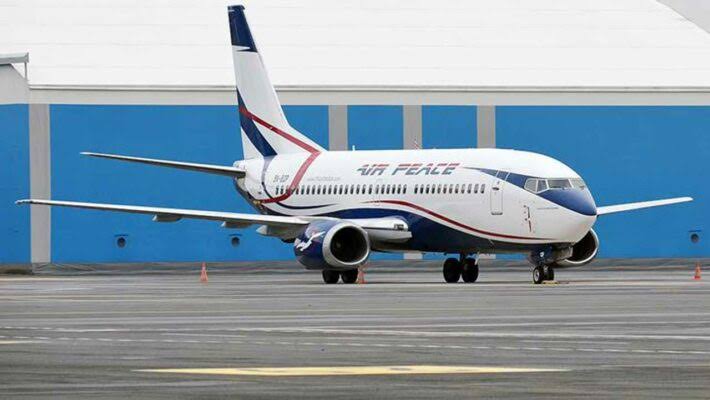
 In a moment that underlines the importance of consumer protection while fostering business growth, the Federal Competition and Consumer Protection Commission (FCCPC) recently clarified its position regarding Air Peace, one of Nigeria’s leading airlines. Contrary to rumors, the FCCPC emphasized that its engagement with Air Peace is not an investigation but an inquiry aimed at understanding the airline’s pricing methodology and addressing consumer complaints.
Reflecting on this development, it recalls a similar scenario in Nigeria’s aviation history when regulatory bodies and operators engaged in dialogue to balance business sustainability and consumer interests. The FCCPC’s current inquiry offers insights into how this balance is still being pursued amid evolving challenges.
The FCCPC has dispelled speculation surrounding its recent engagement with Air Peace, clarifying that it is not an investigation. Instead, the Commission’s focus is an inquiry into the airline’s pricing methods in response to consumer complaints.
During a meeting in Abuja, the Director of Surveillance and Investigation, Mrs. Boladale Adeyinka, expressed gratitude to Air Peace’s Chairman, Dr. Allen Onyema, for responding to the FCCPC’s invitation. “Thank you so much for honoring our invite in person. This is not an investigation but an inquiry to understand and address consumer concerns,” she said. Adeyinka praised Air Peace for shedding light on its operations and contributing to the Nigerian aviation landscape.
She further stated that the Commission is committed to fostering stability in businesses while safeguarding consumer interests. “We aim to ensure that all air passengers enjoy fair competition and quality services across the industry,” Adeyinka added.
Dr. Allen Onyema, Chairman of Air Peace, used the platform to highlight the stark realities of Nigeria’s aviation sector. According to him, the industry’s pricing structure is significantly impacted by operational costs, including high-interest loans, insurance premiums, and jet fuel prices, all of which are influenced by global and local factors.
“Globally, an hour-long flight costs between $250 and $540. However, in Nigeria, we operate below these standards due to the low purchasing power of our citizens. Yet, this comes at a great cost to airline sustainability,” Onyema explained.
The Air Peace boss also noted that the high cost of aviation in Nigeria has forced many airlines out of business, posing the critical question: should Nigerians prioritize affordability over the sustainability of safe flight operations?
Challenges in the African Aviation Sector
Nigeria’s aviation challenges echo those faced across Africa. Flights from Nigeria to other African destinations, such as Mauritius and Kenya, are among the most expensive globally. Limited direct flight options, coupled with high operational costs like jet fuel and airport taxes, significantly inflate fares. For instance:
A round trip to Mauritius ranges between ₦2.3 million and ₦11.6 million.
Flights to Kenya can cost as much as ₦17 million in economy class.
A Collaborative Path Forward
The FCCPC inquiry underscores a larger narrative about the need for collaboration between regulators and businesses. While the FCCPC works to ensure fair competition and protect consumer rights, operators like Air Peace highlight the structural challenges that hinder affordability and sustainability in the aviation sector. Reflecting on this, the inquiry serves as a critical reminder of the ongoing quest to create a thriving aviation industry that benefits both consumers and businesses.
In the words of Dr. Onyema: “Safety is not just a priority for Air Peace; it is a pre-condition for our operations. Despite challenges, our patriotic spirit and commitment to Nigerians remain unwavering.”
Discover more from Ameh News
Subscribe to get the latest posts sent to your email.