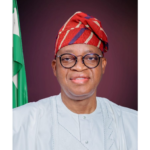
The Honourable Minister of Marine and Blue Economy, H.E. Adegboyega Oyetola
In a decisive move to enhance maritime governance, the Federal Government has endorsed the proposed National Coast Guard Bill, highlighting its potential to address Nigeria’s complex maritime challenges. Speaking during a one-day public hearing at the National Assembly complex, the Honourable Minister of Marine and Blue Economy, H.E. Adegboyega Oyetola, described the bill as transformative for Nigeria’s maritime industry and critical to the nation’s economic growth.
A Vision for Maritime Safety and Sustainability
Minister Oyetola outlined the Coast Guard’s envisioned roles, including maritime safety, environmental protection, conservation of marine ecosystems, and enforcement of civil maritime laws. “This bill is both timely and necessary,” Oyetola remarked. “It addresses critical issues like pollution, overfishing, and unsustainable marine resource usage, while complementing the Nigerian Navy’s core defense role.”
He emphasized the need for the Coast Guard to fill gaps in non-military maritime operations, such as search and rescue missions, environmental enforcement, and accident prevention, citing global precedents. “Fifteen out of 21 maritime nations in sub-Saharan Africa have dedicated coast guards. It’s time Nigeria aligns its maritime governance with its vast coastline and inland waterways,” he added.
Navy’s Accomplishments and Coast Guard’s Complementary Role
Oyetola acknowledged the significant achievements of the Nigerian Navy, particularly its collaboration in the Deep Blue Project, which has resulted in zero piracy incidents in Nigerian waters over the past three years. However, he stressed that the Coast Guard would serve as a complementary institution, addressing civilian and environmental maritime challenges outside the Navy’s core focus.
“A coastline of 850 kilometers, rich in economic opportunities, comes with its challenges. The Coast Guard will play a crucial role in managing these sustainably,” he explained.
Legislative Commitment to Maritime Reform
President of the Senate, Godswill Akpabio, represented by Senator Akintunde Yunus, commended the Senate Committee on Marine and Transport for advancing the bill. “The establishment of the National Coast Guard is not just legislative formalism but an urgent necessity to secure our waterways and resources,” Yunus asserted.
Chairman of the Senate Committee, Senator Sanni Eshinlokun, provided updates on the bill’s progress, noting its first reading in October and its referral for legislative refinement. He affirmed the Senate’s commitment to inclusive, impactful law-making that aligns with Nigeria’s development priorities.
Stakeholders Debate Overlap with the Nigerian Navy
The Coast Guard’s establishment has ignited debates among stakeholders regarding its scope and potential overlap with the Nigerian Navy. Maritime experts like retired Commodore Tunde Balogun expressed concerns over duplication, arguing that the Navy has proven its capacity to secure Nigerian waters.
However, proponents of the Coast Guard argue that its focus on civilian operations, environmental protection, and regulatory enforcement is distinct. “This division of labor is essential for comprehensive maritime governance,” said Dr. Ada Eze, a marine policy analyst.
Ensuring Synergy and Operational Efficiency
Minister Oyetola called for a clear implementation framework to avoid conflicts between the Navy and the proposed Coast Guard. “This is not about competition but collaboration. Each institution must work within its defined roles to achieve common goals,” he emphasized.
Maritime economist Ifeanyi Okeke supported this approach, cautioning against resource redundancy. “A well-defined mandate and strategic funding are critical for the Coast Guard’s success,” Okeke noted.
Path to Maritime Transformation
The proposed National Coast Guard Bill signals Nigeria’s commitment to optimizing its maritime sector. By fostering collaboration and clearly defining roles, the bill promises to unlock economic opportunities, enhance safety, and ensure sustainable resource management.
As Senator Eshinlokun aptly summarized, “The goal is to create a safer, more sustainable maritime environment for Nigeria, leveraging both the Navy’s strengths and the Coast Guard’s unique focus.”
The National Assembly is expected to finalize deliberations soon, paving the way for a new era in Nigeria’s maritime governance.
Discover more from Ameh News
Subscribe to get the latest posts sent to your email.