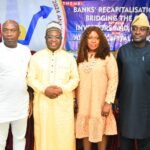
 At the annual workshop of the Capital Market Correspondents Association of Nigeria (CAMAN), themed “Banks’ Recapitalisation: Bridging the Gap Between Investors and Issuers in the Nigerian Capital Market,” renowned economist and CEO of Cowry Asset Management Limited, Mr. Johnson Chukwu, delivered a compelling analysis of the pivotal role the capital market plays in bank recapitalisation and economic stability.
Held in Lagos over the weekend, the workshop provided a platform for stakeholders to deliberate on the challenges and opportunities within Nigeria’s banking and financial sectors. Chukwu highlighted the transformative impact of successful capital-raising initiatives such as Initial Public Offerings (IPOs), rights issues, and bonds on investor confidence and the financial market at large.
“Whenever banks access the capital market and succeed in raising funds, it sends a strong signal of stability and credibility to the broader financial ecosystem,” Chukwu said. He elaborated on how such successes reassure investors, reduce perceived risks, and catalyze further investments in the sector, ultimately fostering sustainable growth.
The Role of Technology and Regulation
Chukwu did not shy away from addressing the systemic inefficiencies impeding bank recapitalisation efforts. He called on the Central Bank of Nigeria (CBN) to deploy advanced infrastructure technology and leverage Bank Verification Numbers (BVN) to accelerate the verification process for bank offers.
Citing delays of up to four months in finalizing some bank offers, Chukwu argued that such inefficiencies erode investor confidence, leading to missed reinvestment opportunities. He provided a comparative analysis of financial markets in emerging economies like South Africa and Malaysia, where regulatory bodies utilize advanced technologies to streamline processes without compromising due diligence.
Barriers to Investment and Practical Solutions
Chukwu also spotlighted the stringent requirements imposed by the CBN on investors seeking to participate in bank recapitalisation. These include the submission of three years of audited financial statements, board resolutions, and tax clearance certificates, which he described as disincentives for investment.
“While regulatory oversight is essential to maintain the integrity of the financial system, overly complex procedures deter participation and reduce market dynamism,” he stated. He recommended a more pragmatic approach, leveraging existing customer data within the banking system to simplify compliance while upholding transparency and accountability.
Chukwu provided a case study from Kenya, where regulators have embraced simplified documentation processes, resulting in a surge of investor participation and enhanced market liquidity.
Collaborative Efforts for Sustainable Growth
Reflecting on the broader implications of recapitalisation, Chukwu emphasized the need for collaboration between regulators, banks, and investors to create a more predictable regulatory environment. He noted that frequent policy changes increase operational risks, making long-term planning difficult for all stakeholders.
To address these issues, he urged Nigerian banks to adopt higher standards of transparency and corporate governance. “Banks must publish comprehensive financial reports and risk disclosures while offering forward-looking guidance to bridge the trust gap between issuers and investors,” he said.
Chukwu concluded his presentation by urging stakeholders to seize opportunities within the Nigerian capital market to unlock its full potential. “By addressing regulatory uncertainties, enhancing transparency, and leveraging technology, we can create a resilient financial system capable of driving Nigeria’s economic transformation,” he affirmed.
The workshop closed with calls for actionable steps from participants to strengthen Nigeria’s banking sector and position the capital market as a key driver of economic growth.
Discover more from Ameh News
Subscribe to get the latest posts sent to your email.