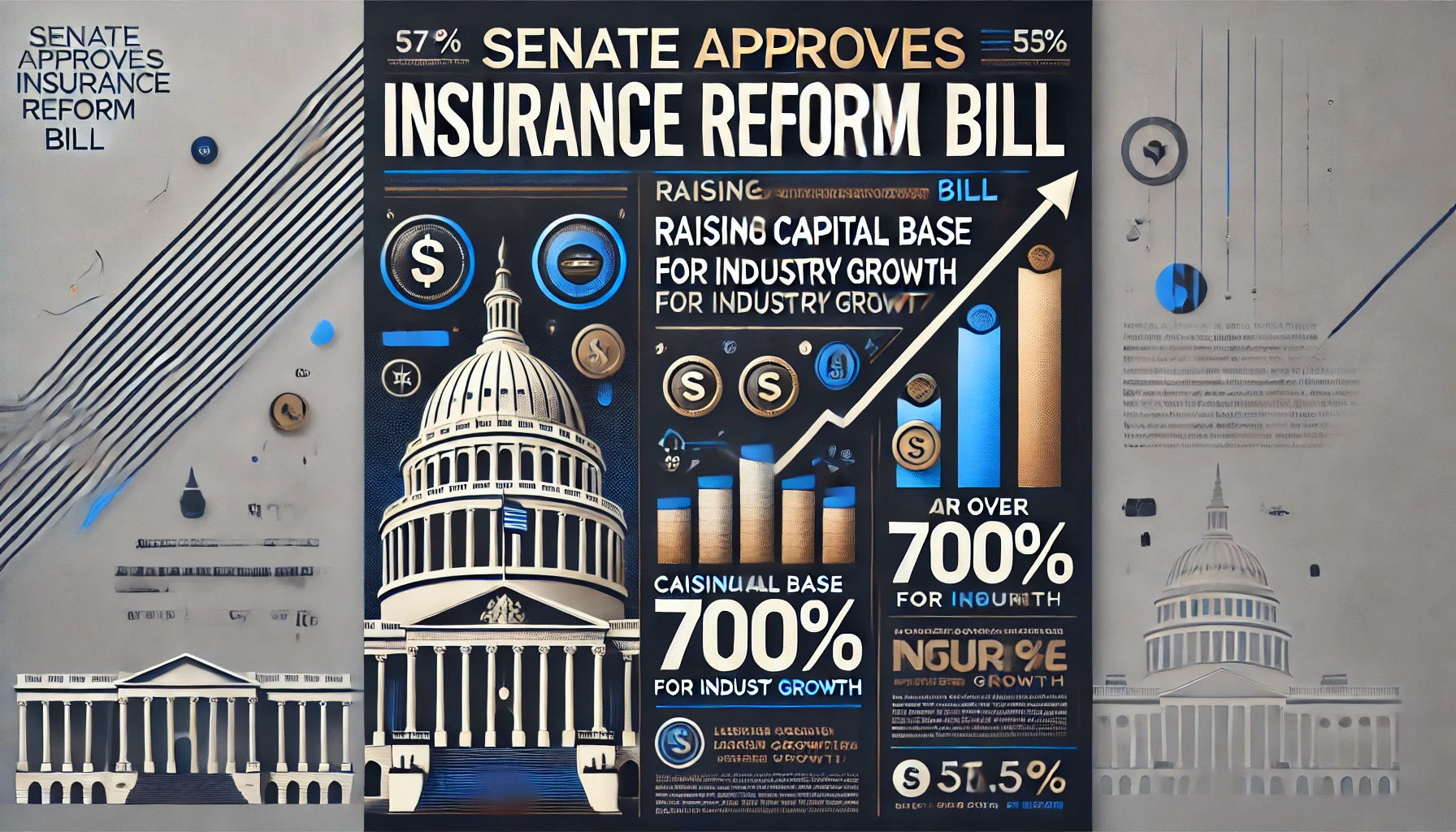
 In a landmark decision poised to reshape Nigeria’s insurance sector, the Senate has passed the Insurance Reform Bill 2024. The bill introduces sweeping reforms, raising the minimum capital requirement for life insurance companies from N2 billion to N15 billion, general insurance businesses from N3 billion to N25 billion, and reinsurance firms from N10 billion to a staggering N45 billion. This represents a more than 700% increase in capitalisation thresholds across the board.
The journey to this groundbreaking legislation has been a long one, marked by extensive deliberations, expert consultations, and stakeholder advocacy. Sponsored by Senator Mukhail Abiru, Chairman of the Senate Committee on Banking, Insurance, and Other Financial Institutions, the bill reflects a critical response to the evolving needs of Nigeria’s insurance sector. Abiru stressed that the existing regulatory framework—spanning decades-old laws like the Insurance Act 2003 and the Marine Insurance Act—had become a bottleneck for the industry’s growth and competitiveness on a global scale.
A Sector in Transformation
The move to raise capital thresholds is expected to address long-standing challenges in the sector, particularly its limited capacity to underwrite high-risk ventures and retain capital within the local market. Experts believe that the enhanced capitalisation will empower insurance companies to handle more complex risks, such as those associated with advanced healthcare, infrastructure, and climate resilience.
A respected industry stakeholder, highlighted the importance of these reforms in aligning the sector with the aspirations of a modern Nigerian economy. “Nigerians require insurance to afford new advances in healthcare and protect their investments. With this reform, companies will not only be better capitalised but also positioned to drive innovation and meet contemporary challenges,” stated.
A Balancing Act: Public and Stakeholder Insights
The public reaction to the bill has been mixed. While many applaud the Senate’s initiative to modernise the sector, concerns have been raised about the potential fallout for smaller insurance firms unable to meet the new capital thresholds. “This reform will likely lead to mergers, acquisitions, and possibly the exit of some players, but it’s a necessary sacrifice for the industry’s future stability and growth,” remarked a financial analyst.
However, Abiru reassured stakeholders, emphasising that the bill includes provisions for a phased compliance period, allowing companies adequate time to adjust to the new requirements.
A Path Toward Economic Competitiveness
The bill, which has now been transmitted to the House of Representatives for concurrence, is expected to become law upon receiving President Bola Tinubu’s assent. Its implementation will mark a turning point for Nigeria’s financial ecosystem, solidifying the insurance sector’s role in achieving the broader objective of positioning Nigeria as Africa’s financial hub and one of the top 20 economies globally.
With this reform, Nigeria’s insurance industry is poised to evolve from an underperforming sector to a robust pillar of economic growth, capable of driving investment, mitigating risk, and protecting the wealth of its citizens. The journey to this point has been challenging, but as the sector braces for a new chapter, it is a moment for both reflection and optimism for the future.
Experts Warn Against Complacency Over Insurance Reform Bill Passage, Cite Lessons from Buhari Era
As the Insurance Reform Bill 2024 moves closer to becoming law, experts are cautioning stakeholders and operators in the insurance sector against premature celebrations. Reflecting on the past, analysts recall a similar situation during the administration of former President Muhammadu Buhari, when a similar reform bill passed the Senate but failed to receive presidential assent, leaving stakeholders disillusioned.
Sources reveal that some operators in the industry resorted to fervent prayers, seeking divine intervention to secure Buhari’s approval. Despite their hopes, the bill was ultimately returned to the legislative drawing board, an outcome many attributed to complacency and a lack of sustained lobbying efforts.
One expert, speaking on the condition of anonymity, said: “The operators went to sleep after the Senate passed the bill, assuming that the natural course of the legislative process would suffice. They underestimated the importance of strategic follow-through, which ultimately led to the bill’s rejection.”
A Call for Proactive Advocacy
With the passage of the new reform bill by the Senate, stakeholders are now faced with a critical question: Will history repeat itself? Or will the operators rise to the occasion and ensure the bill is signed into law by President Bola Tinubu?
The stakes are high, as the bill introduces a significant overhaul to the sector, including raising minimum capital requirements for life insurance companies to N15 billion, general insurance to N25 billion, and reinsurance businesses to N45 billion. These changes are expected to strengthen the industry’s capacity to underwrite high-risk ventures and compete globally.
However, without timely presidential assent, these reforms could once again be relegated to legislative limbo.
Avoiding Past Mistakes
Experts argue that stakeholders must adopt a more coordinated and proactive approach to engage with the Tinubu administration. They emphasize the importance of sustained advocacy, strategic lobbying, and public awareness campaigns to highlight the bill’s significance for economic growth and stability.
“The passage by the Senate is just the beginning,” a senior industry figure warned. “Stakeholders must actively engage policymakers and ensure this administration understands the critical role this bill plays in achieving Nigeria’s broader economic objectives. Failure to do so could result in a repeat of the Buhari-era disappointment.”
A Race Against Time
As the bill progresses to the House of Representatives for concurrence and subsequently to President Tinubu’s desk, the industry must act swiftly to avoid complacency. The insurance sector has learned from past experiences that legislative success is only half the battle; the other half requires relentless effort to secure the President’s signature.
For an industry on the cusp of transformation, this moment presents an opportunity to rewrite history—one that stakeholders and operators cannot afford to squander.
Discover more from Ameh News
Subscribe to get the latest posts sent to your email.