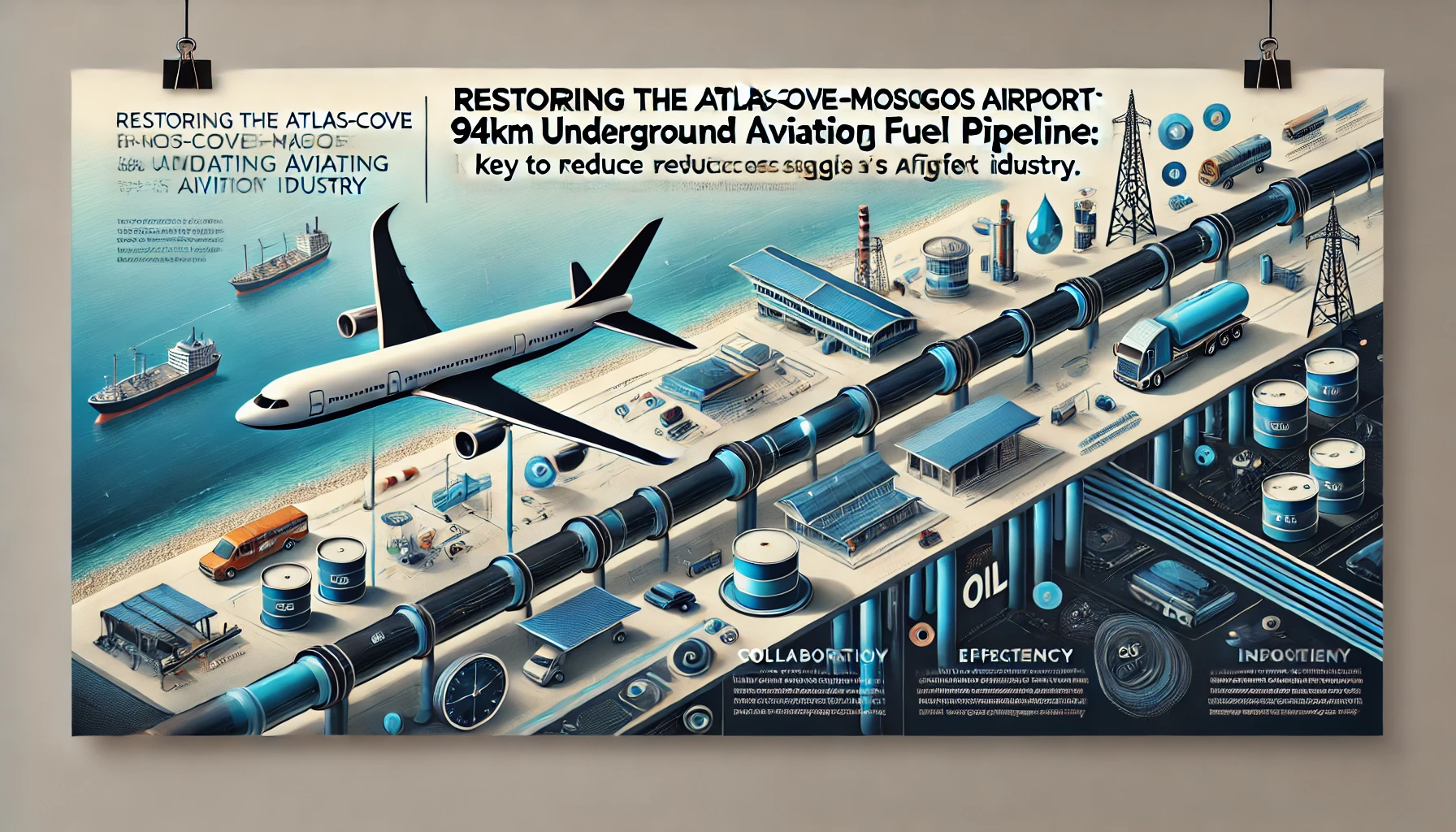
 The Atlas-Cove-Mosimi-Lagos Airport 94km underground aviation fuel pipeline, a once-vital infrastructure connecting Nigeria’s petroleum hub to its busiest airport, remains shut down—a predicament that underscores the high costs faced by aviation operators in the country. This pipeline, initially designed to efficiently transport aviation fuel directly from the coastal terminal at Atlas Cove through Mosimi to the Lagos Airport, has suffered years of neglect. “However, under President Tinubu’s Renewed Hope policy, the Federal Ministry of Aviation and Aerospace Development can effectively champion the revamp of this critical asset, signaling hope for a transformative solution to one of the aviation industry’s most pressing challenges.”
A Reflection on Lost Opportunities
In its heyday, the 94km underground pipeline was a model of efficiency, ensuring seamless fuel delivery to the Lagos Airport. This eliminated reliance on road trucks, a costly, unsafe, and inefficient alternative. Over time, however, vandalism, poor maintenance, and policy inertia rendered the pipeline inactive. The shift to road trucking has since exacerbated operational costs for airlines, disrupted fuel supply chains, and increased safety risks associated with transporting flammable products across long distances.
The impact has been far-reaching. Airlines have reported skyrocketing fuel costs—accounting for up to 40% of their operational expenses—making Nigeria one of the most expensive countries for aviation fuel procurement. This, in turn, has driven up ticket prices and strained the financial stability of domestic carriers, hindering the sector’s ability to compete globally.
Ministerial Vision and Stakeholder Collaboration
Under the leadership of the Honourable Minister of Aviation and Aerospace Development, the government can chart a path towards revamping this critical pipeline. The call aligns with broader efforts to reduce aviation operating costs, enhance safety, and ensure Nigeria’s competitiveness in the global aviation industry.
Reviving the pipeline is no small feat. It requires not only significant financial investment but also strong collaboration between stakeholders in the aviation and petroleum sectors. The Nigerian National Petroleum Corporation Limited (NNPCL), private oil marketers, and regulatory agencies must work in unison to restore this infrastructure to operational status.
Mr Celestine Ukpong an economist has described the pipeline as a “national economic asset” that holds the key to unlocking cost efficiencies in aviation fuel distribution. “Revamping the Atlas-Cove-Mosimi-Lagos Airport pipeline is not just an infrastructure project; it is a strategic initiative to restore Nigeria’s aviation industry to a competitive edge,” he stated during a recent interview.
Urgent Points of Action
To realize the economic gains of the pipeline, Mr Ukpong added that stakeholders must address several critical areas:
1. Infrastructure Assessment: Conducting a comprehensive audit of the pipeline to identify damages and areas requiring upgrades.
2. Funding and Investment: Leveraging public-private partnerships (PPPs) to secure the capital needed for repairs and modernization.
3. Security Measures: Implementing robust measures to prevent vandalism, such as advanced surveillance technology and community engagement initiatives.
4. Regulatory Support: Enacting policies that prioritize pipeline-based fuel distribution over road trucking, thus creating a conducive environment for its sustainability.
5. Timelines for Restoration: Setting clear deadlines to fast-track repairs and resume operations.
Economic Gains on the Horizon
The economic benefits of restoring the pipeline are substantial. It would:
Reduce aviation fuel costs significantly by eliminating road transportation expenses.
Enhance fuel supply reliability and reduce delays caused by trucking challenges.
Bolster the financial viability of airlines, enabling them to pass cost savings to passengers.
Improve safety by minimizing risks associated with road accidents and fuel handling.
A Call to Action
All stakeholders must recognize that revamping the Atlas-Cove-Mosimi-Lagos Airport pipeline is not a luxury but a necessity. The aviation and petroleum industries including Lagos State Government must unite to restore this critical infrastructure, ensuring Nigeria’s aviation sector is not only cost-efficient but also globally competitive.
As the nation reflects on the years of lost opportunities due to the pipeline’s inactivity, the renewed commitment to its restoration offers a glimmer of hope. With decisive action and collective will, the Atlas-Cove pipeline can once again become the lifeline of Nigeria’s aviation fuel supply chain—ushering in a new era of growth and resilience for the industry.
Discover more from Ameh News
Subscribe to get the latest posts sent to your email.