A Look Back at 2024: A Year of Unfulfilled Potential
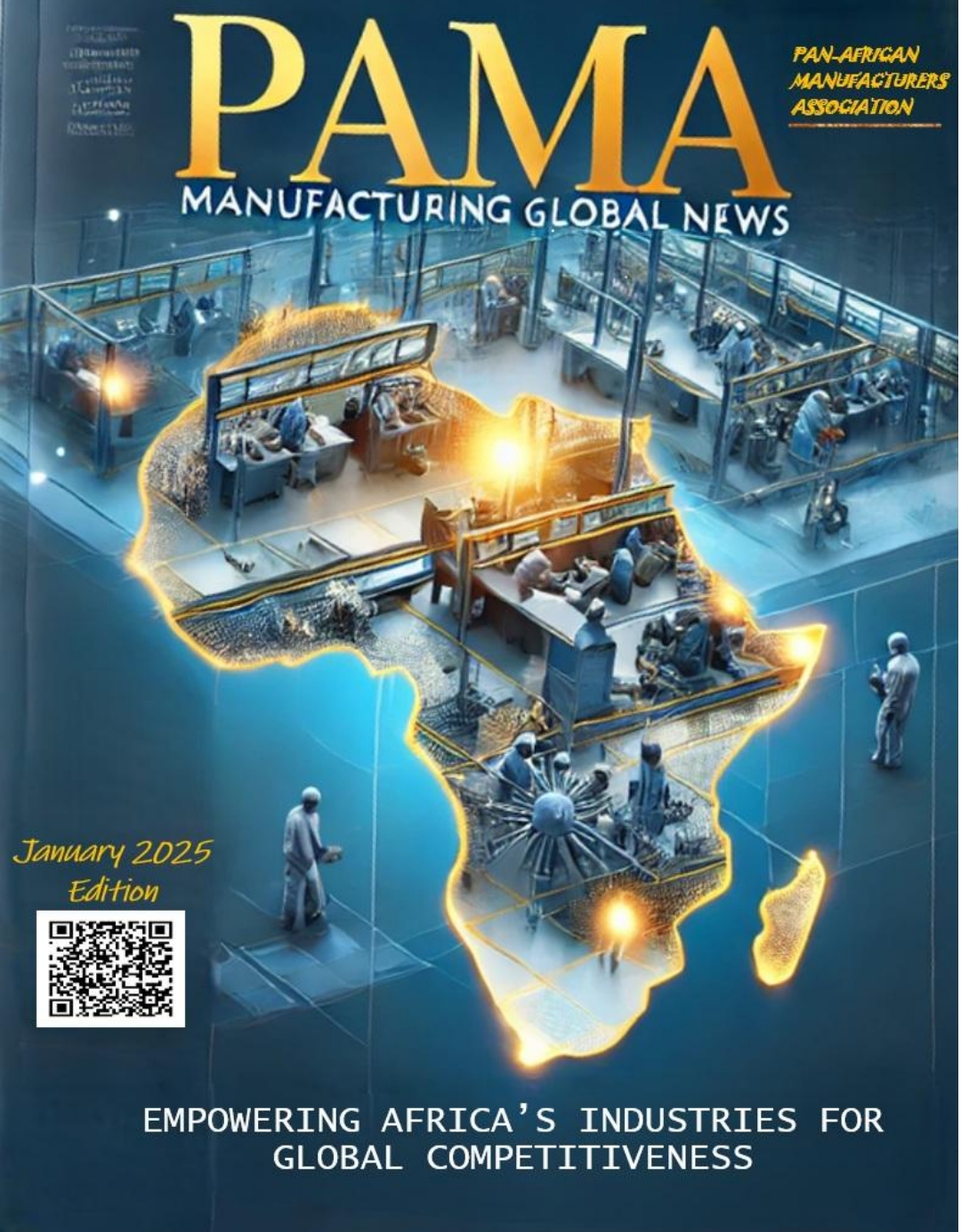 In 2024, Africa’s manufacturing sector faced a turbulent year, grappling with macroeconomic instability. Inflation surged, interest rates climbed, and volatile global commodity prices—exacerbated by a stronger U.S. dollar—created additional pressure. Persistent infrastructure deficits, high tariffs, and sluggish foreign direct investment (FDI) further deepened the sector’s challenges.
Despite these hurdles, a few nations demonstrated resilience. Morocco, South Africa, and Egypt maintained stability, benefiting from their diversified industrial bases. According to the African Development Bank (AfDB), manufacturing contributed approximately 11% to Africa’s GDP in 2024, driven by key industries such as agro-processing (Nigeria, Kenya), automotive (Morocco, South Africa), and pharmaceuticals (Egypt, Rwanda). However, the continent’s overall manufacturing value addition lagged behind global standards, underscoring its competitive struggles.
Production trends varied significantly across the continent. Africa’s share of global manufacturing output stood at just 1.9% in Q1 2024, with a marginal increase of 0.1% from 2023. By Q3, this growth inched up to 0.2%, but regional disparities remained stark. Egypt (0.3%), Nigeria (0.7%), and Rwanda (2.6%) recorded positive growth, while South Africa (-0.9%) and Senegal (-0.6%) experienced contractions.
Interim President Engr. Mansur Ahmed and Interim Co-Secretary Segun Ajayi-Kadir, mni, emphasized that while challenges persist, Africa’s manufacturing sector holds potential for recovery, provided structural reforms, investment inflows, and policy interventions are strategically implemented.
The Path to 2025: Cautious Optimism Amid Structural Challenges
Looking ahead, 2025 presents both opportunities and risks for Africa’s manufacturing sector. Increased regional integration, growing investments in local production, and wider adoption of automation and AI-driven manufacturing could boost performance. However, persistent economic challenges and emerging global trends—such as stricter sustainability regulations and rising freight costs—pose hurdles that will require bold innovation, strategic adaptation, and stronger policy frameworks.
Key Projections for Africa’s Manufacturing Sector in 2025
✔ Moderate Growth Expected: The sector is poised for a gradual rebound, driven by regional trade expansion, technological investments, and stronger investor confidence.
✔ Global Trade Shifts Could Favor Africa: The ongoing US-China trade tensions may spur FDI inflows into Africa, particularly in automotive, textiles, and electronics manufacturing.
✔ Stronger Cross-Border Value Chains: Sectors like agro-processing, textiles, and metallics are expected to expand, reinforcing regional supply networks.
✔ Investment-Friendly Reforms: Countries like Egypt, Rwanda, Nigeria, and Angola are likely to see positive manufacturing growth due to overhauled investment policies and regulatory improvements.
✔ Persistent Inflationary Pressures: Countries such as Zimbabwe (35%) and Nigeria (24.5%) face high inflation, which may erode purchasing power and demand for locally manufactured goods.
✔ Cost of Capital Remains a Concern: Interest rates in Nigeria, Egypt, and Ghana could exceed 25%, making financing inaccessible to small and medium-scale industries (SMIs).
✔ Modest Growth in FDI: Inflows into Africa’s manufacturing sector are projected to rise by 4%, reflecting renewed global interest but tempered by geopolitical risks.
✔ Rising Freight Costs: Increased risks in key sea routes, particularly the Red Sea, may drive higher shipping expenses, although lower global energy and commodity prices could offset some of this impact.
Policy Roadmap: What Needs to Be Done?
To solidify gains and drive sustainable growth, African governments and industry stakeholders must adopt proactive strategies:
Strengthen Regional Integration & Industrial Policies:
- Reduce non-tariff barriers and harmonize trade regulations.
- Invest in cross-border infrastructure (roads, railways, and digital networks).
- Encourage automation and AI-driven production processes.
Control Inflation & Address Borrowing Costs:
- Strengthen exchange rate policies to stabilize currency fluctuations.
- Develop low-interest financing options for small-scale manufacturers.
Attract Foreign Direct Investment (FDI):
- Improve ease of doing business through regulatory reforms.
- Provide tax incentives and political risk guarantees to investors.
Expand Trade & Logistics Networks:
- Diversify trade routes to reduce dependence on high-risk sea routes like the Red Sea.
- Strengthen regional air freight and rail transport to lower shipping costs.
Support Conflict-Affected Nations:
- Special economic stabilization programs for manufacturing sectors in conflict zones like the DRC.
Leverage the AfCFTA for Growth:
- Reduce reliance on imported raw materials by building intra-African supply chains.
- Foster export subsidies and tax rebates for key manufacturing industries.
Looking Forward: A Defining Year for African Manufacturing
As 2025 unfolds, the continent’s manufacturing trajectory will depend on strategic investments, regional collaboration, and the ability to navigate global economic shifts. With AfCFTA in full force and increasing automation in industrial processes, Africa has an opportunity to reposition its manufacturing sector as a key driver of job creation, economic growth, and global competitiveness.
Will Africa rise to the challenge? The coming months will reveal whether 2025 will be a year of resurgence or continued stagnation.
Stay informed, Stay ahead with The Ameh News
Discover more from Ameh News
Subscribe to get the latest posts sent to your email.