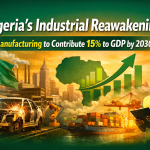
The Battle to Sustain Nigeria’s Manufacturing Resilience
 For decades, Nigeria’s manufacturing sector has endured storms of economic volatility, currency fluctuations, and policy inconsistencies. Yet, against all odds, industries have persevered, fueling job creation and contributing significantly to national revenue. However, the sudden introduction of the 4% Free-on-Board Levy by the Nigeria Customs Service (NCS) threatens to tip the balance, forcing manufacturers into a fight for survival.
The Manufacturers Association of Nigeria (MAN), under the leadership of its Director General, Segun Ajayi-Kadir, has raised a red flag, cautioning that this policy will escalate the cost of production, disrupt supply chains, and shrink Nigeria’s competitive edge in both regional and global markets. Reflecting on past struggles, the sector has faced numerous hurdles—from the forex crisis to inflationary spikes—yet manufacturers have consistently found ways to adapt and sustain operations.
The imposition of this levy, coupled with an already high customs duty exchange rate and a planned 15% hike in port charges, risks plunging the industry into deeper turmoil. The historical pattern of increasing business costs without corresponding economic buffers has repeatedly led to factory closures, job losses, and capital flight. The fear now is that more manufacturers may be pushed to relocate to more business-friendly neighboring countries, exacerbating Nigeria’s unemployment crisis.
The concern isn’t just about rising costs; it’s about the broader economic implications. With inflation at a 30-year high of 34.8%, any additional financial burden will ripple across the economy, affecting the disposable income of over 220 million Nigerians. The policy contradicts the government’s fiscal reforms aimed at reducing taxation burdens and promoting industrial growth. If unchecked, this levy could undermine Nigeria’s ambition of becoming a $1 trillion economy by 2030.
The road ahead requires strategic intervention. MAN has urged the Federal Government to halt the levy’s implementation and engage in a consultative approach with stakeholders. If Nigeria is to truly harness its industrial potential, the focus must shift towards facilitating trade, reducing operational costs, and fostering an investment-friendly environment. Anything less risks an economic downturn that could set the nation back decades.
Discover more from Ameh News
Subscribe to get the latest posts sent to your email.