How Africa’s Richest Man Climbed Back to Global Prominence
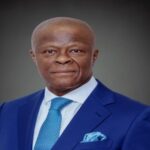
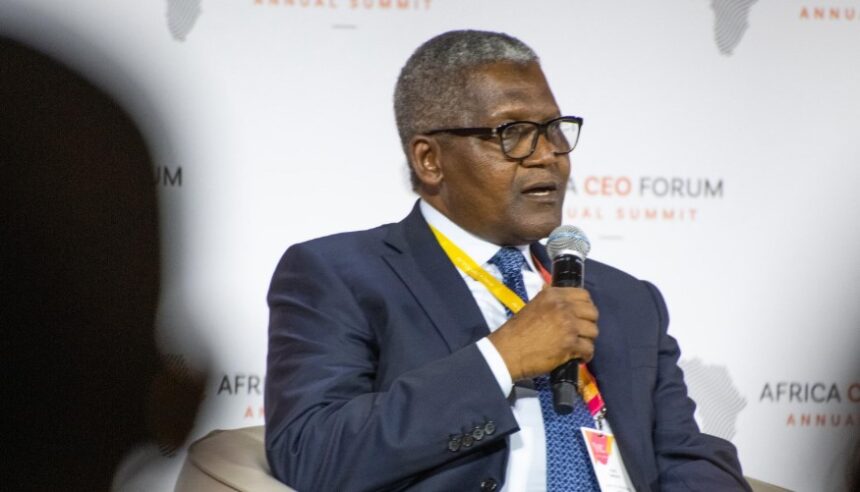 Aliko Dangote, Africa’s wealthiest entrepreneur, has seen his fortune nearly double to $23.9 billion, securing his place as the 86th richest person in the world, according to Forbes. This marks a significant leap from his 2024 ranking, when he was listed as the 144th richest individual globally with a net worth of $13.4 billion.
At the heart of this meteoric rise is Dangote’s 92.3% ownership of Dangote Petroleum Refinery & Petrochemicals, a game-changing project that has reshaped Nigeria’s energy landscape. Now aged 67, Dangote has re-entered the prestigious top 100 billionaires worldwide for the first time since 2018, solidifying his status as a global business titan.
His wealth far surpasses that of South African billionaire Johann Rupert, who ranks 161st with $14.4 billion, and Mike Adenuga, Nigeria’s second-richest person, who holds the 481st position with $6.8 billion.
The Gamble That Paid Off: Dangote’s Refinery Breaks Nigeria’s Dependence on Oil Imports
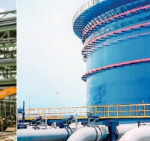
For over a decade, Dangote pursued an ambitious vision: breaking Nigeria’s dependence on imported petroleum products. His $23 billion refinery project, situated on a sprawling 6,200-acre site in the Lekki Free Zone, is the largest in Africa and the seventh-largest in the world, capable of refining 650,000 barrels per day when fully operational. Alongside it, a petrochemical complex produces 3 million metric tons of urea annually, making it the largest fertiliser producer on the continent.
The impact is already being felt. Nigeria’s petroleum imports have plummeted to their lowest levels in eight years, disrupting traditional fuel suppliers from Europe. The country has now become a net exporter of key refined products, including jet fuel, naphtha, and fuel oil, as confirmed by S&P Global.
A Vision for African Industrialization
For Dangote, the refinery is more than a business—it’s a mission to industrialize Africa. In an interview with Forbes, he reinforced his commitment to self-reliance:
“We have to build our nation by ourselves. We have to build our continent by ourselves, not [rely on] foreign investment. Africa has been a mere dumping ground for finished products for too long. This refinery is a pivotal step in ensuring that Africa refines its own crude oil, creating wealth and prosperity for our people.”
The stakes couldn’t have been higher. Dangote himself admitted the refinery was the biggest risk of his life, acknowledging that failure could have been catastrophic:
“If this didn’t work, I was dead.”
Public Perception: A Hero of Industrialization
Many Nigerians and economic analysts view Dangote as a transformational figure. Zainab Usman, director of the Africa Programme at the Carnegie Endowment for International Peace, describes him as a hero, saying:
“He is seen in most parts of Nigeria as a real industrialist who builds things.”
Similarly, Chika Ezeanya, a professor of African studies at Soka University of America, emphasizes that Dangote’s success stems from his deep understanding of Nigerian consumer needs:
“Governments can come and go, policies can change, but the needs of the Nigerian consumer will only grow. Dangote has always believed in meeting those needs.”
The Legacy of a Risk-Taker
Dangote’s resurgence among the world’s top 100 billionaires is not just about wealth—it is a testament to vision, perseverance, and an unshakable belief in African self-sufficiency. His refinery is already reshaping Nigeria’s economy, and if his predictions hold true, it could serve as a blueprint for industrial transformation across Africa.
Stay informed, Stay ahead with The Ameh News
Discover more from Ameh News
Subscribe to get the latest posts sent to your email.