 Nigeria’s Free Trade Zones (FTZs) have attracted over $30 billion in investments, contributed more than N650 billion to government revenue, and created substantial employment opportunities. However, they have yet to reach their full potential, according to the Minister of Industry, Trade and Investment, Dr. Jumoke Oduwole.
Speaking at the third Special Economic Zones (SEZ) yearly meeting in Lagos, organized by the Nigerian Export Economic Zones Association (NEZA), the Nigerian Export Processing Zones Authority (NEPZA), and the Oil & Gas Free Zones Authority (OGFZA), Oduwole noted that while Nigeria hosts a significant number of SEZs in Africa—second only to Morocco—its zones have not fully capitalized on their economic potential.
Comparing Nigeria to Morocco, she highlighted how Morocco’s 12 FTZs have thrived due to strategic policies, political stability, and investor-friendly incentives, particularly in the automotive and aerospace sectors. In contrast, Nigeria’s SEZ projects require stronger policy frameworks to enhance their attractiveness to investors.
To address this, Oduwole revealed that the ministry is working closely with the Federal Inland Revenue Service (FIRS), the Central Bank of Nigeria (CBN), and NEPZA to synchronize fiscal, monetary, and trade policies. This collaboration aims to ensure that Nigeria’s FTZ incentives remain globally competitive.
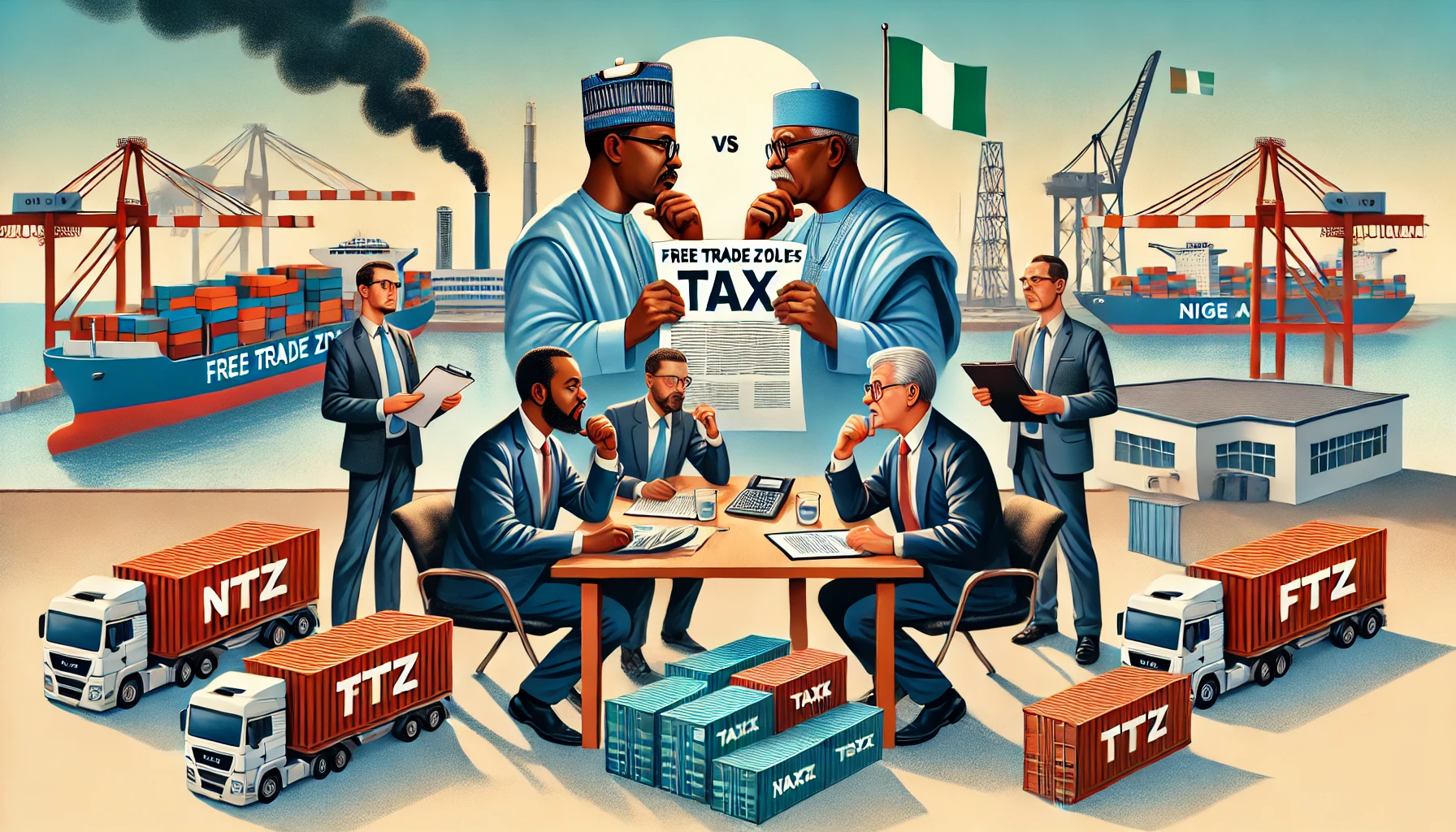
However, despite these efforts, Nigeria’s free trade regime faces a major threat from the Nigeria Tax Bill 2024. The Nigerian Association of Chambers of Commerce, Industry, Mines, and Agriculture (NACCIMA) has raised an alarm, warning that the proposed tax reforms could trigger an exodus of $200 billion in foreign investments and result in the loss of 600,000 jobs.
The contentious amendments, particularly Sections 57, 60, 198(2), and 198(3) of the bill, seek to impose minimum tax rates and eliminate long-standing tax exemptions for businesses operating in FTZs. NACCIMA’s National President, Dele Oye, criticized the move, stating that it contradicts Nigeria’s industrialization goals and could severely damage investor confidence.

“Stripping away established tax exemptions is a drastic measure that will diminish investor confidence and jeopardize Nigeria’s standing in the global investment community,” Oye warned.
Since the FTZ scheme was introduced under the Nigeria Export Processing Zones Act of 1992, these zones have played a pivotal role in attracting investments, driving industrialization, and fostering job creation. NACCIMA insists that dismantling key incentives would undermine decades of progress and deter future foreign direct investment (FDI).
As the federal government deliberates on the proposed tax amendments, industry stakeholders urge a reconsideration of the reforms to prevent potential economic setbacks that could hinder Nigeria’s industrial growth and global competitiveness.
Stay informed, Stay ahead with The Ameh News
Discover more from Ameh News
Subscribe to get the latest posts sent to your email.