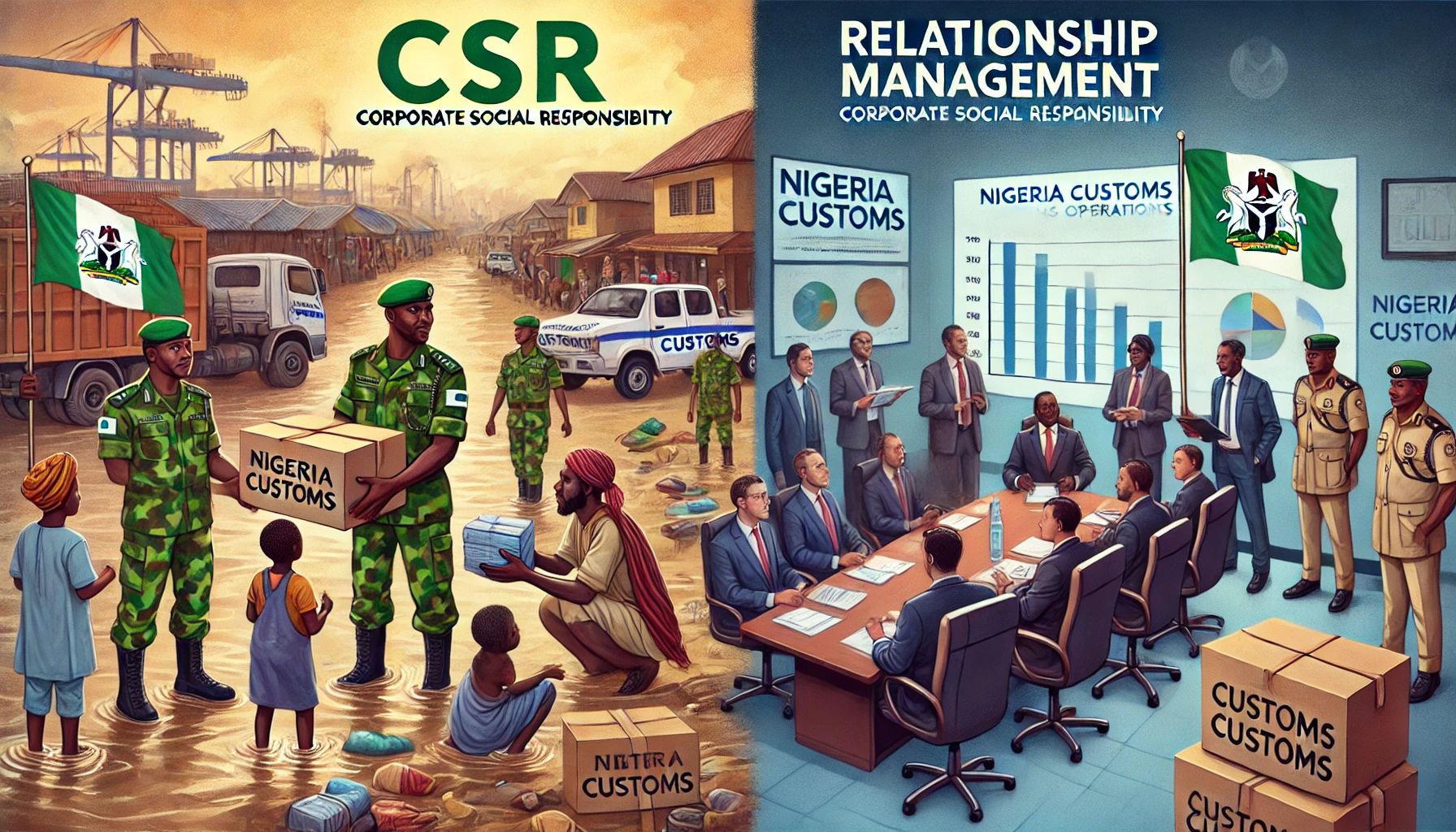
 In Nigeria’s customs landscape, the debate over the effectiveness of Corporate Social Responsibility (CSR) versus Relationship Management has shaped operational efficiency, trade facilitation, and stakeholder engagement. While both strategies play crucial roles, the question remains: which yields better long-term results for the Nigeria Customs Service (NCS)?
CSR Enhance Public Trust
CSR initiatives by NCS have historically focused on community development, education, and healthcare support. One notable case is the NCS’s intervention in flood-ravaged communities, where relief materials were donated to displaced residents. This effort strengthened public trust, portraying the agency as not just a revenue-generating entity but a socially responsible institution.
Similarly, the Customs modernization drive, including the donation of scanners to select ports, aimed to enhance trade efficiency and reduce clearance delays. While such CSR-driven actions improved public perception, their direct impact on operational effectiveness remained debatable.
Relationship Management as a Compliance Enabler
On the other hand, Relationship Management—building strong partnerships with stakeholders—has proven instrumental in compliance enforcement and trade facilitation. The introduction of the Time Release Study (TRS) in collaboration with port operators showcased how relationship-driven initiatives could streamline cargo clearance and enhance efficiency.
Another example is the Customs-Private Sector Engagement Forums, where importers, freight forwarders, and government officials discuss regulatory challenges. These forums have helped address bottlenecks, leading to improved policy implementation and better stakeholder alignment.
How Effective Relationship Management Skills Can Reduce Smuggling Across Nigerian Borders and Render CSR Ineffective
Smuggling remains a persistent challenge across Nigeria’s borders, undermining economic stability, security, and government revenue. While enforcement and policy measures have traditionally been the primary tools to combat smuggling, effective relationship management skills—encompassing stakeholder engagement, diplomacy, negotiation, and strategic communication—can serve as a powerful, non-coercive method to curb illicit trade. However, as these relationship-driven interventions gain traction, they may also expose the limitations of corporate social responsibility (CSR) initiatives by rendering them less impactful in addressing border security challenges.

How Relationship Management Skills Can Curb Smuggling:
1. Enhanced Collaboration Between Government and Border Communities
Many border communities rely on smuggling for economic survival due to limited legal trade opportunities. Effective engagement between government agencies, local leaders, and traders through trust-building initiatives can encourage compliance with regulations. By offering alternative economic incentives and integrating these communities into formal trade channels, smuggling can be reduced.
2. Strengthening Cross-Border Partnerships
Diplomatic negotiations and collaboration with neighboring countries play a crucial role in border management. By fostering strong relationships with customs and security agencies of neighboring nations, intelligence sharing and joint operations can become more efficient, limiting smuggling routes.
3. Building Trust with Traders and Transporters
Many smuggling operations involve legitimate businesspeople who resort to illegal activities due to complex customs procedures or high tariffs. Effective dialogue and policy advocacy can lead to trade facilitation reforms, reducing incentives for smuggling while ensuring compliance with trade regulations.
4. Proactive Engagement with Security Forces
Corruption and inefficiencies within security agencies contribute significantly to smuggling. Relationship management strategies, such as training programs, ethical leadership, and performance-based incentives, can encourage a culture of professionalism and accountability within border security forces.
5. Public Awareness and Behavioral Change Campaigns
Educating communities and businesses about the long-term economic consequences of smuggling—such as job losses, loss of tax revenue, and national insecurity—can help shift perceptions and reduce public tolerance for illicit trade.
Further Analysis Shows How These Measures Render CSR Ineffective
While corporate social responsibility (CSR) initiatives by private businesses, especially in border regions, often aim to address socio-economic challenges, their impact may become redundant if relationship management effectively eliminates smuggling:
1. Reduced Need for CSR-Driven Development Projects
Many CSR initiatives focus on community development, providing infrastructure, education, or financial support. However, if relationship-based engagement fosters economic inclusion and government-backed trade programs take root, these CSR efforts may no longer be the primary source of community upliftment.
2. Diminished Role of CSR in Law Enforcement Support
Some businesses invest in CSR projects to support border security efforts, such as providing equipment or logistics assistance to security agencies. If smuggling is curtailed through strategic relationship management, reliance on private-sector support for border security could decrease.
3. Shift in Business Priorities
Companies often use CSR to mitigate the impact of government inefficiencies or poor border policies on local businesses. If relationship management leads to policy improvements, transparent trade systems, and stronger governance, businesses may no longer need to rely on CSR to create favorable operating environments.
Effective relationship management skills provide a sustainable and non-coercive strategy to reduce smuggling across Nigeria’s borders. By fostering collaboration, enhancing trust, and ensuring community participation in formal trade, smuggling can be curbed without excessive reliance on punitive measures. However, as these approaches succeed, they may also diminish the effectiveness and necessity of CSR interventions, shifting the focus from corporate-led social development to government-driven economic reforms and trade facilitation.
Stay informed, stay ahead with The Ameh News.
Discover more from Ameh News
Subscribe to get the latest posts sent to your email.