Economic Ripple Effect: How Dangote Refinery’s Naira Sales Suspension Impacts Nigerians
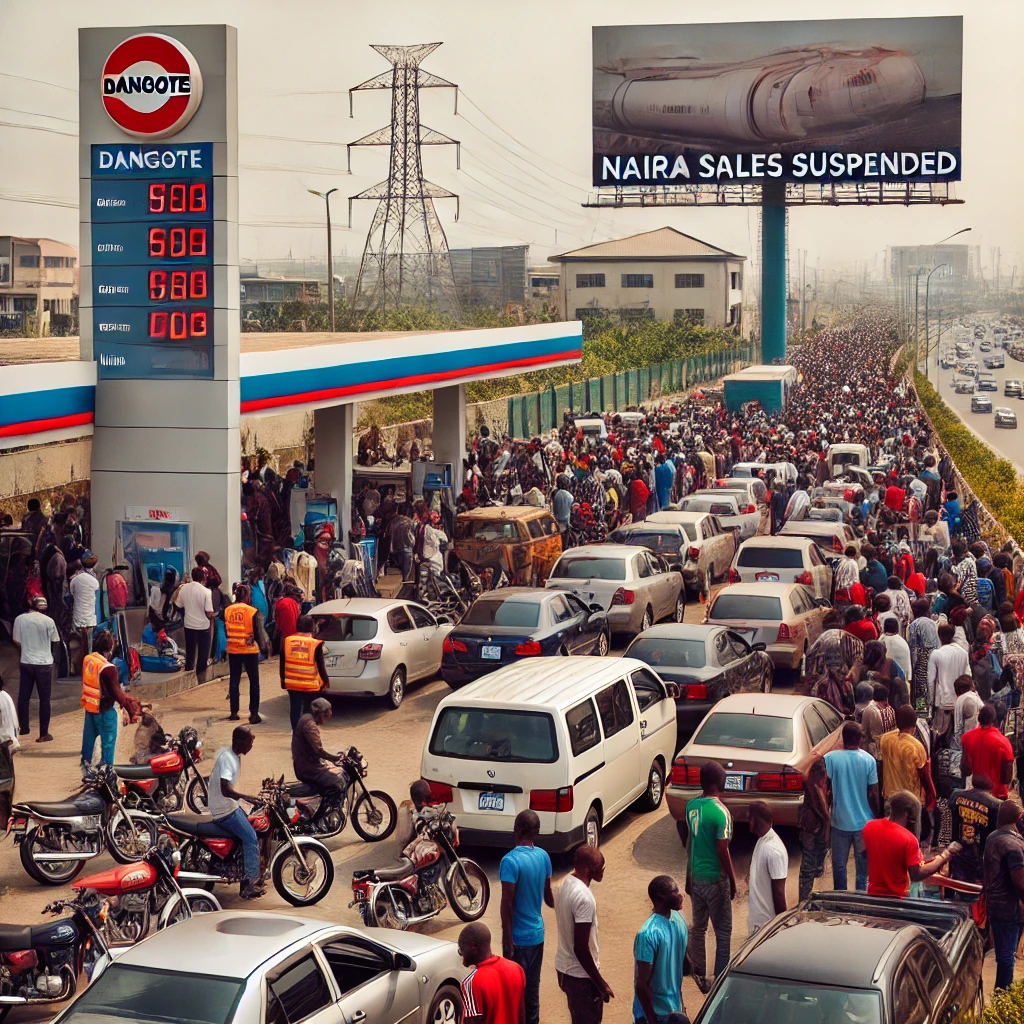 The temporary suspension of petroleum product sales in Naira by Dangote Petroleum Refinery has sent ripples through the economy, affecting businesses, transport operators, and everyday Nigerians who depend on stable fuel prices. The move, necessitated by the mismatch between Naira sales proceeds and dollar-based crude oil purchases, has intensified concerns over fuel affordability and accessibility in an already strained economy.
For months, Dangote Refinery’s acceptance of Naira payments provided some relief to local businesses by reducing forex exposure. However, with the sudden shift back to dollar-denominated sales, petroleum marketers who relied on Naira transactions now face rising costs and supply uncertainties. The consequences are already evident: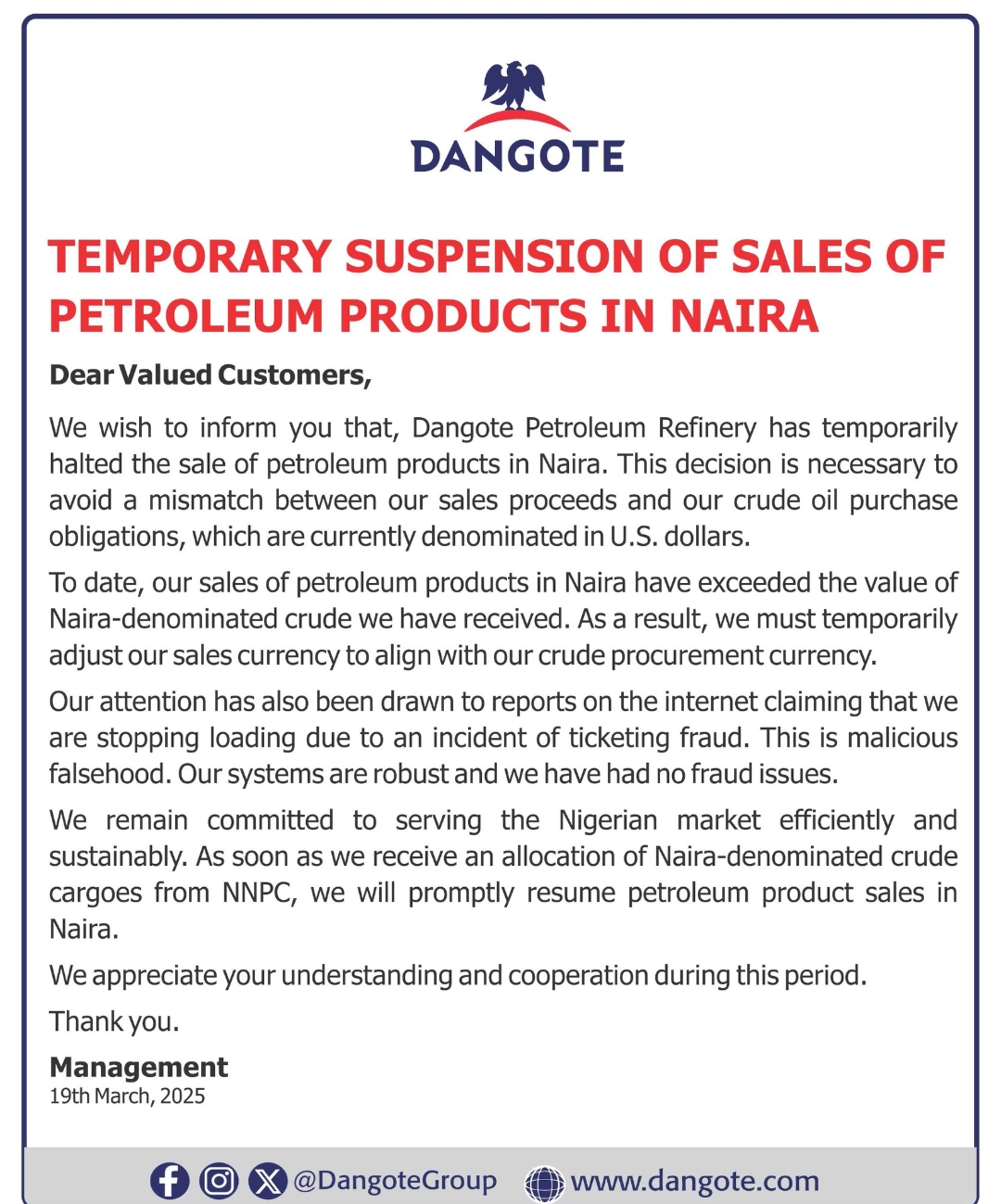
- Transport Costs Surging: The informal transport sector, including commercial drivers and logistics companies, is seeing increased fuel costs, which could translate into higher transport fares for millions of commuters.
- Inflationary Pressure: Higher petroleum product prices contribute to rising costs for goods and services, worsening inflation at a time when many Nigerians are already struggling with economic hardship.
- Small Businesses at Risk: Entrepreneurs, from farmers who depend on diesel-powered machinery to retailers reliant on petrol generators, now face operational challenges that threaten their profit margins.
A Broader Reflection: The Struggle for Economic Stability
The situation underscores the vulnerability of Nigeria’s local economy to foreign exchange dynamics, despite government efforts to promote energy self-sufficiency. When the Federal Government announced the sale of Naira-denominated crude to Dangote Refinery, it was seen as a bold move to reduce reliance on the dollar. However, the refinery’s latest decision reflects the realities of crude procurement, where dollar transactions dominate the global oil market.
Adding to the tension, misinformation about ticketing fraud has circulated online, falsely suggesting that fraud issues led to the sales suspension. Dangote Refinery has strongly refuted these claims, reaffirming the integrity of its supply chain and operational systems.
What’s Next? A Test for Government Action
The Federal Government and NNPC now face mounting pressure to deliver on their promise of consistent Naira-based crude allocations. Without urgent intervention, the refinery’s reliance on dollar transactions could worsen fuel affordability for millions of Nigerians.
As the nation waits for a resolution, many wonder: Is Nigeria ready for a fully independent refining sector, or does forex dependency continue to dictate its energy future? The coming weeks will determine whether this suspension is merely a short-term setback or a long-term challenge with lasting economic consequences.
Stay informed, Stay ahead with The Ameh News
Discover more from Ameh News
Subscribe to get the latest posts sent to your email.