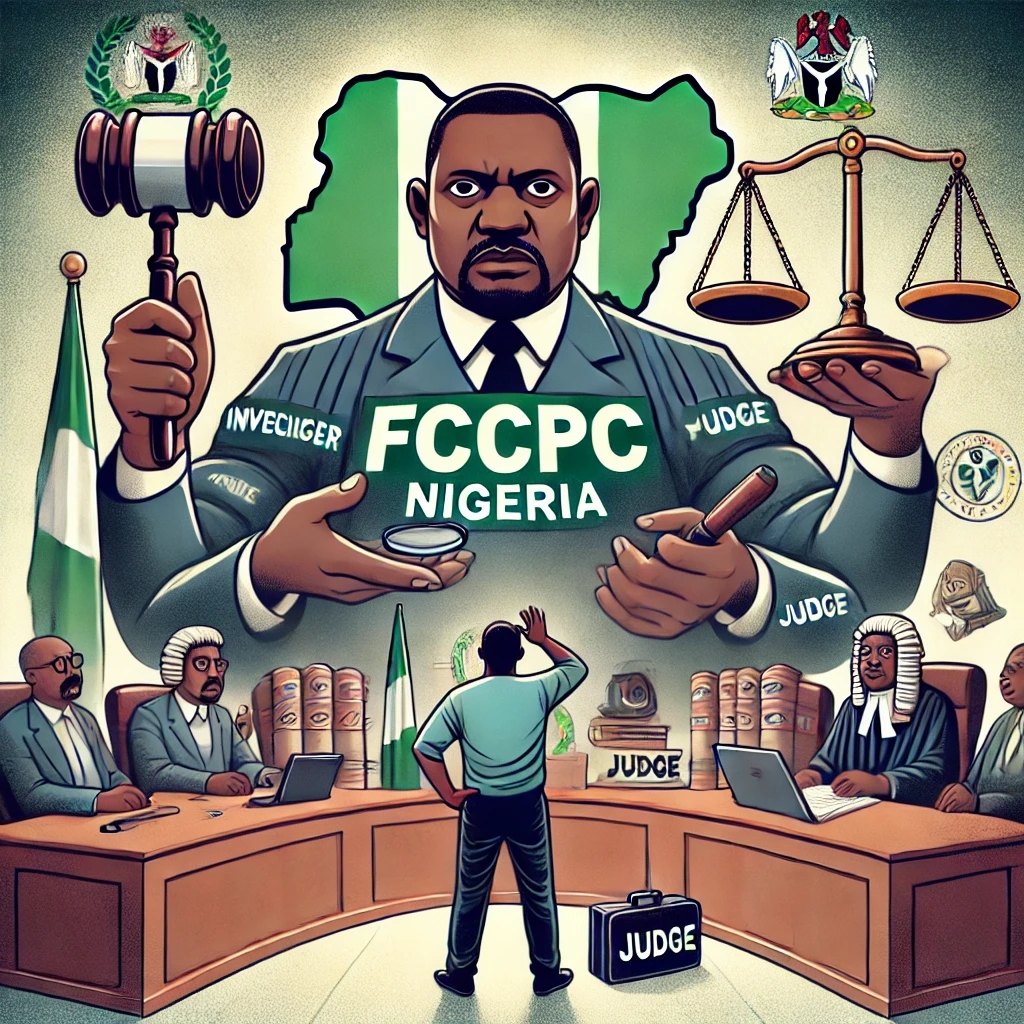
 The Federal Competition and Consumer Protection Commission (FCCPC) has come under scrutiny for allegedly exceeding its statutory mandate by assuming multiple conflicting roles in consumer protection cases. Industry stakeholders and legal experts have raised concerns that the Commission, instead of strictly adhering to its consumer protection function, has been operating as a complainant, investigator, prosecutor, and judge in the same matters, thereby undermining the principles of fairness and due process.
The FCCPC, established to promote fair competition and safeguard consumer rights, is empowered to investigate and address issues of anti-competitive practices, unfair trade, and consumer exploitation. However, recent actions by the Commission have sparked debate over its overreach, with some businesses and legal professionals arguing that its approach lacks transparency and procedural justice.
According to a legal expert specializing in regulatory compliance, the FCCPC’s operational model raises significant legal and ethical concerns. “The Commission is supposed to act as a regulator ensuring compliance with competition laws, but in some cases, it appears to have overstepped its boundaries by assuming the roles of complainant, investigator, prosecutor, and judge simultaneously. This contravenes fundamental principles of fair hearing and natural justice,” stated.
Business owners who have been affected by the FCCPC’s recent enforcement actions claim that the Commission’s mode of operation leaves no room for independent adjudication or recourse to an impartial tribunal. “We are not against consumer protection, but when the FCCPC acts as both the accuser and the judge, where do businesses go for a fair hearing? It creates a system where regulatory excesses can occur without checks and balances,” lamented a retail industry executive who spoke on condition of anonymity.

This controversy follows a series of enforcement actions by the FCCPC against companies accused of price gouging, false advertising, and unfair trade practices. While consumer advocacy groups applaud the Commission for holding businesses accountable, critics argue that its unchecked powers may result in abuse and regulatory overreach.
Legal analysts have suggested that an independent adjudicatory body be established to handle cases brought forward by the FCCPC, ensuring that accused parties have access to due process and impartial judgment. “There is a need for clearer separation of roles within the regulatory framework. The FCCPC should focus on investigation and enforcement while an independent tribunal or court determines guilt and imposes sanctions,” said Dr. Ifeoma Adigwe, a competition law specialist.
As the debate intensifies, calls for legislative reforms to redefine the FCCPC’s mandate and ensure compliance with constitutional safeguards for fair hearing are growing louder. The business community, legal professionals, and consumer rights groups await further developments on whether the Commission will adjust its approach to align with global best practices in competition regulation and consumer protection.
Stay informed, Stay ahead with The Ameh News
Discover more from Ameh News
Subscribe to get the latest posts sent to your email.