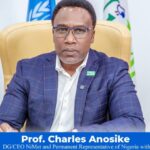
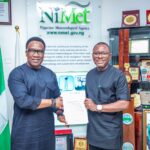
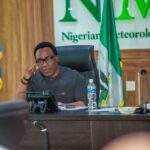
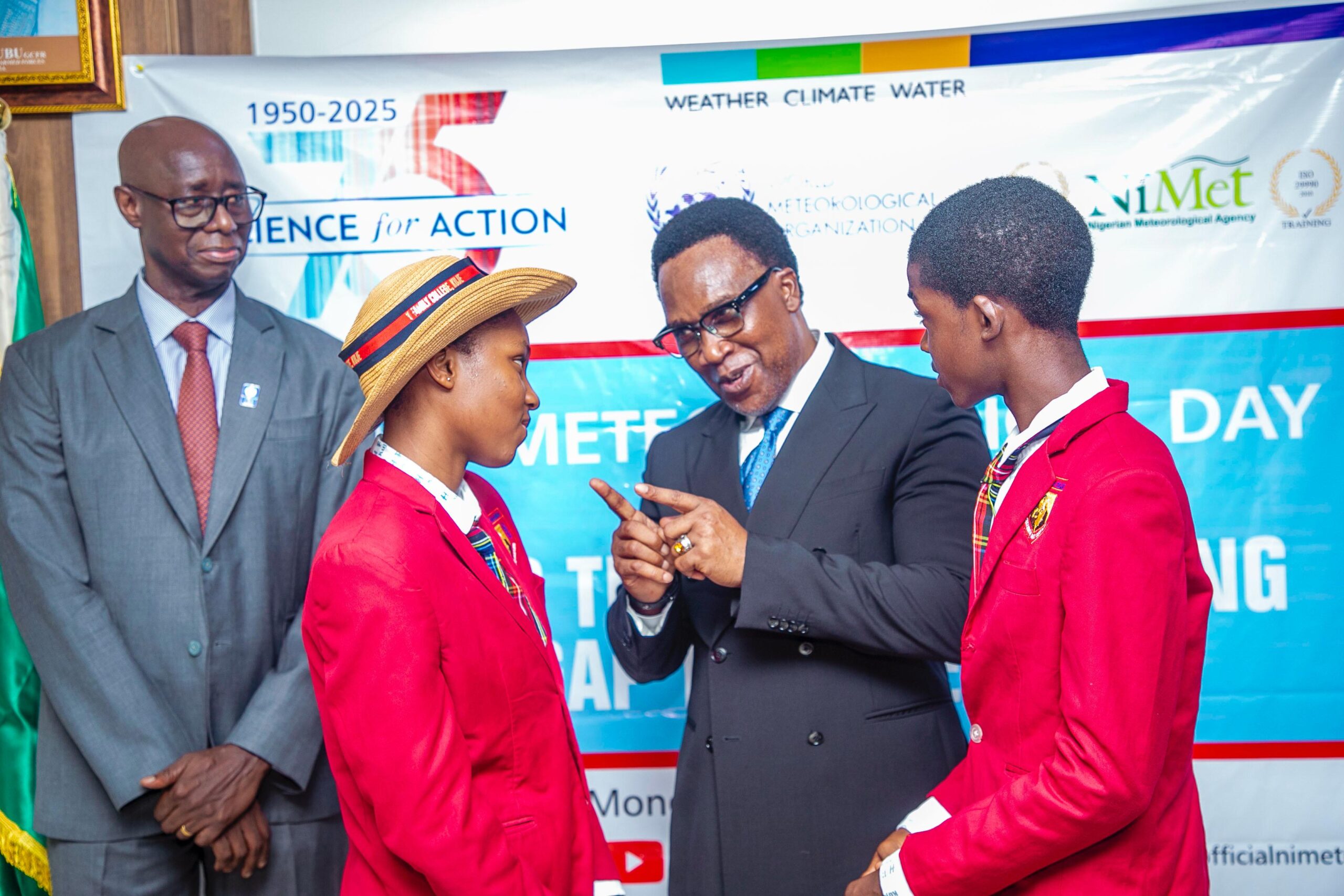
 The World Meteorological Organization (WMO) Representative for North, Central, and West Africa, Bernard Gomez (Left), the DG and CEO of the Nigerian Meteorological Agency (NiMet), Prof. Charles Anosike (Middle), and students of Holy Family College, Kuje, Abuja, at the 2025 World Meteorological Day celebration at NiMet’s headquarters in Abuja on Monday, March 24, 2025.
The Director General and Chief Executive Officer of the Nigerian Meteorological Agency (NiMet), Professor Charles Anosike, has called for intensified efforts to bridge early warning gaps as the world marked the 2025 World Meteorological Day. The global event, themed “Closing the Early Warning Gap Together,” was celebrated on Sunday, March 23, 2025, coinciding with the 75th anniversary of the World Meteorological Organization (WMO).
Speaking at a special ceremony held at NiMet’s headquarters in Abuja on Monday, March 24, 2025, Professor Anosike emphasized that closing the early warning gap requires a multi-stakeholder approach, involving national and international partners, policymakers, private sector players, and local communities.
“Government alone cannot do it,” Anosike stated. “Strong collaboration, coordination, and cooperation are essential to ensuring that early warning systems reach and protect every citizen, especially in vulnerable communities.”
He paid tribute to Professor Godwin Olu Patrick Obasi, a former Secretary-General of WMO, acknowledging his pioneering contributions to meteorology and early warning systems. “Investing in early warning systems not only saves countless lives and livelihoods but also generates a tenfold return on investment, strengthening economies,” he added.
Strengthening Early Warning Systems in Nigeria
Professor Anosike reaffirmed NiMet’s commitment to advancing early warning capabilities through science-driven weather and climate services. He highlighted the agency’s Seasonal Climate Prediction (SCP), daily weather forecasts, impact-based forecasts, and other bulletins as critical tools for disaster risk reduction across various socio-economic sectors.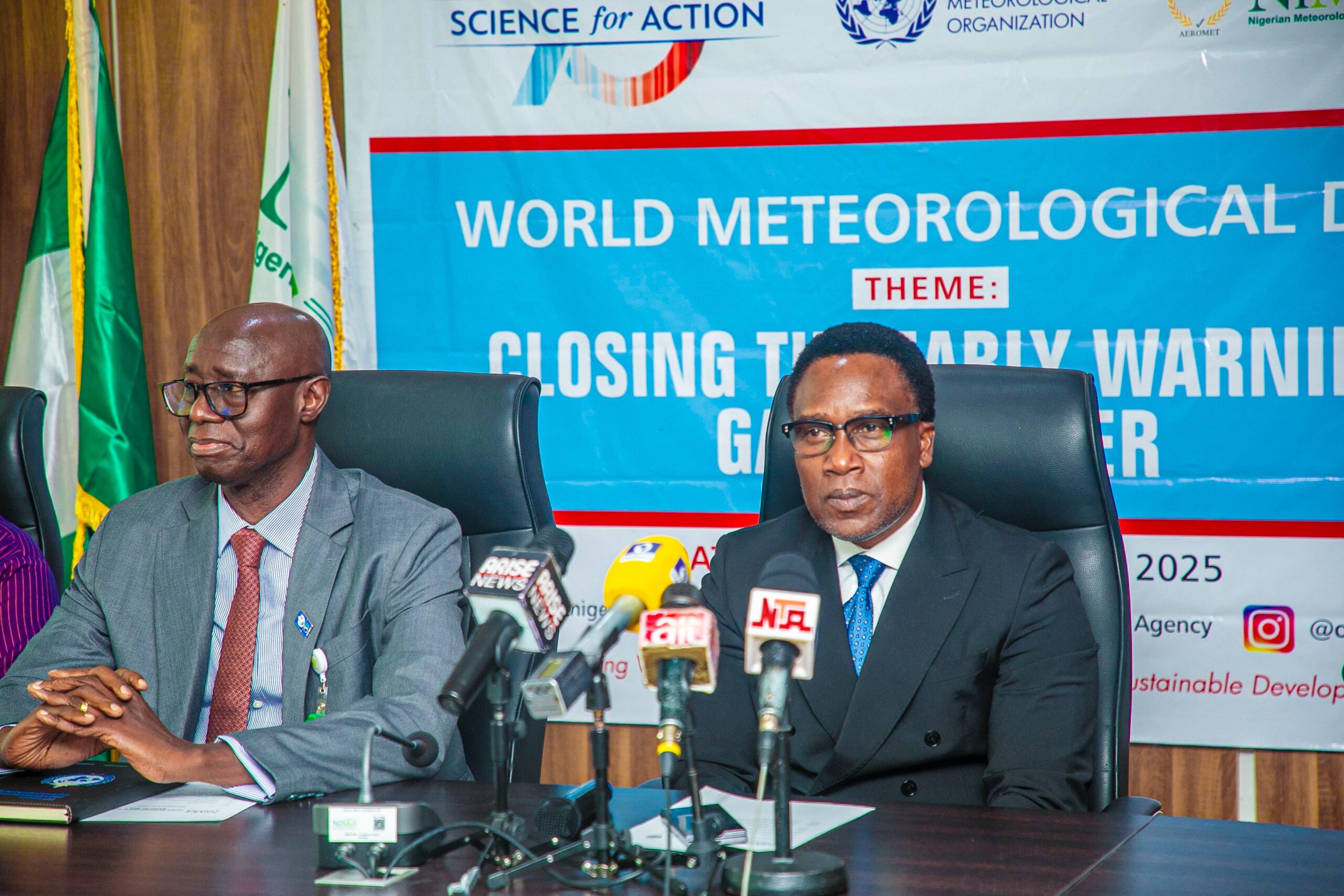
However, he noted that recent extreme weather events have exposed gaps in early warning systems, citing inadequate funding, outdated technology, uncoordinated dissemination efforts, insecurity, and challenges in system maintenance as key issues that must be urgently addressed.
A Call for Leadership and Collaboration
Professor Anosike expressed gratitude to President Bola Ahmed Tinubu and the Minister of Aviation and Aerospace Development, Festus Keyamo (SAN), for their leadership and continued support of NiMet’s activities. He also commended WMO for spearheading the global Early Warning for All Initiative (EW4All) and acknowledged the unwavering commitment of stakeholders towards building a weather-aware and climate-resilient society.
“Early warnings save lives!” Anosike concluded, urging all stakeholders to remain dedicated to strengthening early warning capabilities.
WMO’s Global Perspective
Representing the WMO in Nigeria, Bernard Gomez delivered a message from WMO Secretary-General Celeste Saulo, underscoring the importance of government-led initiatives.
“Investing in National Meteorological and Hydrological Services isn’t just about forecasting—it’s about saving lives, strengthening economies, and securing our future. The time to act is now,” Saulo stated.
Gomez further stressed that National Meteorological and Hydrological Services must remain the authoritative source of early warnings, while the private sector should play a complementary role in enhancing dissemination, driving innovation, and improving risk communication.
Stay informed, Stay ahead with The Ameh News
Discover more from Ameh News
Subscribe to get the latest posts sent to your email.