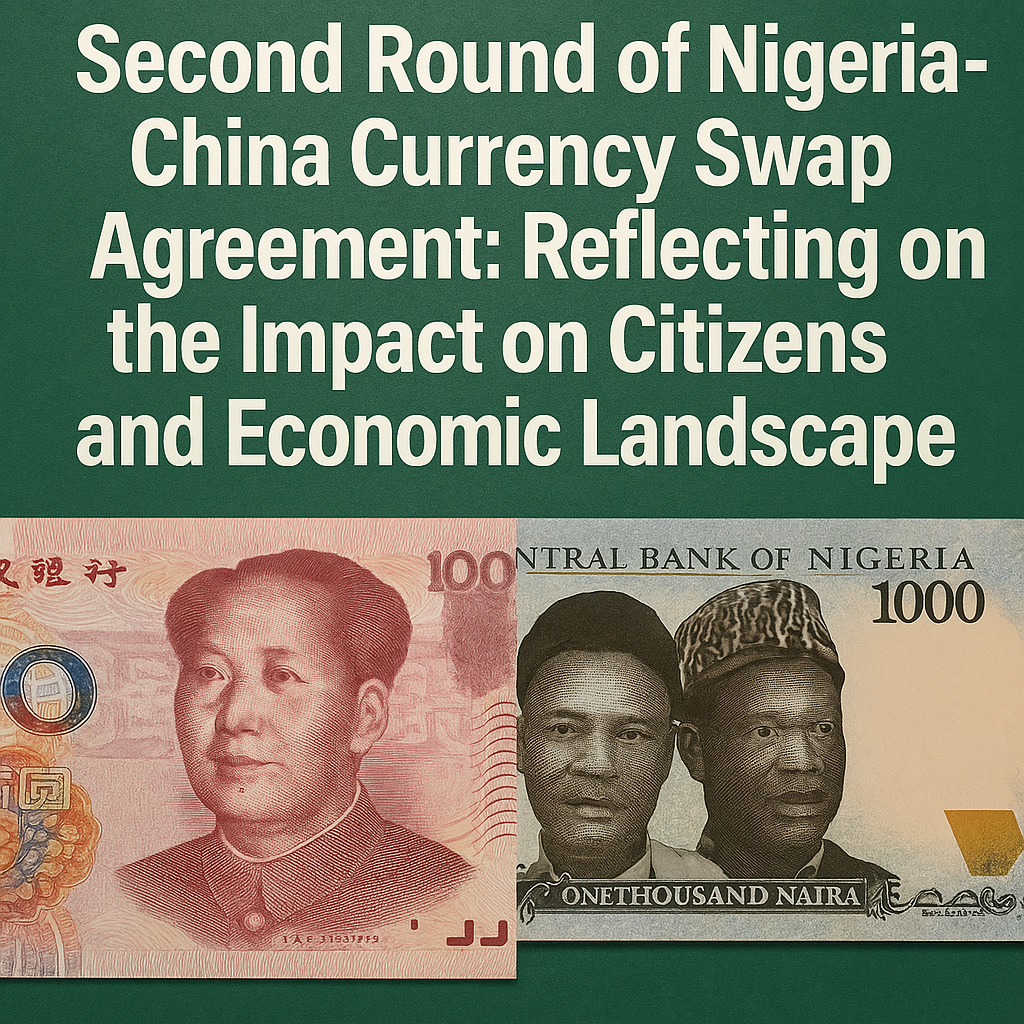
 As Nigeria enters the second round of its currency swap agreement with China, a thorough reflection on the impacts of the initial deal reveals significant economic shifts, both positive and challenging, for citizens and businesses alike. The Nigeria-China currency swap, which was first signed in 2018, aimed to promote bilateral trade by reducing dependency on the US dollar and facilitating easier transactions between the two nations. The agreement allows Nigeria to access the Chinese yuan (CNY), offering more flexibility in trade and financial activities.
The Birth of the Agreement
The currency swap agreement between Nigeria and China was initially signed with a value of 15 billion yuan (approximately $2.5 billion) and was meant to ease trade relations by enabling both countries to use their local currencies. This move was seen as a strategic attempt by Nigeria to reduce its reliance on the US dollar, a critical issue in an economy heavily dependent on imports. The agreement allowed for direct exchanges between the naira and yuan, bypassing the complexities of the dollar route and helping Nigerian businesses engage in trade with China more efficiently.
By 2023, the first agreement period had elapsed, and both governments agreed to extend the deal. The new phase promised increased access to yuan and more opportunities for Nigerian businesses to tap into China’s massive market. However, as the second round of the agreement progresses, it’s essential to assess the on-the-ground effects.
Impact on Citizens: A Mixed Bag
For many Nigerians, the swap has had both its advantages and drawbacks. One of the most immediate effects of the currency swap has been on the ease of access to the Chinese yuan for businesses importing goods from China. Traders and manufacturers who deal with Chinese suppliers reported faster and more cost-effective transactions due to reduced reliance on the US dollar.
However, for ordinary citizens, the impact of the currency swap has not been as clear-cut. The fluctuations in the exchange rates between the yuan and naira have led to mixed perceptions. While some traders have benefited from a more stable exchange rate with China, others have found it challenging to adjust to the variations in the yuan-naira value.
A case in point is the experience of Mrs. Grace Okoro, a small business owner in Lagos, who imports electronics from China. She noted that while the swap had initially seemed promising, the volatility of the yuan against the naira created inconsistencies in pricing, leading to higher costs for her products. “It was supposed to reduce costs, but we’re still dealing with currency instability. I was hoping the government would step in to stabilize the exchange,” she said.
The Textile Industry
The textile sector, which has been a focal point for Nigeria’s trade with China, offers a more nuanced perspective. With China being one of the largest exporters of textile goods, the currency swap was hailed as a way to streamline imports for local manufacturers. One such example is the story of Mr. Chuka Eze, the owner of a textile factory in Kano. For him, the swap agreement initially seemed like a lifeline.
“In the past, I had to worry about fluctuating dollar rates and long waiting periods for approvals at the banks. The yuan made it easier for us to get materials and pay our suppliers directly,” Eze explained. However, the second round of the agreement has introduced complications. “Now, the yuan exchange rate itself is fluctuating, which sometimes means I pay more than expected. If the currency wasn’t as volatile, it would help me control my costs better,” he added.
Reflections on the Second Round Agreement
As the second round of the agreement unfolds, its impact on the Nigerian economy remains a subject of considerable debate. On one hand, the deal continues to support China-Nigeria trade relations, which remain robust, with China being one of Nigeria’s largest trading partners. The central bank’s ability to access yuan for critical imports, such as machinery and pharmaceuticals, has been an undeniable benefit.
Yet, the question remains: can the currency swap truly reduce Nigeria’s vulnerability to global currency fluctuations? For most citizens, the advantages of the agreement seem distant, as the benefits are mostly observed by businesses engaged in international trade.
Looking Ahead: What Citizens Expect
Looking to the future, Nigerians are hopeful that the renewed currency swap will lead to more stability. Experts suggest that more comprehensive policies addressing currency volatility should accompany the swap agreement. “For the currency swap to have a more direct positive impact on citizens, it’s crucial that we focus on improving the local economy and stabilizing the naira,” said Dr. Patrick Oko, an economist based in Abuja.
As Nigeria continues its engagement with China, it is evident that while the currency swap has strengthened economic ties, the broader benefits to the average citizen remain contingent on additional economic reforms. The renewed agreement offers hope, but its full impact will require careful management and support for businesses and citizens alike to navigate the complexities of an ever-changing global economy.
This reflective piece highlights both the optimism and challenges surrounding the currency swap agreement, offering a lens through which citizens can view its impact and the broader economic implications.
Stay informed, Stay ahead with The Ameh News
Discover more from Ameh News
Subscribe to get the latest posts sent to your email.