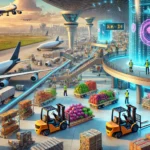
 On April 2, 2025, President Donald Trump shocked the world by officially declaring a trade war with Nigeria. Tensions had been rising for months over trade imbalances, and Trump’s administration now set its sights on imposing sweeping tariffs and restrictions on Nigerian exports. The cargo handling and aviation industries, which had long been key to Nigeria’s export operations, quickly became the hardest-hit sectors. Nigerian exporters, whose goods were traditionally shipped to the U.S. via air freight, were caught in a crisis as their products were stranded at major airports.
From that day forward, export processing areas of airports like Lagos’ Murtala Muhammed International and Abuja’s Nnamdi Azikiwe International became a focal point for chaos. Cargo shipments intended for the U.S. could no longer be processed or exported, leaving goods to accumulate at terminals. The aviation cargo sector, which had been expanding rapidly in recent years, faced unprecedented delays. Airlines were forced to cancel flights, and freight handlers struggled to deal with mounting congestion as goods waited for an unclear future. The consequences of the trade war were immediate: shipments, businesses, and livelihoods were left hanging in the balance.
When President Trump officially declared the start of a trade war with Nigeria on April 2, 2025, the announcement was met with shock and concern across Nigeria’s economic sectors. The U.S., a key trading partner, had long been the destination for a wide range of Nigerian exports, from agricultural products to oil and high-value goods. However, Trump’s administration, motivated by a desire to protect American industries and reduce trade deficits, imposed heavy tariffs and restrictive measures on Nigerian imports.
The aviation cargo industry, a critical part of Nigeria’s trade infrastructure, found itself in the crossfire of this new trade conflict. As an African country with a rapidly expanding air cargo sector, Nigeria had become increasingly dependent on its airport-based logistics network to ship goods to international markets. With the U.S. now imposing tariffs and restrictions, Nigeria’s aviation cargo handlers were suddenly forced to halt shipments destined for American ports, resulting in a massive backlog at major airports.
The crisis was felt immediately at the nation’s busiest airports. Murtala Muhammed International Airport in Lagos, the gateway for much of Nigeria’s international trade, became the epicenter of the disruption. Goods, particularly those in high demand like perishables, textiles, and electronics, remained stuck in storage, unable to be cleared for export. Airlines that had relied on cargo revenue faced reduced flight schedules, and freight handlers scrambled to manage the growing congestion.
Airlines were hit hard by the sudden disruption. Cargo flights were canceled or rerouted as shipping schedules became uncertain. Some major airlines, particularly those focused on U.S. exports, faced operational halts, leading to significant losses. With planes grounded and export volumes plunging, the aviation sector’s revenues took a huge hit.
For Nigerian exporters, the toll was even heavier. Businesses that had spent years cultivating relationships with U.S. buyers saw their goods stranded and the value of their products plummeting. The imposition of tariffs led to an immediate decrease in demand for Nigerian products, while alternative export routes to Europe, Asia, and the Middle East proved insufficient to make up for the lost U.S. business.
The collapse in airfreight capacity created a ripple effect throughout the economy. Logistics companies, freight forwarders, and small businesses faced immediate financial strain, and many questioned how long they could endure such disruptions. The once-booming Nigerian export industry, which had thrived on quick, reliable shipping via air freight, suddenly found itself at the mercy of trade politics far beyond its control.
Reflecting on the aftermath of the trade war, it became clear that the aviation cargo sector in Nigeria was among the hardest-hit industries. The disruption highlighted the country’s over-reliance on a narrow set of markets and exposed the vulnerabilities of the logistics infrastructure. The crisis also underscored the need for diversification in Nigeria’s trade strategies, especially in light of the growing global volatility in trade relations.
However, the U.S.-Nigeria trade war also served as a turning point for the industry. Nigeria began focusing on strengthening its trade ties with other global markets, including the EU, China, and other parts of Africa. Efforts were made to modernize cargo facilities, improve efficiency at airports, and reduce reliance on any one market. Airlines in Nigeria began to diversify their routes and expand cargo capabilities to more secure and stable markets.
Ultimately, the trade war led to greater collaboration between the Nigerian government and private sector players to enhance the resilience of Nigeria’s cargo handling and aviation industries. The lesson learned from the chaos was clear: diversification of markets, infrastructure modernization, and resilience to geopolitical risks were essential to long-term economic stability. As Nigeria moved forward, it was determined to turn this crisis into an opportunity to reshape its export infrastructure and reduce its dependence on any single market, ensuring that its aviation cargo sector would be better prepared for future global trade challenges.
Stay informed, Stay ahead with The Ameh News
Discover more from Ameh News
Subscribe to get the latest posts sent to your email.