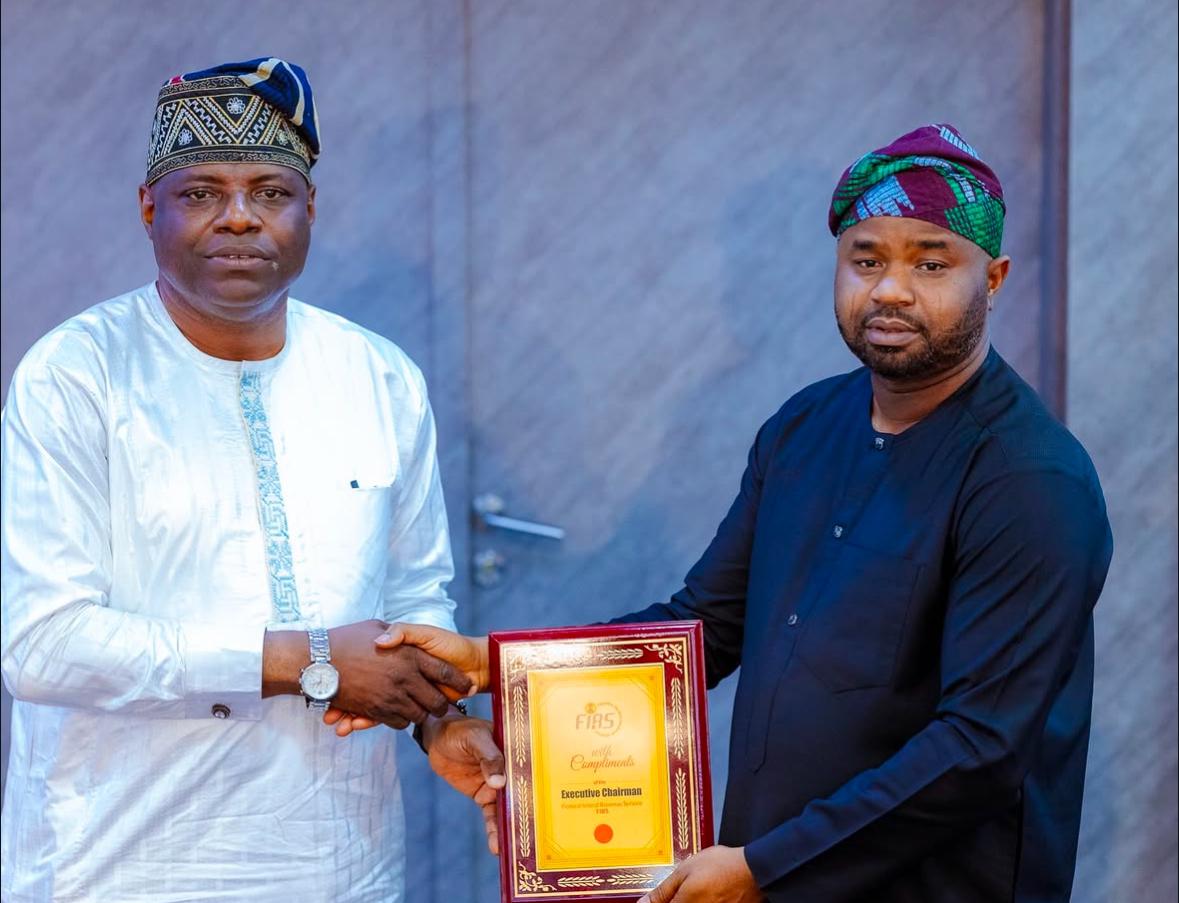
 The Revenue Mobilisation Allocation and Fiscal Commission (RMAFC) has lauded the Federal Inland Revenue Service (FIRS) as the linchpin of Nigeria’s fiscal stability, crediting the tax authority for ensuring steady revenue flow across all tiers of government.
Speaking in Abuja at the inauguration of a joint FIRS-RMAFC Technical Committee, RMAFC commissioner and head of the Inland Revenue Monitoring Committee (IRMC), Bimbo Kolade, described the FIRS as the “cash cow” of the nation’s economy. The event was held at the FIRS headquarters and marked a new phase of strategic collaboration between both institutions.
According to a statement issued by Sikiru Akinola, Technical Assistant on Media to the FIRS Executive Chairman, Kolade noted that consistent tax revenue—largely mobilised by FIRS—has enabled federal, state, and local governments to make credible projections and execute key developmental projects.
“In 2024, tax revenue from FIRS accounted for roughly 65% of the total funds distributed at the monthly Federation Allocation Account Committee (FAAC) meetings—far outweighing revenue from crude oil sales by NNPC,” Kolade said.
He commended the FIRS Chairman, Dr. Zacch Adedeji, for his reform-driven leadership and efficient administration since his appointment in September 2023. “If not for the stellar work by Dr. Adedeji, Nigerians would be experiencing even greater fiscal hardship,” Kolade added.
Highlighting the critical function of the IRMC, Kolade explained that the committee monitors tax inflows into the federation account, ensuring that taxes such as Value Added Tax (VAT) and Companies Income Tax (CIT) are properly collected and remitted.
The RMAFC commissioner acknowledged past friction between both agencies—particularly around VAT allocation—but praised Dr. Adedeji’s collaborative approach in resolving such issues diplomatically.
In his remarks, Dr. Adedeji welcomed the RMAFC delegation, noting that the partnership between FIRS and RMAFC is vital to Nigeria’s economic sustainability.
“While FIRS focuses on revenue collection, especially non-oil taxes, RMAFC ensures that these funds are monitored, transparently accounted for, and equitably distributed,” he said. “This collaboration reinforces Nigeria’s fiscal architecture.”
Adedeji emphasized that the long-standing relationship between the two agencies is built on mutual respect, professionalism, and a shared commitment to national development.
“As Nigeria diversifies away from oil dependency, the roles of FIRS and RMAFC become even more critical. This engagement is not just ceremonial—it is a strategic dialogue aimed at deepening institutional synergy,” he stated.
He revealed that joint efforts—including data verification and revenue monitoring—have improved accountability and informed better fiscal policies. However, he noted that challenges such as functional overlaps and communication gaps still exist.
“To address these, we must institutionalise our partnership through structured frameworks involving regular inter-agency strategy meetings, joint research initiatives, and integrated data systems,” Adedeji proposed.
He concluded that such frameworks would lead to increased efficiency, innovation, and improved revenue performance across all government levels.
The joint technical committee is expected to drive this agenda forward, setting a new benchmark for inter-agency cooperation in Nigeria’s public finance sector.
Stay informed, stay ahead with The Ameh News
Discover more from Ameh News
Subscribe to get the latest posts sent to your email.