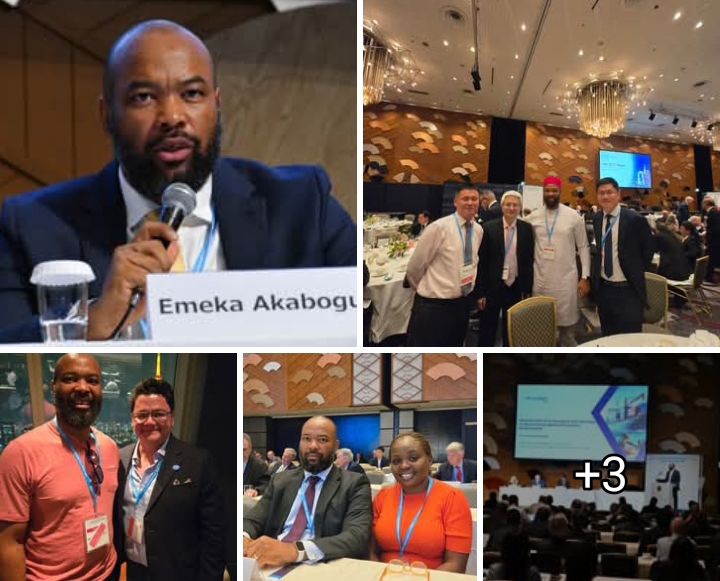
 The General Assembly of the Comité Maritime International (CMI) on Saturday formally adopted the Principles of the Lex Maritima, offering a unified framework to guide courts, lawmakers, governments, and industry players on foundational maritime legal norms. The landmark decision, announced in Tokyo, marks a significant milestone in the evolution of global maritime governance.
The adoption of the Lex Maritima principles capped an intensive week of high-level deliberations, as legal scholars, maritime practitioners, and policymakers from around the world convened to address pressing issues confronting the international shipping community.
Among the highlights was the International Working Group on Piracy, Maritime Violence and Fraudulent Activity, chaired by Richard Neylon. The session featured sharp reflections on emerging maritime threats and legal uncertainties.
Delivering a presentation on “Blurred Lines of Sovereignty and Self-help in West African Maritime Security Enforcement,” a Nigerian delegate underscored the ongoing challenges surrounding jurisdiction in Exclusive Economic Zones (EEZs). Citing the Esberne Snare incident, where a Danish naval operation clashed with Nigeria’s interpretation of its EEZ rights, the speaker warned of the consequences of weak or unclear governance frameworks in maritime law.
The discussion also turned a critical lens on Nigeria. Alexandra Couvadelli of Gard AS raised concerns over the detention of the multinational crew aboard the Heroic Idun, urging coastal states to respect international protocols protecting seafarers. The vessel’s crew was held for over eight months by Nigerian authorities, drawing widespread condemnation from human rights and maritime groups.
Elsewhere, Tom Starr addressed the threat posed by the so-called Dark Fleet—a network of untraceable vessels engaged in illicit maritime activity—while Pietro Palandri shed light on the legal status of vessels stranded in Ukrainian ports amid the ongoing conflict.
On the diplomatic front, the Nigerian delegation, led by Funke Agbor SAN, President of the Nigerian Maritime Law Association, engaged in productive bilateral discussions with counterparts from South Africa and Cameroon, represented respectively by Andrew P.M. Robinson and Gaston Ngamkan. The talks emphasized the importance of building a united African front in international maritime policymaking.
Beyond the official sessions, the assembly offered moments of reconnection and reflection. Alumni from the University College London programme, including Yosuke Tanaka and Wan Hilwanie Ariff, reunited, underscoring the global nature and enduring ties of the maritime law community.
As the event drew to a close, participants paid tribute to the CMI’s continued leadership in shaping maritime legal norms. The organization’s role as a neutral forum for consensus-building was widely acknowledged.
Special appreciation was extended to Prof. Norman Martinez, Director of the IMO International Maritime Law Institute (IMLI); CMI President Ann Fenech; and the Japan Maritime Law Association, led by Tomotaka, for their warm hospitality and efficient organization.
The adoption of the Lex Maritima principles in Tokyo signals a renewed global commitment to harmonized maritime law and strengthens the CMI’s reputation as the compass of international maritime jurisprudence.
Stay informed, Stay ahead with The Ameh News
Discover more from Ameh News
Subscribe to get the latest posts sent to your email.