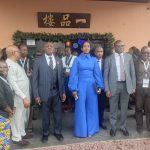
Omolola Oloworaran, DG PenCom
When President Bola Ahmed Tinubu assumed office in May 2023, his administration was quick to unveil an ambitious economic roadmap aimed at reshaping Nigeria’s financial landscape. Amid sweeping reforms, fuel subsidy removal, forex liberalization, and infrastructure financing, a quieter revolution began to take shape in the background: the repositioning of pension funds as a key driver of economic stability and national development.
Today, with pension assets crossing the ₦23 trillion mark, the narrative has shifted from merely safeguarding retiree savings to actively harnessing these funds for strategic investment in Nigeria’s future. This transformation is a direct result of Tinubu’s “Renewed Hope Agenda,” which views long-term financial instruments not just as retirement cushions, but as tools for catalyzing economic growth.
Under the guidance of the Director General of National Pension Commission (PenCom), Ms Omolola Oloworaran and in alignment with broader presidential directives, pension fund administrators have increased their participation in capital market instruments, infrastructure bonds, corporate debt, and real estate investments. This growing diversification has not only provided stability in volatile economic times but has also injected much-needed liquidity into Nigeria’s financial system.
“Pension funds are now being seen as national assets,” said an official familiar with the coordination between PenCom and the Federal Ministry of Finance. “We are building a foundation where these funds support infrastructure, housing, agriculture, and other productive sectors, without compromising the safety of contributors’ savings.”
One of the most significant developments has been the renewed effort to integrate pension-backed financing into the mortgage system. With collaborative frameworks between PenCom and the Central Bank of Nigeria (CBN), workers may soon access home ownership opportunities using their retirement savings as collateral, an initiative that signals a broader push for financial inclusion.
Equally important is the Tinubu administration’s focus on improving compliance. More private and public sector employers are being brought under the contributory pension net, boosting overall fund accumulation while ensuring retirement security for millions of Nigerians.
This approach aligns seamlessly with the President’s aspiration of building a $1 trillion economy. Pension funds, once relegated to the sidelines of national discourse, are now emerging as a cornerstone of macroeconomic resilience, offering long-term, low-risk capital to a country hungry for growth.
While inflation and currency fluctuations continue to challenge the Nigerian economy, the sustained growth of pension assets provides a rare source of confidence. Experts argue that beyond financial returns, this strategy speaks to a deeper philosophy: a government tapping into its own domestic capacity to fund development, rather than relying solely on foreign debt.
For President Tinubu, it is not just about economic numbers, it is about transforming institutional frameworks. And in that transformation, Nigeria’s pension industry has found a new calling: not just to secure retirements, but to help build a nation.
Stay informed, stay ahead with The Ameh News
Discover more from Ameh News
Subscribe to get the latest posts sent to your email.