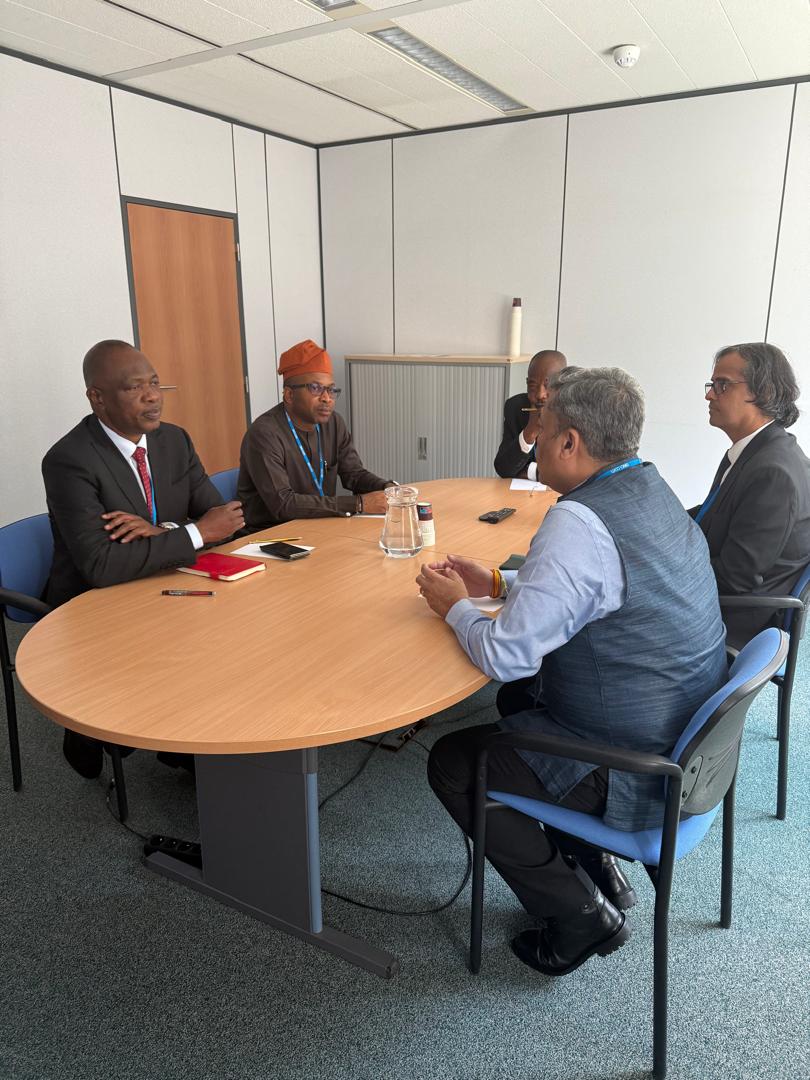
 The Nigeria Customs Service (NCS) and India’s Customs Administration have taken significant steps to deepen bilateral cooperation, advancing key areas of collaboration during a strategic meeting on the sidelines of the 92nd Session of the World Customs Organisation (WCO) Policy Commission held in Brussels.
Nigeria’s delegation, led by Comptroller-General of Customs, Adewale Adeniyi, met with Mr. Surjit Bhujbal of India’s Central Board of Indirect Taxes and Customs (CBIC) to assess the progress of the Customs Mutual Administrative Agreement (CMAA) signed in November 2024. The CMAA, formalised during the Indian Prime Minister’s state visit to Nigeria, set the groundwork for closer cooperation on trade facilitation, revenue assurance, and enforcement.
The discussions centred on customs valuation, curbing abusive transfer pricing practices, and integrating customs with tax systems — areas flagged as critical in the CMAA. Also high on the agenda was the rising threat of substandard pharmaceutical imports, with both countries noting recent joint intelligence efforts that have led to significant seizures in Nigeria.
“This engagement builds on the solid foundation established last year. We’re working closely to address undervaluation and improve the interoperability of our customs and tax systems,” said Adeniyi. “Importantly, our coordinated efforts in stopping dangerous pharmaceuticals are already yielding results that directly benefit public health.”
The Customs chief also emphasised Nigeria’s interest in expanding the partnership through technical missions, joint training programmes, and real-time data sharing — tools expected to enhance risk management and boost revenue mobilisation.
“We envision a smarter, collaborative customs system that reflects the demands of modern trade and supports sustainable economic growth,” Adeniyi added.
Speaking on behalf of the Indian delegation, Mr. Bhujbal described Nigeria as a key strategic partner in Africa and reiterated India’s readiness to scale up collaboration under the CMAA framework.
“The agreement provides a structured pathway for mutual assistance, capacity building, and data exchange. We’re particularly keen on deepening cooperation on valuation and tackling revenue leakages associated with transfer pricing,” he said.
The WCO Policy Commission provides a high-level platform for customs administrations across the globe to shape policy, harmonise procedures, and reinforce trade security frameworks. Nigeria’s active role at the summit reinforces its ongoing commitment to global best practices and institutional reform.
As both countries continue to strengthen ties, their evolving partnership is being viewed as a model for international customs cooperation, with shared goals in promoting fair trade, securing borders, and protecting public health.
Stay informed, stay ahead with The Ameh News
Discover more from Ameh News
Subscribe to get the latest posts sent to your email.