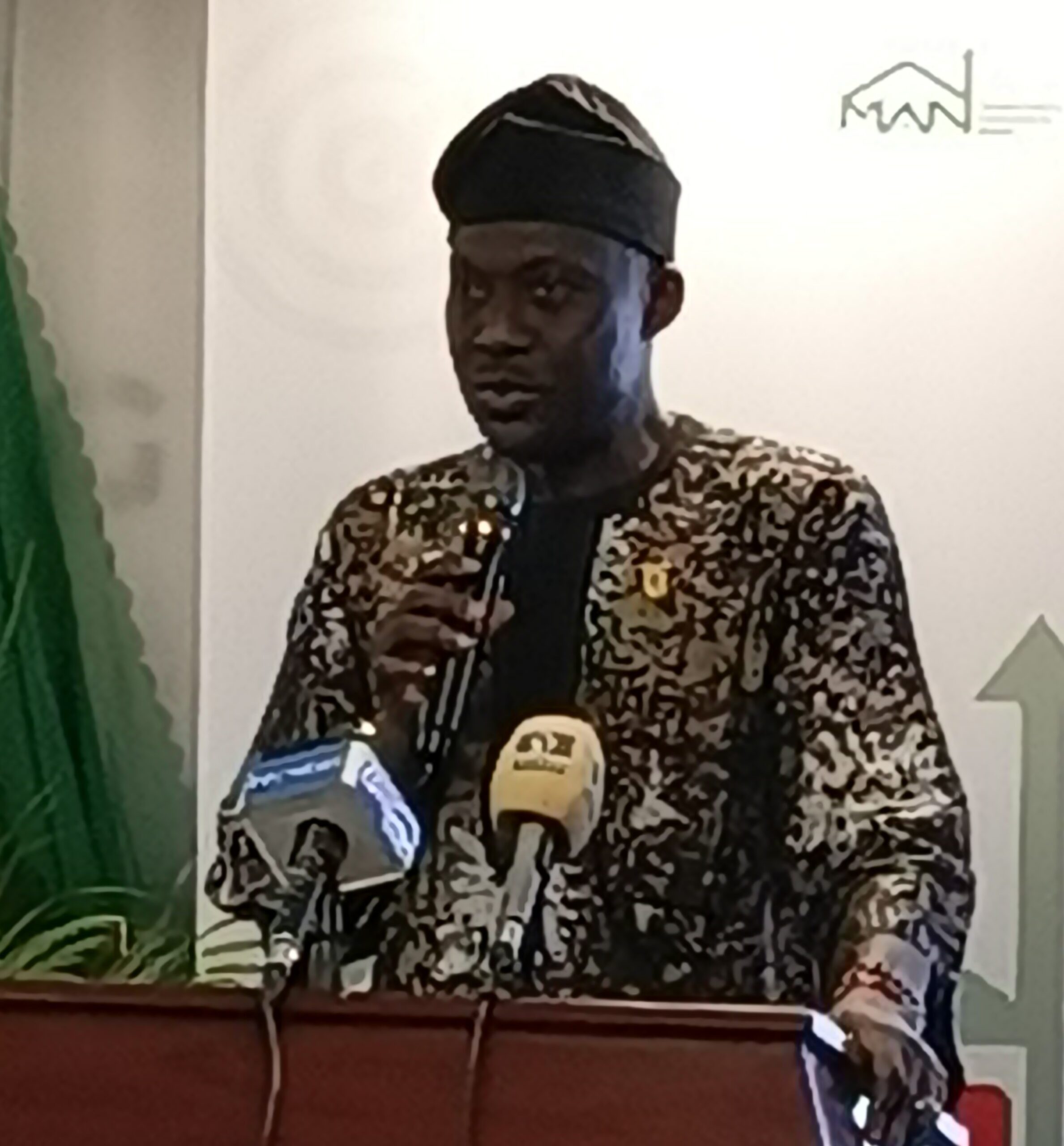
The Manufacturers Association of Nigeria (MAN) has commended the Ogun State Government for its forward-thinking approach to managing plastic waste, calling it a model for other states, particularly Lagos, to emulate.
In a statement signed by its Director General, Segun Ajayi-Kadir, mni, on Thursday, July 3, 2025, MAN applauded Ogun State’s efforts to tackle single-use plastics through practical and inclusive initiatives. The association said the government’s strategy balances environmental protection with economic empowerment, offering a sustainable alternative to outright bans that threaten livelihoods.
During this year’s World Environment Day celebration in Abeokuta, the Ogun State Commissioner for Environment, Ola Oresanya, showcased the state’s initiatives, including the “Plastics for Cash” and “Blue Box” programs. These schemes encourage residents to separate and recycle plastic waste, exchanging it for money or goods, and promote structured house-to-house waste collection. According to Oresanya, these initiatives aim to create income streams for youth, women, and informal waste collectors while ensuring a cleaner environment.
To deepen these efforts, Ogun State has established a Plastic Management Committee comprising regulators, manufacturers, and academic institutions. The committee will drive the implementation of Extended Producer Responsibility (EPR) guidelines and support plastic buy-back schemes, job creation, and circular economy practices across the recycling value chain.
MAN emphasized that such collaborative and scalable initiatives contrast sharply with recent developments in Lagos, where the state government has announced a blanket ban on the production and use of single-use plastics. The manufacturers’ group warned that sudden prohibitions risk triggering job losses, particularly among small businesses and informal waste workers, without addressing the root causes of plastic pollution.
“The problem isn’t plastic itself but poor waste management infrastructure and enforcement,” Ajayi-Kadir stated. “Rather than stifle productivity, sustainability efforts should guide it toward circularity.”
MAN cited global examples to support its call for a balanced approach. In Egypt, partnerships with social enterprises like Banlastic drive community clean-ups and recycling education. Ghana’s Nelplast is transforming plastic waste into affordable construction materials, while the United States is promoting a national recycling innovation challenge to improve plastic recovery and design.
The association urged Lagos to revive and expand its own promising waste management programs, such as the Smart Bins initiative and Blue Box scheme, instead of implementing policies that could destabilize the local economy.
“Sustainable solutions must be rooted in stakeholder engagement, scalable alternatives, and enabling infrastructure,” Ajayi-Kadir said. “A ban alone cannot solve the problem but will disrupt livelihoods and industrial progress.”
MAN reiterated its commitment to supporting policies that protect both the environment and economic stability. It stressed that effective waste management is essential for public health, environmental protection, and national development.
The association concluded by calling on all stakeholders to draw lessons from Ogun State’s pragmatic and inclusive model, which prioritizes job creation, wealth generation, and environmental sustainability.
@The Ameh News: All Rights Reserved.
Discover more from Ameh News
Subscribe to get the latest posts sent to your email.