History Repeats Itself as NNPCL Eyes Refinery Sales Nearly Two Decades After Obasanjo’s Reform Was Reversed
 Nearly two decades after Nigeria reversed a bold refinery privatization under President Olusegun Obasanjo, the country finds itself right back at the same junction—this time, weighed down by $18 billion in wasted investments and public frustration.
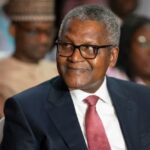
Africa’s richest man, Aliko Dangote, recently pulled back the curtain on one of Nigeria’s costliest missteps: the reversal of the 2007 sale of the Port Harcourt and Kaduna refineries to his consortium. Dangote’s candid account has reignited public debate just as the Nigerian National Petroleum Company Limited (NNPCL) reveals plans to sell off the very same refineries once again.
“We bought the refineries in January 2007,” Dangote recalled. “Then we had to return them to the government because there was a change of government. The managing director at that time convinced President Yar’Adua that the refineries would work. They said they just gave them to us as a parting gift or so.”
According to Dangote, the reversal has since cost Nigeria an estimated $18 billion in futile efforts to rehabilitate the refineries. “They are still not working,” he said bluntly. “I don’t think—and I doubt very much—if they will ever work.”
Now, in a stunning turn of events, Bashir Bayou Ojulari, the current Group Chief Executive Officer of NNPCL, has publicly confirmed that the federal government is preparing to offload the refineries through privatization, a decision that echoes the very reform once blocked in 2007.
“NNPCL is not in the business of managing refineries,” Ojulari stated in a recent policy briefing. “We will sell them through a transparent and competitive process. We must refocus on our core business—exploration, production, and energy transition.”
Ojulari’s statement signals a major policy pivot, but for many Nigerians, it is a stark reminder of the painful consequences of past indecision.
For years, the Port Harcourt, Kaduna, and Warri refineries have stood idle, despite consuming billions in taxpayer funds for so-called “Turnaround Maintenance.” The repeated promises to revive them under government control have produced nothing but rusting infrastructure, economic losses, and a fuel-dependent population left to suffer.
“I’ve spent hours in queues just to buy petrol during scarcity. We keep hearing about repairs, but nothing changes,” said Rukayat, a trader in Ibadan. “Now they want to sell them? Why didn’t they do it earlier?”
Nigeria’s inability to refine its own crude has long been a national embarrassment, despite being one of the world’s top oil producers. With the country importing over 90% of its refined products, the pressure on foreign reserves and the impact on local prices have been devastating for households and businesses alike.
The timing of Ojulari’s announcement is especially significant as the Dangote Refinery, a privately financed $20 billion mega project, ramps up operations. It has already begun supplying diesel and jet fuel to the domestic market, an achievement that only sharpens the contrast between what private capital can deliver versus what public mismanagement has failed to do.
For analysts and citizens alike, the latest move to privatize the refineries may appear as a course correction. But the road to redemption is long, and Nigerians are demanding more than policy pronouncements.
“This isn’t innovation. This is admission of failure,” said an Abuja-based oil economist. “It’s a return to the same reform that was derailed almost 20 years ago.”
As NNPCL prepares the groundwork for divestment, Ojulari’s leadership will be under intense scrutiny. Transparency, investor confidence, and public trust will be critical, especially with the bitter memory of the 2007 reversal still fresh in many minds.
Ultimately, Dangote’s stark words continue to reverberate: “They’ve spent $18 billion—and still, the refineries don’t work.”
This time, Nigerians are not just hoping for change, they are demanding it. And with the refineries back on the auction block, the nation watches closely to see if history will finally stop repeating itself.
@2025 The Ameh News: All Rights Reserved
Discover more from Ameh News
Subscribe to get the latest posts sent to your email.