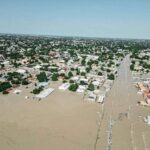
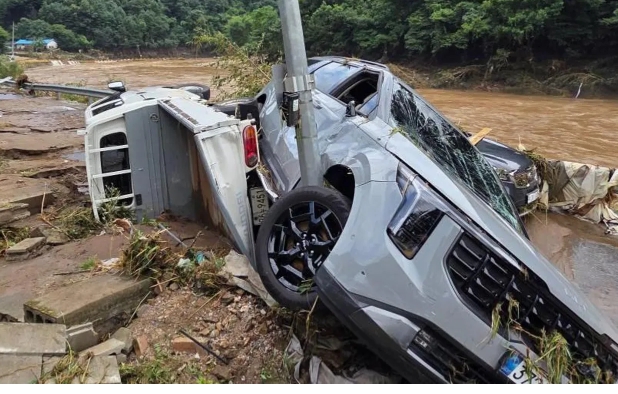
 A trail of destruction and heartbreak stretches across South Korea after days of torrential rainfall triggered deadly floods and landslides, killing at least 14 people and displacing thousands from their homes.
For residents in the worst-hit regions, the downpour was not just a weather event—it was a life-altering tragedy.
According to BBC News, In the southern county of Sancheong, where six lives were lost and seven people remain missing, survivors describe scenes of chaos and disbelief. “We watched everything disappear in a matter of minutes—our home, our farm, our animals,” said 63-year-old farmer Lee Jung-soo, his voice trembling. “We barely escaped with our lives.”
The government’s disaster management office said more than 41,000 households temporarily lost power as swollen rivers overwhelmed infrastructure, uprooted trees, and submerged entire neighborhoods. Nearly 10,000 people have been evacuated since the rains began on Wednesday.
Gapyeong province saw some of the most dramatic moments, where strong floodwaters swept vehicles into rivers and tore up roads. Video footage shared widely online shows residents clinging to rooftops, waiting desperately for rescue teams to arrive.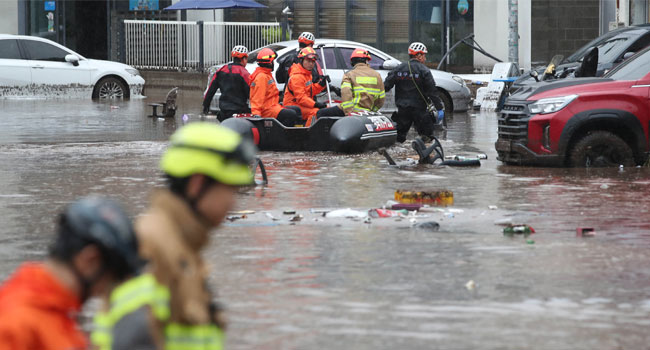
In one mountainous village north of Seoul, 72-year-old Kim Hye-sook stood outside what remained of her home—a crumbled foundation and twisted remnants of corrugated metal. “My husband and I built this house ourselves. It was small, but it was ours,” she said, wiping away tears. “Now we have nothing.”
The scale of the disaster has prompted South Korea’s interior ministry to raise the weather-related disaster alert to its highest level. Emergency crews are working around the clock, searching for the missing, clearing debris, and delivering aid to affected communities. A nationwide multi-agency recovery operation was launched on Sunday, as serious landslide warnings remain in effect.
Much of the damage is concentrated in the southern and central regions, but more rain is forecast for the capital Seoul and the north. The fear now is that further rainfall could worsen the already fragile conditions.
Officials are particularly concerned about landslides, which have already destroyed homes and cut off access to several rural communities. “The ground is saturated and unstable. Even a little more rain could trigger more disasters,” said Park Jin-ho, a senior official with the disaster response agency.
In the agricultural heartlands, the damage to crops and livestock is immense. Fields have been reduced to swamps, and farmers are facing the grim reality of a ruined harvest season. Local governments are beginning assessments for financial support, but many worry it won’t be enough to rebuild lives and livelihoods.
For now, families like the Lees and Kims are sheltering in community centers, schools, and churches—places that have become havens for those with nowhere else to turn. Volunteers and aid workers distribute blankets and food, while psychologists offer grief support to those overwhelmed by loss.
As the country begins the long road to recovery, the resilience of its people is evident. But so too is the pain.
“We’re alive, and for that we are grateful,” said Kim Hye-sook. “But we’re also grieving. Not just for what we’ve lost, but for those who didn’t survive.”
@2025 The Ameh News: All Rights Reserved
Discover more from Ameh News
Subscribe to get the latest posts sent to your email.