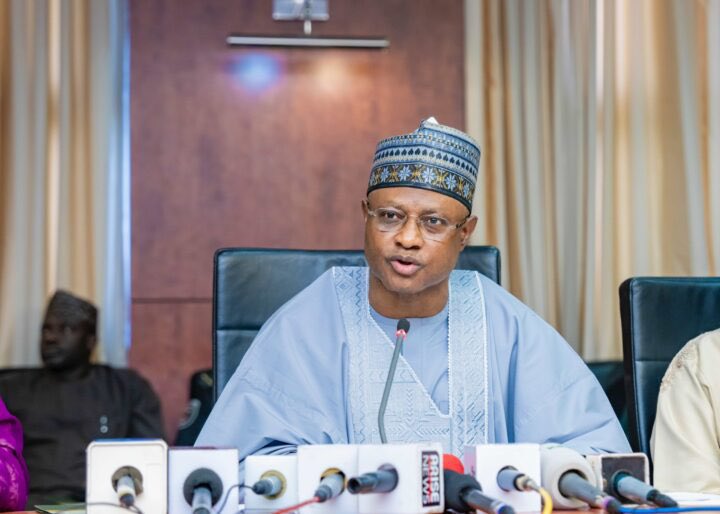
 Kaduna State Governor, Uba Sani
When 56-year-old Malam Idris Musa walks through his maize field in Giwa Local Government Area, the parched earth beneath his feet tells a story of struggle—one that many smallholder farmers in Kaduna State know too well. Like many others, rising fertilizer costs have forced him to cut back on production in recent seasons, reducing his yield and income.
But relief may finally be in sight.
In a bold step toward revitalizing the agricultural sector, Governor Uba Sani has flagged off the distribution of over 300 truckloads of fertilizer across the state. The initiative is set to reach more than 100,000 farmers, offering a much-needed lifeline to those hardest hit by input inflation and poor access to resources.
A statement signed by Kaduna State Commissioner for Agriculture, Murtala Dabo, revealed that a multi-layered committee structure—spanning state and local government levels—will manage the distribution and monitoring process. This, he said, is to guarantee transparency, efficiency, and inclusion.
“This is not just about giving out fertilizer,” Dabo emphasized. “It’s about creating a system where every stakeholder has a seat at the table—public and private sectors, civil society organizations, traditional and religious leaders, labor unions, security agencies, and anti-corruption bodies. We’re building trust and ensuring that no farmer is left behind.”
For local farmers, that trust has been hard-earned. Past interventions, while well-intentioned, have often fallen short due to poor coordination, corruption, or political interference. The state government’s new approach is a calculated response to those past failures—a bid to restore confidence in public agricultural programs.
Governor Sani’s administration is framing the initiative not just as a subsidy, but as a critical piece of a broader economic puzzle. By reducing input costs, the government hopes to stimulate agribusiness growth, attract investment, and make Kaduna’s agricultural products more competitive in national and regional markets.
“This is part of a long-term plan,” Dabo added. “We are linking food security to job creation and rural development. It’s a complete value chain approach.”
Malam Idris, for one, is cautiously optimistic. “If they can really bring it to us in time—before planting starts—it will change things. We can go back to the farm with hope, not fear,” he said, as he surveyed his small plot of land.
The plan also comes at a crucial time. As Nigeria faces persistent inflation and food insecurity, local interventions like Kaduna’s fertilizer scheme offer a glimmer of hope—not just for individual farmers, but for communities whose livelihoods depend on agriculture.
Whether the initiative succeeds in delivering lasting impact will depend on how faithfully it is implemented and monitored. But for now, in places like Giwa, Zaria, and Kachia, the promise of timely, affordable fertilizer is beginning to sow something even more valuable than crops—hope.
Discover more from Ameh News
Subscribe to get the latest posts sent to your email.