 The Comptroller-General of the Nigeria Customs Service (NCS), Bashir Adewale Adeniyi, has urged stronger inter-agency collaboration to combat illicit financial flows (IFFs) in Nigeria, citing a high-profile $8.3 million cash seizure made during his tenure as Area Comptroller at the Murtala Muhammed International Airport in Lagos.
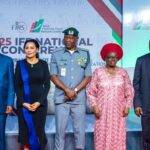
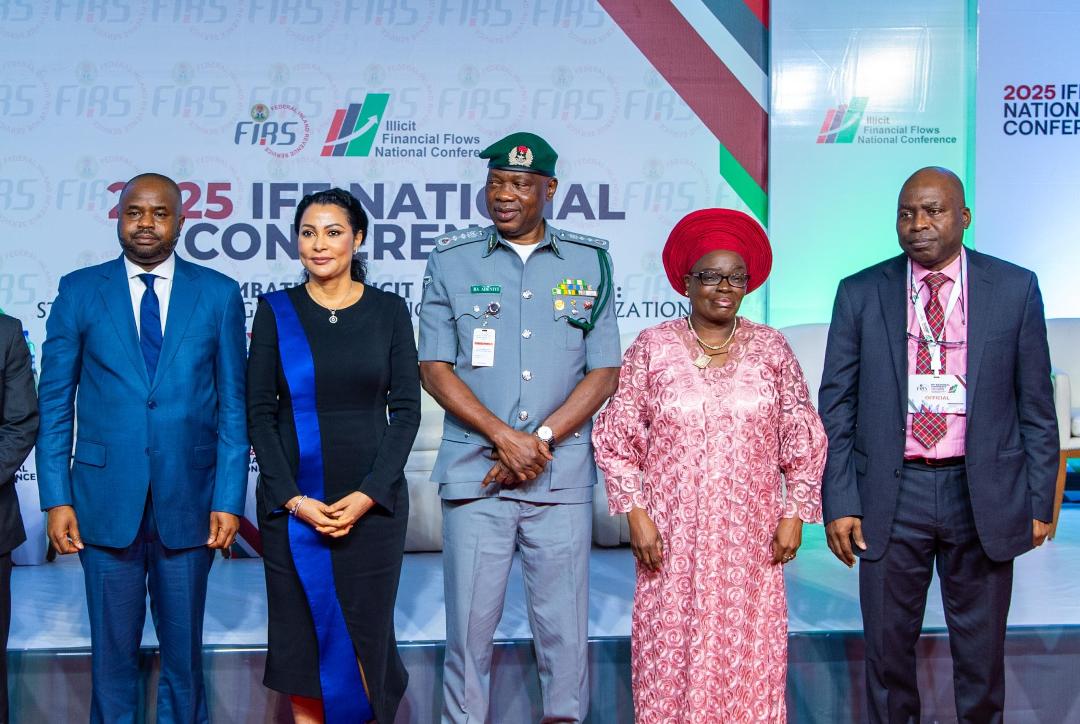
Adeniyi made the call in a goodwill message at the opening of a two-day national conference on IFFs organised by the Federal Inland Revenue Service (FIRS) in Abuja. The event, themed “Combating IFFs: Strengthening Nigeria’s Domestic Resource Mobilisation,” brought together stakeholders from various government agencies, financial institutions, and international development partners.
The Customs boss recalled that the $8.3 million seizure was seen as a major enforcement success, but it drew a surprising reaction from the Financial Action Task Force (FATF), a global watchdog on anti-money laundering and terror financing.
“We thought we had done something big,” Adeniyi recounted. “But FATF wasn’t impressed. They told us they were more interested in the inward movement of cash into Nigeria than the outward. We’ve asked questions since then, but we’re still looking for the right answers.”
With Nigeria preparing for an upcoming FATF mutual evaluation, Adeniyi stressed the urgency of strengthening inter-agency cooperation to tackle the complex and multi-dimensional nature of IFFs.
“At Customs, we monitor illegal cross-border movements of cash and financial instruments daily. Our protocol requires that any cash movement beyond a set threshold must be declared. But we cannot do it alone,” he said.
He noted that proceeds from illegal mining now represent one of the largest sources of IFFs from Nigeria and commended the United Nations Office on Drugs and Crime (UNODC) for its recent support on the issue.
“We need a whole-of-government approach, Customs, tax authorities, anti-graft agencies, and law enforcement must collaborate closely to stop these illicit flows,” Adeniyi said.
Speaking at the same event, the Minister of State for Finance, Dr. Doris Uzoka-Anite, highlighted the scale of the challenge, stating that Nigeria loses an estimated $18 billion annually to IFFs, mostly due to profit shifting and aggressive tax avoidance by multinational corporations.
“These are funds that should have been used to build schools, hospitals, and other critical infrastructure,” she said. “Yet, they are siphoned out of our economy through loopholes in tax treaties and weak enforcement.”
Dr. Uzoka-Anite called for a comprehensive review of Nigeria’s international tax agreements to reflect current economic priorities and the government’s ongoing fiscal reforms. She also commended FIRS for its increasing reliance on technology to close revenue leakages and improve transparency in tax administration.
In his welcome remarks, FIRS Chairman, Zacch Adedeji, described IFFs as one of the greatest threats to Nigeria’s fiscal health.
“Illicit financial flows do not just undermine tax collection—they erode public trust, weaken governance, and deepen economic inequality,” he said.
Adedeji outlined a three-pronged strategy the FIRS is adopting to tackle IFFs: promoting voluntary compliance, leveraging technology for digital intelligence, and coordinating enforcement under the Proceeds of Crime Act (2022) through a newly established IFF and asset recovery directorate.
He emphasized that under President Bola Tinubu’s Renewed Hope Agenda, Nigeria had entered a new phase of fiscal reform. The recent signing of four tax reform bills on June 26, 2025, he said, underscored the administration’s commitment to overhauling the tax system and institutionalising transparency.
“As much as legal reform is necessary, enforcement, digital vigilance, and strategic communication are just as critical,” Adedeji stated.
As Nigeria inches closer to the FATF assessment, stakeholders at the conference agreed that stopping illicit financial flows is not just a policy issue, but a national imperative. From airport seizures to tax reform and cross-border surveillance, the consensus was clear: protecting Nigeria’s financial system will require coordinated, continuous, and collective effort.
@2025 The Ameh News: All Rights Reserved
Discover more from Ameh News
Subscribe to get the latest posts sent to your email.