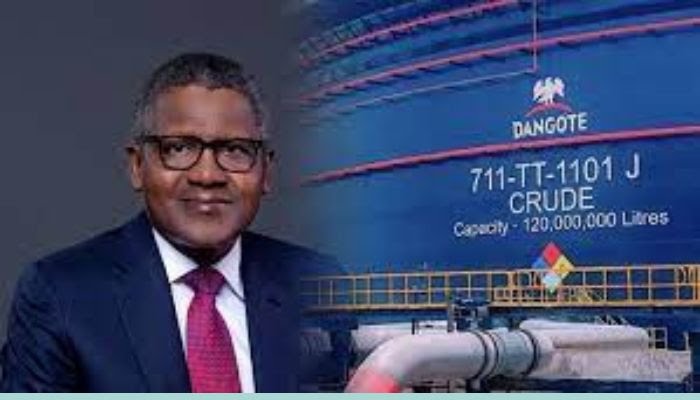
 Africa’s richest man, Aliko Dangote, has issued a powerful wake-up call to African leaders, regulators, and the oil industry, warning that the continent is bleeding wealth—losing an estimated $90 billion annually to imported, often substandard, petroleum products.
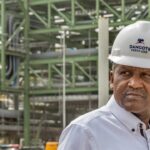
Speaking during the West African Refined Fuel Conference held in Abuja, hosted by the Nigerian Midstream and Downstream Petroleum Regulatory Authority (NMDPRA) in collaboration with S&P Global Commodity Insights, the President/CEO of Dangote Industries Limited gave a frank account of the heavy economic, technical, and regulatory burdens facing Africa’s refining sector.
Africa’s Oil Paradox: Rich in Crude, Poor in Fuel
“While Africa produces around 7 million barrels of crude oil daily, it only refines 40% of its 4.3 million barrels daily consumption of refined petroleum products locally,” Dangote said. “The rest—over 120 million tonnes annually—is imported at an enormous cost of $90 billion.”
In an emotional reflection, Dangote lamented that this reality has made Africa a dumping ground for cheap, often toxic fuels—fuels that would be illegal in Europe or North America. “We are not just importing fuel,” he said, “we’re importing poverty and exporting jobs.”
He drew a stark comparison: “Only 15% of African countries even have a GDP greater than $90 billion. This is a continental market size we are giving away—every single year.”
Dangote Refinery Forced to Import Crude
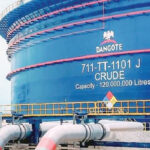
Despite being a Nigerian-built refinery, the Dangote Petroleum Refinery has been forced to import 9 to 10 million barrels of crude oil monthly from the United States and other countries, Dangote revealed.
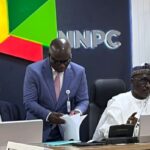
He acknowledged the Nigerian National Petroleum Company Limited (NNPC) for allocating some local crude oil but expressed concern that international traders often outbid local buyers, making it more expensive for the refinery to buy Nigerian crude.
“It makes no sense that a refinery in Nigeria is buying Nigerian crude from international traders—at a premium,” he said. “We’ve been left negotiating with middlemen, not producers.”
Costly Challenges: From Swamps to Seaports
Dangote recounted the monumental effort it took to build the world’s largest single-train refinery in Nigeria.
- The project covered 2,735 hectares of swampy land, requiring 65 million cubic metres of sand to stabilise the site.
- Over 250,000 foundation piles, millions of metres of cabling, and more than 2,500 pieces of heavy equipment were used.
- A dedicated seaport and even the world’s largest granite quarry (10 million tonnes per year capacity) had to be built from scratch.
- At the peak of construction, 67,000 people worked on-site, including 50,000 Nigerians.
And yet, perhaps the most enduring challenge came from Nigeria’s volatile exchange rate. “We started the project at N156/$ and completed it at N1,600/$,” Dangote noted, describing the financial hit as massive.
Hurdles in Local Trade and Fuel Standards
Another major roadblock for Dangote Refinery is the lack of harmonised fuel standards across African countries.
“Our diesel produced to Nigerian standards cannot be sold in Cameroon or Ghana. We all drive the same vehicles, yet have different fuel specs,” Dangote lamented. “This artificially fragments our markets and keeps us dependent on international traders.”
He cited a specific technical example: “Nigeria requires a diesel cloud point of 4°C. That limits the type of crude we can refine. Yet, most of Nigeria doesn’t even see such low temperatures. Other countries allow 7–12°C. That’s a simple regulatory fix.”
Toxic Fuel Dumping: A Threat to Public Health
In a chilling revelation, Dangote warned of growing fuel dumping in Africa from regions like Russia, where discounted, low-grade products are blended and sold at prices that crush local competition.
“These fuels are blended under price caps and dumped here. They would never be allowed in the U.S. or Europe,” he said. “Africa has become the final destination for dirty fuel.”
Call to Action: Protect Local Refiners, Harmonise Trade
Dangote called on African governments to enact policies that protect local refining investments, much like the U.S., Canada, and the EU do.
“We need a continental fuel standard. We need transparent and fair access to our own crude. And we need port and regulatory reforms,” he stated.
He noted that 40% of freight cost is due to port and regulatory charges, making it more expensive to move products from Lagos to Port Harcourt than from India to West Africa.
A Plea for Africa’s Future
In closing, Dangote was both passionate and pointed:
“It defies logic and economic sense for Africa to be exporting raw crude, only to re-import refined products—products we are more than capable of producing ourselves, closer to both source and consumption. We’re not just building a refinery. We’re building an ecosystem, a future.”
As the Dangote Refinery begins to scale up, the real challenge lies not in its engineering—but in breaking Africa’s dependence on foreign fuel, reclaiming economic sovereignty, and setting the continent on a new path of industrialisation and energy security.
@2025 The Ameh News: All Rights Reserved
Discover more from Ameh News
Subscribe to get the latest posts sent to your email.