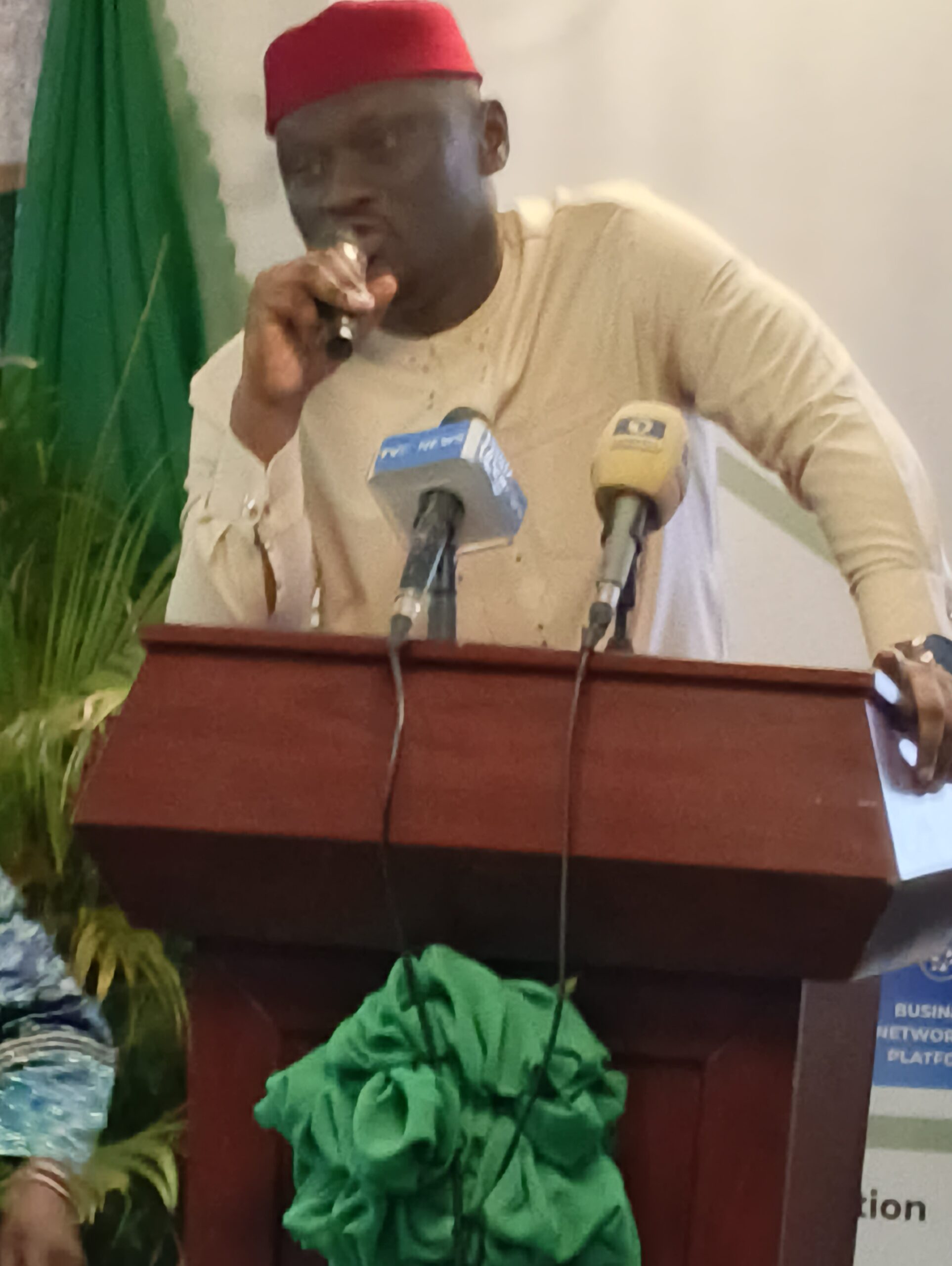
The conference room at the Standards Organisation of Nigeria (SON) headquarters buzzed with a renewed sense of purpose as journalists from across the country gathered for a Capacity Building Workshop organized by SON for members of the Commerce and Industry Correspondents’ Association of Nigeria (CICAN). But this was no ordinary gathering. From the moment Dr. Ifeanyi Chukwunonso Okeke, Director General and Chief Executive of SON, took the podium, it was clear this was a call to arms—an invitation to the media to take on a more active role in shaping Nigeria’s industrial future.
“Your pen is powerful,” Dr. Okeke said with conviction. “It can catalyze change, demystify standards, and deepen national conversations around Made-in-Nigeria products and competitiveness.”
His message resonated in a room filled with seasoned journalists who cover the intricate beat of trade, commerce, and industry. For many of them, the workshop offered more than technical briefings—it was a moment of reckoning on how their work can influence economic development.
Dr. Okeke did not mince words about the critical place of journalists in Nigeria’s journey to economic diversification. In his words, “This engagement is born out of our belief that empowering the media with the right knowledge about standards is key to building the Nigeria of our dreams.”
A Shift from Observers to Co-Drivers
At the heart of Dr. Okeke’s address was a deeper narrative: that journalists must evolve from being mere observers of industrial affairs to active co-drivers of Nigeria’s national quality infrastructure. He challenged CICAN members to move beyond surface-level reporting and become vocal advocates for quality, compliance, and certification.
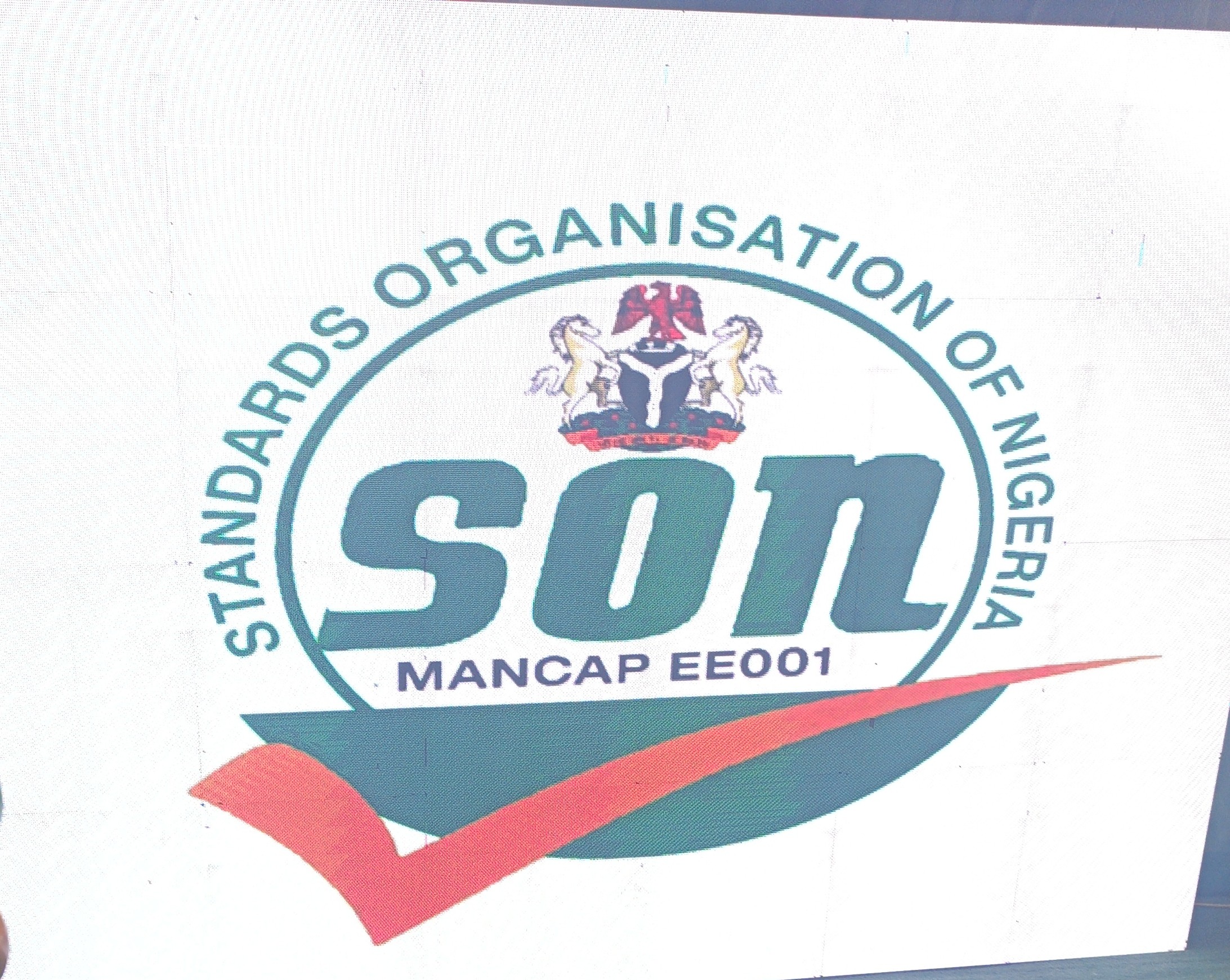
He emphasized the importance of aligning with SON’s flagship initiatives, such as the Mandatory Conformity Assessment Programme (MANCAP) and the Product Authentication Mark (PAM)—tools essential for verifying genuine products and driving out substandard ones from Nigerian markets.
With the backdrop of Nigeria’s push to gain competitive traction under the African Continental Free Trade Area (AfCFTA), the message was timely. Dr. Okeke made it clear: standards are now the new currency of global trade.
Standards as the Bedrock of Progress
As he spoke, it became clear that standardization is more than a bureaucratic process—it is the bedrock upon which innovation, consumer safety, international competitiveness, and economic sustainability are built.
“Standards open regional and global markets. They reduce production costs. They protect consumers. They even promote eco-friendly practices,” Dr. Okeke explained.
Beyond regulatory talk, there was a human angle to his message. The everyday Nigerian consumer, the small business owner trying to export goods, and the factory worker relying on safe production systems—all stand to gain from robust standards. The media, he emphasized, must help tell those stories.
Bridging the Gap Between Policy and the People
The SON DG acknowledged the challenges many journalists face in interpreting complex technical information. Yet, he insisted that their role as communicators of standardization to the everyday Nigerian remains irreplaceable.
“You are the translators between the technical language of regulation and the practical language of public understanding,” he noted, calling for more feature stories, human-interest reports, and sector analyses that elevate the national quality conversation.
He also called for visibility on enforcement efforts and success stories from manufacturers who adhere to quality benchmarks—insisting that public accountability and recognition must go hand-in-hand.
Media as Stakeholders in Nigeria’s Industrial Journey
Dr. Okeke’s tone shifted from challenge to collaboration as he pledged to make SON’s tools, data, and training more accessible to journalists.
“This workshop is not just about training. It is about reaffirming our shared mission,” he said. “Let this be the beginning of deeper engagement, regular interaction, and joint advocacy.”
As the workshop progressed, it was clear the message landed. Journalists asked questions, shared field experiences, and reflected on how they could better connect their reporting with national development objectives.
For many of the correspondents, the takeaway was not just knowledge—it was a new sense of responsibility. Dr. Okeke’s closing appeal captured it best:
“Let us walk together on this journey of national development through standardization.”
In a country striving for industrial transformation, the media is more than a mirror; it is a lever. This workshop, spearheaded by SON, wasn’t just about compliance or policy—it was about shifting mindsets and building coalitions for progress.
As Nigeria looks to compete not just locally but across Africa and the globe, the partnership between SON and the press may well prove to be one of its most powerful tools.
@2025 The Ameh News: All Rights Reserved
Discover more from Ameh News
Subscribe to get the latest posts sent to your email.