 Nigeria’s economy has officially expanded—on paper. The National Bureau of Statistics (NBS) recently rebased the country’s Gross Domestic Product (GDP) to ₦372.8 trillion, reflecting a broader and more inclusive measure of economic activities across sectors. But as many Nigerians will tell you, that growth isn’t showing up in their pockets.
Amid worsening poverty and inflation, the disconnect between data and daily life has never been starker. The rebased GDP, which now includes more comprehensive data from previously uncaptured sectors such as water transport, social investment funds, pensions, and the informal economy, paints a picture of vibrancy. Yet the streets tell a different story—one of rising food prices, joblessness, and widespread hardship.
The Numbers vs. Reality
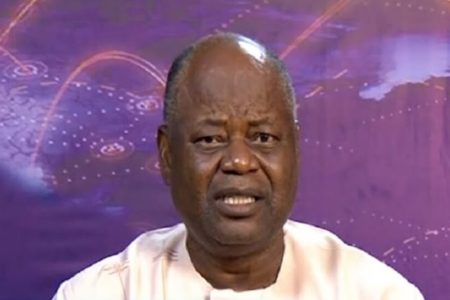
Renowned development economist, Professor Ken Ife, offered perspective on the data during a recent interview. “Yes, the GDP figure looks impressive,” he said, referencing the updated ₦372.8 trillion valuation. “But if you divide that by the current exchange rate of ₦1,530 to the dollar, our real economy in dollar terms shrinks drastically to about $243 billion.”
That matters because in global economic rankings, GDP is often assessed in dollar terms. Nigeria, once touted as Africa’s largest economy, now sits behind countries like South Africa and Egypt due to currency depreciation. In purchasing power parity (PPP) terms, however, Nigeria still holds strong at $1.28 trillion—showing the economy’s potential if structural issues are addressed.
Growth Without Impact?
While GDP grew at 3.13%, key sectors like non-oil industries, including ICT, construction, trade, and solid minerals, were the main drivers. However, agriculture, which employs a significant portion of the population, barely moved, posting a dismal 0.07% growth rate.
“That’s alarming,” said Prof. Ife. “For a country with 3% population growth and 4.6% urbanisation, that level of stagnation in agriculture means we’re heading toward hunger.”
Industry performed slightly better at 3.42%, but the manufacturing sub-sector remains fragile, raising concerns about Nigeria’s ability to reduce its over-reliance on imports.
What Changed in the New GDP?
The NBS used 2019 as the new base year—updating the outdated 2010 benchmark last used in the 2014 rebasing. The revision increased GDP by 41%, largely due to the inclusion of new economic activities like fintech, domestic services, and pension fund operations—formerly left out of GDP calculations.
The informal sector also grew in its contribution, reflecting more accurate household consumption and labour patterns. These inclusions make the data more reflective of today’s economy, but not necessarily of improved living standards.
Human Cost of Growth
The paradox is glaring: the economy is growing, yet poverty is deepening. The reason, Ife explains, is because one of the most critical drivers of GDP—household consumption—is under pressure.
With inflation eroding purchasing power, and taxes burdening small businesses and individuals, the average Nigerian feels no relief from rising GDP numbers. “People are earning less, spending more, and struggling to survive,” Ife said.
A Turning Point Ahead?
Despite the gloom, January 2026 could offer a glimmer of hope. The federal government’s planned fiscal reforms are set to remove VAT from essential goods and services, such as electricity, education, healthcare, and food. The reforms also raise the tax threshold for MSMEs from ₦25 million to ₦50 million in annual revenue—freeing up capital for small businesses.
“Those reforms are game-changers,” said Prof. Ife. “More disposable income will raise consumption. MSMEs will invest more, create jobs, and lift productivity. That’s when GDP growth becomes meaningful to the man on the street.”
The $1 Trillion Economy Dream
There’s been much talk of Nigeria becoming a $1 trillion economy. Prof. Ife believes it’s achievable—if managed correctly. “If the naira stabilises around ₦500 to the dollar, GDP could triple overnight to over $700 billion,” he argued.
But that hinges on more than exchange rates. It requires strategic investment in agriculture, industry, and mineral value addition. “We must stop exporting raw resources and start refining them locally. That’s how we grow jobs, reserves, and GDP,” he added.
Final Word
The rebasing of GDP has put Nigeria’s economic statistics back in global focus. But without deliberate policy changes and real investment in human capital, the numbers risk becoming little more than window dressing.
As Professor Ife concluded, “The numbers are important, but they must lead to one thing—improving the lives of Nigerians. Until then, it’s growth without development.”
@2025 The Ameh News: All Rights Reserved
Discover more from Ameh News
Subscribe to get the latest posts sent to your email.