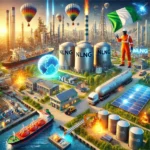
 In a major step toward transforming Nigeria’s gas sector, the Federal Government has moved to unlock domestic access to the Nigerian Liquefied Natural Gas (NLNG) supply while accelerating efforts to expand gas infrastructure across the country.
The move is part of a broader strategy to address energy poverty, boost industrial output, and reduce gas flaring by making more gas available for local consumption.
At the 2025 National Gas Infrastructure Summit held in Abuja, the Minister of State for Petroleum Resources (Gas), Ekperikpe Ekpo, announced that the government had secured an agreement with NLNG to allocate a portion of its production to the domestic market. Until now, most of NLNG’s output has been exported, limiting local access to Nigeria’s abundant gas resources.
“We can no longer afford to export prosperity and import scarcity,” Ekpo said. “Gas should power our industries, light our homes, and fuel our vehicles. This is a new era for our economy.”
The new arrangement will see NLNG supply gas to power plants, manufacturers, and compressed natural gas (CNG) projects, as the country pushes to transition from expensive, polluting fuels to cleaner energy alternatives.
To support the increased supply, the government is also investing in critical infrastructure, including the completion of the Ajaokuta-Kaduna-Kano (AKK) pipeline, development of new gas processing hubs, and rehabilitation of aging transmission lines. Public-private partnerships are expected to play a key role in delivering these projects.
Energy industry stakeholders have welcomed the policy shift. The President of the Nigerian Gas Association (NGA), Mrs. Audrey Joe-Ezigbo, described it as a “breakthrough” that could unlock new industrial growth and job creation.
“For too long, access to gas has been limited and inconsistent,” Joe-Ezigbo said. “This bold decision to prioritize domestic supply is what we’ve been advocating for. It will drive down costs for businesses and households alike.”
Despite the optimism, experts caution that challenges remain. Producers have expressed concerns over pricing structures and delayed payments. There are also ongoing threats to pipeline security in parts of the country.
However, the Nigerian Liquefied Natural Gas Company has pledged support. NLNG Managing Director, Dr. Philip Mshelbila, confirmed that the company is working with relevant agencies and market players to ensure a smooth rollout.
“This is a balancing act,” Mshelbila said. “We’re committed to meeting our export obligations, but we also recognize the urgent need to support Nigeria’s domestic energy goals.”
Energy economist Dr. Hassan Mohammed noted that if fully implemented, the expanded access to gas could be a game-changer.
“This is more than an infrastructure project—it’s an economic lifeline,” he said. “It means power for rural areas, fuel for industries, and a path toward a cleaner, more resilient economy.”
With global investors keeping a close eye on Nigeria’s energy sector, the government’s decision to unlock NLNG access may mark a turning point in the country’s journey from fossil fuel dependency to a gas-powered industrial economy.
For more updates on Nigeria’s energy policies and infrastructure developments, stay with us.
Discover more from Ameh News
Subscribe to get the latest posts sent to your email.