 Renowned economist and trade expert, Professor Ken Ife, has called for urgent implementation of Nigeria’s National Single Window (NSW) project, warning that continued delays are costing the country an estimated $12–$18 billion annually in trade inefficiencies and revenue leakages.
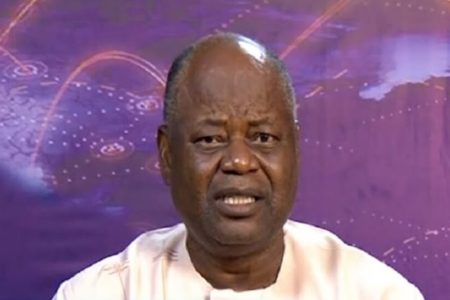
Prof. Ife, who served as a guest speaker on a national policy discussion programme, offered deep insights into the decade-long stagnation of the project and its impact on Nigeria’s economy, investment climate, and regional trade performance.
“This project should have been delivered in 2010,” Prof. Ife noted. “As the DFID trade adviser to the Nigerian government at the time, I worked on the National Action Plan for the WTO Trade Facilitation Agreement, and the National Single Window was a key component. Unfortunately, vested interests and institutional bottlenecks stalled progress for over 15 years.”
The National Single Window is a digital trade facilitation platform that aims to streamline import and export processes by electronically linking all regulatory and enforcement agencies at Nigeria’s ports. According to Prof. Ife, over 16 government agencies currently intervene manually in cargo clearance, causing costly delays and fueling corruption.
“Importers spend N3.5 million to N5 million per container just to navigate bottlenecks at Nigerian ports—while in ports like Cotonou, goods are cleared in one day,” he stated. “That’s why we’re experiencing large-scale trade diversion to neighboring countries. The Nigerian economy is hemorrhaging.”
Prof. Ife referenced data from the World Trade Organization (WTO) and the World Customs Organization (WCO), which estimate that failure to facilitate trade costs countries between 10% and 15% of total trade volume. For Nigeria—with an annual trade volume of roughly $120 billion—this translates to between $12 billion and $18 billion in avoidable losses every year.
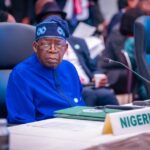
He lauded President Bola Ahmed Tinubu for showing political will by mandating that the NSW must go live by the first quarter of 2026. The President recently summoned key stakeholders—including the Federal Ministry of Finance, Federal Inland Revenue Service (FIRS), and the Nigeria Customs Service—to fast-track implementation.
“President Tinubu’s leadership is commendable,” said Prof. Ife. “But this isn’t just about meeting the Q1 2026 deadline—we must aim to beat that target by December 2025. This delay has already cost Nigeria far too much.”
Beyond efficiency and revenue gains, Prof. Ife emphasized that the NSW is interconnected with Nigeria’s broader economic reforms, including the national tax policy and the African Continental Free Trade Area (AfCFTA). He explained that the platform would enhance transparency, lower trade costs, and create a friendlier business environment for Micro, Small, and Medium Enterprises (MSMEs).
“The recent tax reforms raise the threshold for MSME taxation from N25 million to N50 million, giving smaller businesses room to grow. If you pair that with a functional Single Window system, we’ll see reduced import costs, better price controls, and increased consumer purchasing power,” he said.
However, he warned that resistance to the NSW could intensify, especially from those benefiting from the current manual processes.
“Corruption thrives where there’s opacity. Many stakeholders don’t want this system because it removes physical interference,” Prof. Ife stated. “But this is not the time to slow down. It’s the time for decisive action.”
He also linked the delay in NSW implementation to weakened investor confidence in Nigeria. “Foreign investors often walk away when they learn about the costs and risks of clearing goods in Nigeria, sometimes waiting months due to inefficiencies, while also having to invest in roads, security, and infrastructure just to operate.”
Prof. Ife cited the example of Independent Power Project (IPP) gas equipment, which he said stayed in Nigerian ports for more than five years, deteriorating before being cleared. He also pointed to the alarming number of used vehicles—over 400,000 annually—being smuggled into Nigeria through Cotonou, resulting in billions of naira in lost customs revenue.
“Ghana can export 100 tons of cocoa for $7,000, but in Nigeria, it costs $40,000 to export the same amount. That tells you all you need to know about how unfriendly our trade environment is,” he said.
Wrapping up the session, Prof. Ife reiterated his support for the Tinubu administration’s renewed momentum on NSW implementation and urged the federal government to maintain pressure on stakeholders.
“This is a cornerstone reform,” he emphasized. “If implemented correctly, it will boost government revenue, reduce inflation, enhance transparency, and finally position Nigeria as a serious player in global trade.”
The next Steering Committee meeting on the National Single Window is expected before the end of the year, as preparations intensify to ensure Nigeria’s long-awaited digital trade transformation becomes a reality.
@2025 The Ameh News: All Rights Reserved
Discover more from Ameh News
Subscribe to get the latest posts sent to your email.