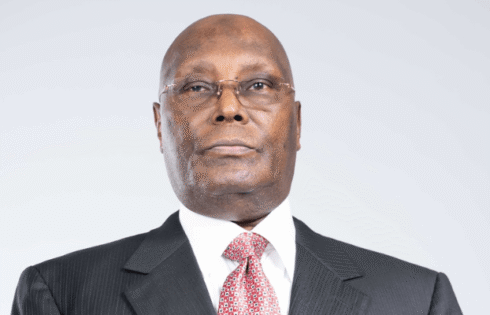
Atiku Abubakar, Nigeria’s former vice president, is preparing for a seventh bid for the presidency—this time under the banner of the African Democratic Congress (ADC). But as 2027 approaches, signs are emerging that his latest political move may be his most difficult yet as some of his allies have refused to join the ADC.
After contesting Nigeria’s top office in 1993, 2007, 2011, 2015, 2019, and 2023— without success—Abubakar, 78, appears determined to make another attempt despite mounting resistance both within his new party and from longtime allies.
Abubakar’s political journey has spanned over three decades amid numerous party switches and alliances with nearly every major political force in Nigeria.
Most recently, he lost the 2023 election as the Peoples Democratic Party (PDP) candidate to President Bola Tinubu of the All Progressives Congress (APC). His defection to the ADC earlier this year surprised many, igniting fresh debate about his political relevance and capacity to unify opposition forces.
But cracks are already showing in the ADC. Party insiders and former allies have voiced discomfort with Abubakar’s presidential ambition. “Many of the original promoters of the party are developing cold feet,” a senior ADC source told BusinessDay, requesting anonymity. “It’s not about Atiku’s credentials—it’s the perception of perpetual ambition without results.”
Even within Abubakar’s traditional base in Adamawa State, the reaction has been lukewarm. Governor Ahmadu Fintiri has distanced himself from the ADC move, while the Adamawa PDP leadership has firmly declined to follow.
“We are not joining him in the ADC,” Ibrahim Tahir, Adamawa PDP chairman, said. “Quote me, he will not make any impact in 2027 if he continues with his journey into ADC.”
Tahir also urged Abubakar to take a step back from frontline politics. “He will be more respected now if he chooses to play the role of an elder statesman rather than a presidential candidate of any political party,” he said. “By 2027, age will no longer be on his side, and he will not be strong enough to withstand the rigours of the presidency.”
The former vice president’s defection has done little to rally support from his network. Boss Mustapha, a long-time ally and former secretary to the Government of the Federation, has denied reports he plans to join the ADC. Nasir El-Rufai, another influential figure loosely associated with the party, is also reportedly uncomfortable with Abubakar’s candidacy.
Analysts say the inability to consolidate his political base could make his 2027 bid significantly weaker than previous runs. Moreover, the ADC’s organisational structure and electoral machinery remain untested at a national scale.
Still, Abubakar retains loyalists who believe his experience and policy credentials make him a viable alternative to Tinubu’s administration.
“You can’t deny him his right to contest,” Eze Chukwuemeka Eze, a Port Harcourt-based politician and former aide to Abubakar,” told BusinessDay. “As a Nigerian, he is free to contest the 2027 presidential election, no matter what people feel about his candidature.”
Eze dismissed claims that Abubakar’s northern origin should bar him from running. “Those canvassing this position are ignorant of the fact that it was Jonathan who disrupted the North’s turn by contesting in 2011,” he said. “So, it is legitimate for a northerner to contest again.”
Discontent with the current administration is one of the key themes emerging in opposition circles. Critics say Tinubu’s government has failed to deliver on key economic and governance promises, with inflation, insecurity, and public dissatisfaction rising.
While Abubakar has not formally declared his candidacy, his inner circle’s messaging suggests he will position himself as the elder statesman willing to ‘rescue’ Nigeria from deepening political fractures.
The ADC, meanwhile, has a steep hill to climb. Despite winning a state assembly seat in a recent Anambra by-election, the party remains politically fragile, lacking the nationwide network or funding like the PDP or APC.
Eze acknowledged this but insisted the party would be ready. “By 2026, we will be positioned to dislodge another political party in our march to Aso Rock,” he said. “With the support of Nigerians that desire good governance, we are ready to go.”
Discover more from Ameh News
Subscribe to get the latest posts sent to your email.