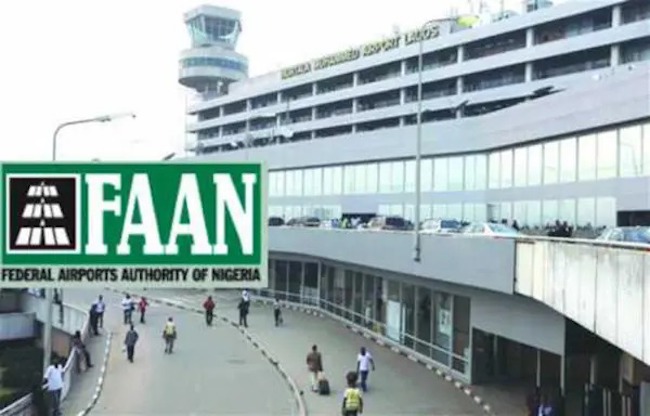
The Federal Airports Authority of Nigeria (FAAN) has taken a major stride in aligning with global best practices by formally inaugurating its ISO Certification Steering Committee. The ceremony, held today in the Managing Director’s Boardroom, was presided over by the Director of Airport Operations on behalf of the Managing Director/Chief Executive. The committee is charged with steering FAAN’s efforts toward securing ISO 9001 (Quality Management Systems) and ISO 14001 (Environmental Management Systems) certifications.
FAAN management noted that the inauguration underscores its unwavering commitment to raising service quality, operational efficiency, and sustainability across Nigerian airports, stating that the initiative marks the beginning of a structured journey toward quality, safety, and environmental stewardship.
Why ISO Matters for Aviation
- ISO 9001 ensures the consistent delivery of services that meet customer and regulatory expectations, fostering a culture of reliability and continuous improvement.
- ISO 14001 focuses on reducing environmental impact, enabling organizations to comply with environmental laws and improve sustainability performance.
Industry voices say these certifications signal accountability, safety, and responsiveness to international aviation standards. As aviation consultant puts it, “ISO certification … is about creating an environment where processes are predictable, safety is uncompromised, and travelers enjoy consistent quality of service.”
Recent Aviation Reforms Strengthening the Context
1. Infrastructure Upgrades and Expansion
FAAN has rolled out expansive infrastructure improvements across the country:
- At Murtala Muhammed International Airport (MMIA), terminal modernization (including the new international terminal) was matched with apron expansion to support larger aircraft.
- Lagos’s E-Wing has been revamped, with ongoing redevelopment of D-Wing, as part of a broader airport transformation strategy.
- The 18R/36L runway at MMIA was rehabilitated and reopened, reducing operational delays and congestion.
- Upgrades extend to secondary airports—Borno Airport was elevated to international status, and Lagos’s Wing E Arrival Hall was modernized through a PPP with enhanced immigration services.
- Plans are underway to reconstruct MMIA’s older terminal to accommodate up to 20 million passengers annually, building on the 14 million capacity of the new terminal.
2. Digital Transformation and Passenger Experience
- Self-service e-Gates have been deployed at MMIA to speed up immigration for Nigerian passport holders.
- FAAN is implementing a fully cashless system across its airports, in partnership with fintech provider Paystack.
3. Safety, Training, and Security
- Over 3,200 airport and aviation agency staff have undergone 1,765 hours of safety training, covering ICAO-compliant courses such as Global Reporting Format, crisis management, and safety oversight.
- FAAN has deployed advanced screening and surveillance equipment, organized safety drills, and established a Safety Management System (SMS) to foster a proactive safety culture.
4. Strategic Partnerships and Policy Reforms
- In August 2024, Nigeria signed a MoU with Boeing for technical support, training, and development of local MRO (Maintenance, Repair & Overhaul) infrastructure—vital for a sustainable aviation ecosystem.
- A collaborative MRO facility is underway, along with training programs with Boeing and Cranfield University, further boosting safety culture and operational excellence.
- Nigeria improved its compliance with the Cape Town Convention from 49.5% to 75.5%, facilitated by the signing of IDERA, making aircraft leasing and repossession smoother for airlines.
- The Ministry is driving Public–Private Partnerships (PPPs) for airport infrastructure, including terminal concessions (Lagos, Abuja, Kano, Port Harcourt), modal PPPs for cargo terminals, maintenance hangars, and even airport hotels. MM2 (Murtala Muhammed Airport Terminal II) is a model success.
5. Connectivity, Governance, and Revenue Reforms
- Regulatory reforms have improved air service agreements, restored flights to Europe (Neos SPA Airlines replacing Alitalia), revised slot allocations with the UAE, and established new regional routes.
- A crackdown on unauthorized charters could recover up to ₦120 billion annually in lost revenue, improving safety and transparency.
- Nigeria is also investing in navigation safety—NAMA was ISO 9001-certified and earned a SERVICOM Award.
- The government cleared $893 million in trapped airline funds, prompting foreign carriers like Emirates to resume operations, thereby supporting fare reduction and connectivity.
- Recertification efforts at Lagos and Abuja airports, and similar processes underway at Kano, reinforce security standards.
Putting It All Together
FAAN’s ISO Steering Committee inauguration is not occurring in isolation—it’s the pinnacle of a broader reform momentum reshaping the Nigerian aviation sector. Investment in infrastructure, digitization, safety, security, strategic partnerships, and regulatory overhaul provide the essential groundwork for meeting the rigorous demands of ISO certification.
ISO 9001 will validate FAAN’s commitment to quality management in service delivery; ISO 14001 will ensure environmental accountability. Achieving these will not only elevate Nigeria’s airports operationally, but also reinforce investor confidence, enhance passenger experience, and reinforce Nigeria’s aspirations as an aviation hub in Africa.
@2025 The Ameh News: All Rights Reserved
Discover more from Ameh News
Subscribe to get the latest posts sent to your email.