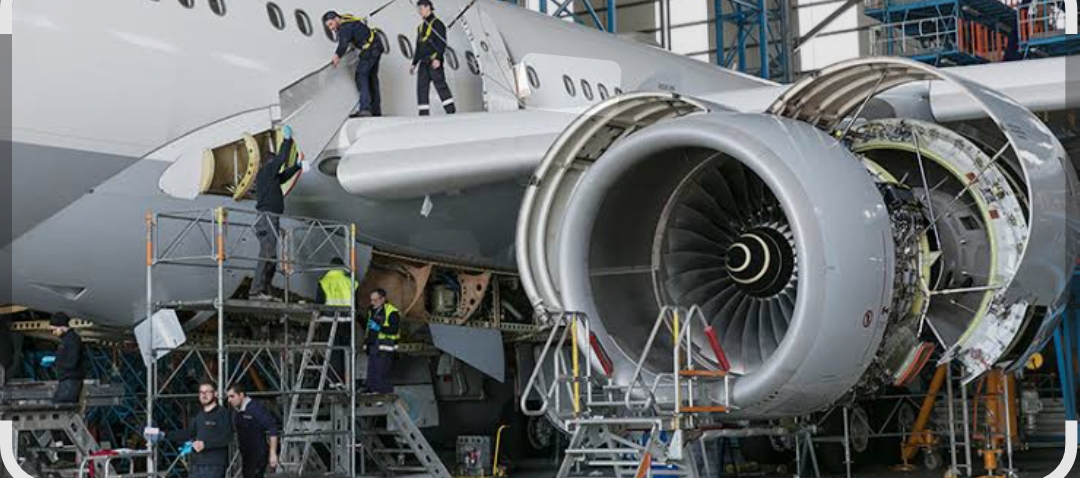
 For years, Nigeria has been celebrated as Africa’s largest aviation market, a country with busy airports, expanding passenger traffic, and a vision of becoming a continental hub. Yet behind this ambition lies a sobering truth: the nation’s aviation sector lacks the indigenous Maintenance, Repair, and Overhaul (MRO) backbone required to sustain its growth, particularly as government campaigns intensify to attract global aircraft leasing businesses. “The Nigerian aviation sector urgently needs a private-sector-led MRO (Maintenance, Repair, and Overhaul) service provider offering a full range of solutions, including aircraft maintenance, engine and component repairs, as well as specialized VIP aircraft services.”
Flashback: From Nigeria Airways to a Skills Vacuum
Decades ago, Nigeria Airways was not just a national carrier but also a breeding ground for aviation engineers. Young apprentices trained under experienced professionals, gaining hands-on expertise that sustained the airline’s operations. But the collapse of Nigeria Airways in the early 2000s created a gaping vacuum. With no national MRO facility to absorb engineering talent, a generation of skills was lost.
Today, Nigeria produces graduates from aviation schools and universities, but the opportunities for them to practice locally are limited. Many migrate abroad in search of experience, while others abandon the profession entirely. The result is a talent drain that leaves the country reliant on foreign engineers and overseas facilities for essential aircraft maintenance.
The Cost of Outsourcing
The absence of a certified, world-class MRO facility in Nigeria comes at a heavy price. Airlines are forced to ferry aircraft to Europe, the Middle East, or even Ethiopia for heavy checks such as C and D maintenance. This not only drains foreign exchange but also drives up operational costs for carriers already struggling with high fuel prices, taxes, and volatile exchange rates.
Aircraft leasing firms, the very businesses Nigeria is seeking to attract, see this as a red flag. Leasing thrives in markets where technical oversight and infrastructure are reliable. Without strong local support, leasing costs rise as lessors price in higher risks for placing aircraft in Nigeria.
Lost Opportunities and Regional Competition
Nigeria has announced several plans for indigenous MRO projects over the years — from Lagos to Akwa Ibom, but most have stalled due to red tape, underfunding, or shifting political priorities. Meanwhile, competitors have surged ahead. Addis Ababa now hosts Africa’s most robust MRO facility, serving airlines across the continent. Johannesburg and Cairo, too, continue to attract business that Nigeria could have claimed.
Industry watchers say the absence of such infrastructure is the single biggest reason Nigeria has not converted its aviation potential into dominance.
Expert Voices: Warnings and Lessons
A well rounded veteran engineer, based in Lagos offered a blunt assessment: “We cannot continue sending aircraft abroad for C and D checks and still expect leasing costs to be competitive. The absence of a certified MRO is not just a cost problem; it is a credibility problem.”
From the leasing perspective, a regional executive of a European lessor who requested anonymity said: “Nigeria is a significant market for us, but the challenge is risk perception. Without strong local engineering support and internationally certified facilities, lessors price in higher risks, which ultimately makes leases more expensive for Nigerian airlines.”
Adding a wider economic view, Bismarck Rewane, a highly respected financial analyst and Managing Director of Financial Derivatives Company Limited explained: “The ecosystem cannot be sustained on leasing alone. You need engineers, you need facilities, you need trust. Ethiopia understood this early, and now Addis Ababa is the default hub for MRO in Africa. Nigeria must invest strategically if it truly wants to lead.”
Reflection: Building Castles on Sand
The government’s campaign to boost aircraft leases may offer short-term relief to airlines. But without parallel investment in indigenous MRO capacity, Nigeria risks building its aviation growth on weak foundations.
The lessons of history are clear. Nations that dominate aviation today, from Ethiopia in Africa to Singapore in Asia, built their credibility not just on aircraft fleets but on strong engineering ecosystems. Nigeria’s reflection point is now: to bridge the skills gap, revive apprenticeship culture, and build internationally certified facilities that will keep its aircraft in the skies and its engineers at home.
Until then, Nigeria’s aviation ambitions will remain aspirational, lofty dreams hampered by a missing backbone. Leasing may attract the planes, but it is engineering talent and MRO infrastructure that will determine whether those planes keep flying safely and competitively.
@2025 The Ameh News: All Rights Reserved
Discover more from Ameh News
Subscribe to get the latest posts sent to your email.