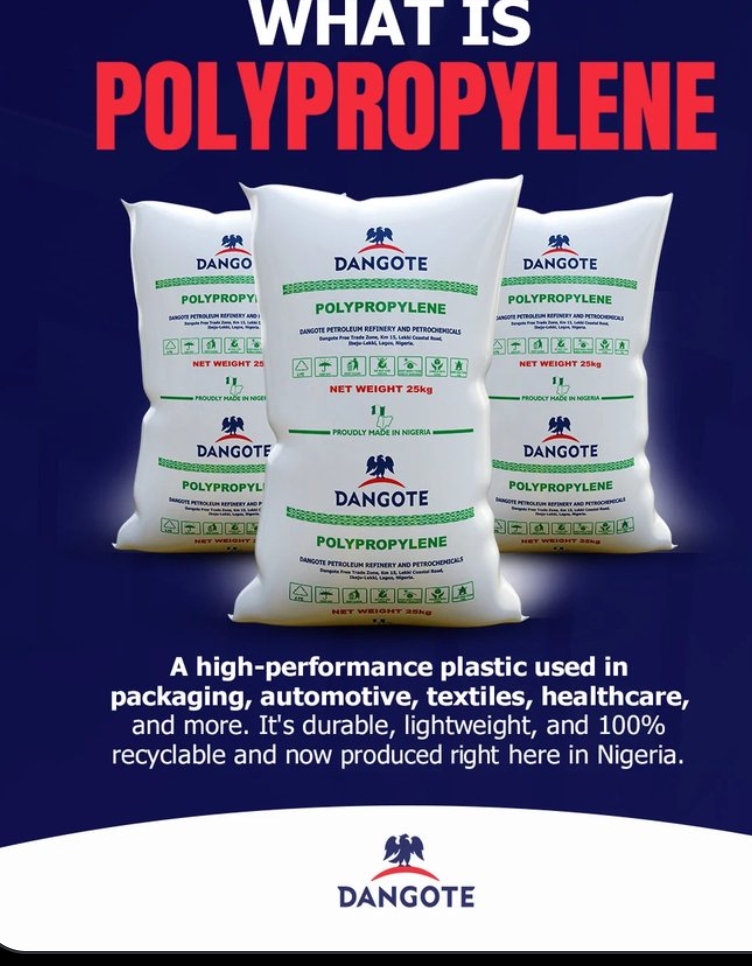
 Polypropylene, the strong, lightweight, and versatile polymer that underpins modern life, is now being produced in Nigeria — a development that signals a new phase in the country’s march toward industrialisation. Long relied upon for packaging, textiles, and even automotive parts, polypropylene is indispensable in today’s global economy. With the Dangote Group’s foray into local production, Nigeria is taking its place in the global petrochemical value chain.
From Import Dependency to Local Production
For decades, Nigeria’s manufacturers depended heavily on imported polypropylene, exposing businesses to volatile exchange rates, high import costs, and unstable supply chains. Industries ranging from food and beverage packaging to construction and automotive struggled to remain competitive. Despite being Africa’s largest oil producer, the nation’s petrochemical potential remained untapped — a paradox that stunted growth in critical sectors.
Dangote’s decision to invest in a world-class polypropylene plant disrupted this cycle. By bringing production home, the Group not only addressed a long-standing industrial gap but also laid the foundation for reducing Nigeria’s dependence on imports, strengthening local industries, and building resilience against external shocks.
A Broader Industrial Narrative
This milestone fits into a larger story — one of Nigeria’s renewed industrial awakening. Industrialisation has long been recognised as the cornerstone of economic growth, enabling countries to diversify beyond resource exports and build value-added industries that drive innovation and employment.
Polypropylene production is not just about plastics; it is about powering entire ecosystems. Packaging industries can now source cheaper and more reliable inputs locally. Textile firms stand to benefit from stronger supply chains. Automotive parts manufacturers have new opportunities to expand operations. Each of these ripple effects contributes to the growth of small and medium-sized enterprises (SMEs), job creation, and overall economic competitiveness.
Catalyst for Economic Growth
The impact of local polypropylene production extends beyond industry. It reduces Nigeria’s foreign exchange outflows by cutting the need for massive imports of petrochemicals. It also positions Nigeria as a potential exporter of polypropylene to other African countries, supporting the objectives of the African Continental Free Trade Area (AfCFTA). By moving from raw crude exports toward refined and value-added products, Nigeria is edging closer to building a diversified and sustainable economy.
A Reflection on Industrial Africa
The Dangote polypropylene project is more than a corporate milestone; it is a symbol of what Africa can achieve when it shifts from being a supplier of raw resources to a creator of industrial value. It reflects a future where the continent is not merely a consumer market but a competitive producer, shaping its own destiny in the global industrial landscape.
As Nigeria continues to pursue its $1 trillion economy vision, projects like this stand as powerful reminders that true growth lies in industrialisation — in building the factories, technologies, and ecosystems that convert natural resources into finished products.
Dangote’s polypropylene production is, therefore, not just about plastics. It is about possibilities — a bold step toward industrial self-reliance, economic resilience, and a new era of made-in-Nigeria innovation.
Discover more from Ameh News
Subscribe to get the latest posts sent to your email.