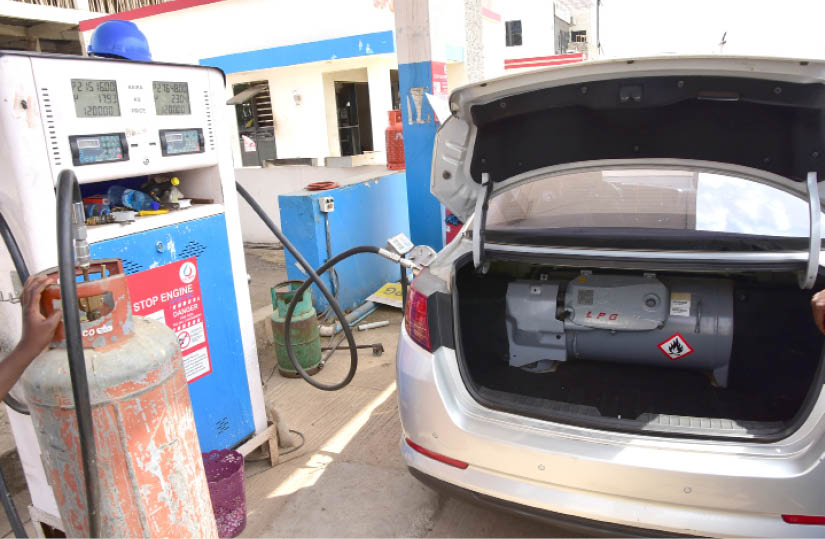
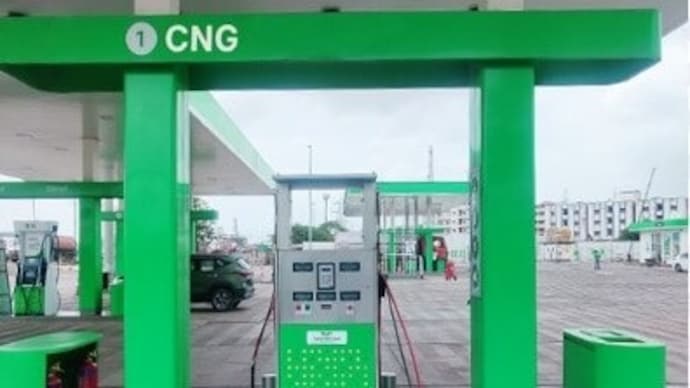
 The Federal Government’s push to make Compressed Natural Gas (CNG) the affordable and cleaner alternative to petrol is under strain after pump prices spiked from ₦230 to ₦380 per Standard Cubic Metre (SCM) at several filling stations nationwide.
According to Daily Trust, major operators like NIPCO CNG and Mobil raised their prices on Monday, sparking frustration among motorists who had embraced CNG as a cost-saving lifeline following the removal of petrol subsidies in 2023. However, at NNPC’s retail station in Abuja’s Central Business District, prices remained unchanged, underscoring persisting market disparities.
Industry sources attribute the sudden hike to the expiration of NIPCO Plc’s supply contract, with the Nigerian National Petroleum Company Limited (NNPCL) stepping in to assume control of distribution.
Motorists Voice Frustration
“This is discouraging,” said ride-hailing driver Hakeem Idris. “We already spend hours in queues or drive long distances just to refill. Now, with this sudden increase, the whole idea of CNG being cheaper is at risk.”
In Edo State, motorists confirmed prices jumped from ₦200 to ₦380, with drivers like Monday Okosu warning that further hikes could make CNG as unaffordable as petrol.
In Lagos, however, some drivers argued CNG remains the cheaper option despite the increase. “It’s better than fuel. The only problem is availability. We queue too long,” said Joshua John, a commercial driver.
Experts Raise Concerns
Energy economists and policy analysts say Nigeria’s CNG rollout is at risk of losing momentum unless pricing and infrastructure issues are urgently addressed.
Dr. Nnaemeka Obi, an energy economist, warned that “the ₦230 price ceiling was artificially low and unsustainable. Without cost-reflective pricing, private investors will stay away, leaving motorists stranded.”
Gas consultant Abdullahi Kabiru cautioned that volatile prices could undermine adoption.
“The government must provide guarantees, either through stabilisation funds or tax incentives, otherwise Nigerians will see CNG as another broken promise,” he said.
Public policy analyst Dr. Aisha Salihu added that rising CNG costs could feed into broader inflationary pressures.
“Transport is a key driver of inflation. If CNG prices fluctuate unpredictably, the entire economy feels the ripple effect,” she explained.

How Nigeria Compares Globally
Experts note that Nigeria’s struggles mirror the early challenges faced in other developing economies, but warn the country risks falling behind if it fails to provide stability.
- India has the world’s largest CNG vehicle fleet, with over 4 million CNG-powered vehicles supported by more than 6,000 filling stations. Despite occasional price hikes, government subsidies and strong private investment have kept adoption steady, making CNG a central pillar of India’s urban transport policy.
- Pakistan was once the global leader in CNG vehicles, with over 3 million cars running on CNG by 2011. However, erratic gas supplies and inconsistent pricing undermined confidence, leading many motorists to switch back to petrol. Analysts warn Nigeria could face a similar scenario if it fails to guarantee stable supply and prices.
- Egypt has aggressively expanded its CNG infrastructure in recent years, with more than 400 refueling stations operational and government-backed incentives for vehicle conversions. By offering low-interest loans for conversion kits and keeping prices relatively stable, Egypt has accelerated adoption while reducing petrol import bills.
Comparatively, Nigeria has fewer than 30 fully operational CNG stations nationwide, despite being Africa’s largest natural gas reserve holder. Analysts argue that without massive infrastructure expansion and pricing reforms, the country’s ambition to replicate India or Egypt’s success may falter.
“Global lessons are clear,” said Dr. Obi. “Sustained government support, transparent pricing, and strong private sector participation are non-negotiable. Nigeria has the resources, but it needs consistent policy execution.”
Policy Push Under Strain
The Tinubu administration, through its NNPCL–NIPCO partnership, had promised 21 intra-city CNG stations and 35 intercity outlets nationwide as part of its post-subsidy fuel reform. But motorists already face price hikes, long queues, and scarce infrastructure, raising doubts about whether the plan can deliver.
For now, Nigerians remain caught between hope and uncertainty—hope that CNG can still deliver cheaper mobility, and uncertainty that the transition won’t collapse under the weight of poor planning, as it did in Pakistan.
Discover more from Ameh News
Subscribe to get the latest posts sent to your email.