 The Nigeria Customs Service Board (NCSB) has announced sweeping leadership appointments, wide-ranging promotions, and significant operational updates as part of its ongoing efforts to strengthen service delivery, enhance transparency, and boost national revenue mobilisation.
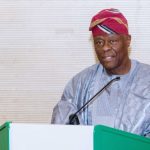
The decisions were reached at the Board’s 63rd regular meeting held on Tuesday, September 2, 2025, under the chairmanship of the Honourable Minister of Finance and Coordinating Minister of the Economy, Mr. Wale Edun.
Leadership Renewal at the Top
To address vacancies left by recent retirements and to strengthen equitable representation across the six geopolitical zones, the Board approved the appointment of four new Deputy Comptroller-Generals (DCGs) and twelve Assistant Comptroller-Generals (ACGs).
The newly appointed DCGs are:
- AB Mohammed (North-West)
- GO Omale (North-Central)
- OC Orbih (South-South)
- D Nnadi (South-East)
The ACG list includes: MP Binga (North-East), CA Awo (South-East), AB Shuaibu (North-Central), AT Abe (North-West), K Mohammed (North-West), B Mohammed (North-West), TM Daniyan (North-Central), B Oramalugo (South-East), OP Olaniyan (South-West), B Olomu (South-West), IK Oladeji (South-West), and CC Dim (South-East).
Customs spokesperson Dr. Abdullahi Maiwada, the National Public Relations Officer, said the appointments complied with the Federal Character principle enshrined in the Nigeria Customs Service Act, 2023, ensuring inclusivity and balance within the Service’s leadership structure.
Mass Promotions Reflect Commitment to Career Growth
In addition to appointments, the Board approved the promotion of 3,312 senior officers, cutting across ranks from Comptroller of Customs (CC) to Assistant Superintendent of Customs II (ASC II).
At its 6th Management Meeting on August 29, 2025, the Service also elevated 202 junior officers, reflecting its commitment to career growth and reward for outstanding performance.
“These promotions are not just routine, they are a morale booster,” said a public sector analyst. “A motivated workforce is essential for sustaining reforms and ensuring frontline officers carry out their duties with integrity.”
Revenue Performance Surpasses Targets
Between January and June 2025, the Nigeria Customs Service collected ₦3.68 trillion, exceeding projections by ₦390 billion and achieving 55.93% of its annual target within just six months.
Economists say this performance provides a crucial buffer for the federal government, especially amid fluctuating oil revenues.
“This revenue surge is very significant for Nigeria’s fiscal outlook,” said Prof. Chinyere Ume, an economist, “It reduces the government’s overdependence on oil earnings and provides additional resources to fund infrastructure, health, and education.”
Another analyst, Ifeanyi Azuka, a trade policy consultant, added that the performance underscores the importance of Customs in non-oil revenue diversification. “If this trajectory continues, Nigeria could see Customs becoming one of the leading contributors to the ₦30 trillion-plus revenue ambitions of the Tinubu administration.”
However, Azuka cautioned that sustaining the trend will require vigilance. “Revenue spikes must not only be celebrated but also institutionalised through stronger compliance frameworks, reduced corruption at borders, and continuous investment in automation.”
Trade Modernisation and Technology Deployment
The Board also reviewed progress on the Trade Modernisation Project, designed to align Nigeria’s trade facilitation with global standards.
Key achievements include:
- Rollout of the Unified Customs Management System (UCMS), codenamed B’Odogwu
- Arrival of six scanners, including the high-capacity FS6000 model for non-intrusive cargo inspection
- Procurement of Electronic Cargo Tracking System (ECTS) equipment
- Installation of a Centralised Image Analysis System (CIAS) at headquarters
- Reinforced cybersecurity infrastructure
- Launch of a multi-channel stakeholder helpdesk
- Expanded capacity-building programmes for Customs personnel
According to Bola Adeyemi, an international trade analyst, these steps could shorten clearance times and improve Nigeria’s standing in the World Bank’s trade facilitation rankings.
“Technology-driven Customs systems are not just about boosting revenue; they are about making Nigerian ports competitive. Investors want predictability and efficiency, and Customs is now aligning with those demands,” Adeyemi said.
Disciplinary Matters: Accountability and Fairness
The Board also considered disciplinary cases, approving the demotion of two officers for misconduct while reinstating two others after case reviews.
“These measures show that while Customs rewards performance, it also holds officers accountable,” said governance advocate Mr. Haruna Gidado. “Fairness and discipline are vital for public trust.”
CG Adeniyi’s Charge to Officers
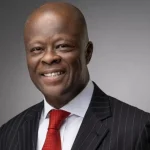
The Comptroller-General of Customs, Bashir Adewale Adeniyi, MFR, congratulated all appointed and promoted officers, urging them to justify the confidence reposed in them.
“Our Service is on a reform journey that demands dedication, innovation, inclusivity, and transparency,” Adeniyi said. “The impressive revenue performance is proof that we are on the right track, but much more work lies ahead.”
He also expressed appreciation to Minister Edun for his guidance in steering the Service toward efficiency and fiscal sustainability.
Looking Ahead: What It Means for Nigeria
The Customs Service’s strong half-year revenue collection and its ambitious modernisation agenda could have far-reaching implications for Nigeria’s economy.
- For government spending: The extra ₦390 billion above projections provides more fiscal space for social and capital projects without resorting to excessive borrowing.
- For trade facilitation: Faster cargo clearance and reduced bottlenecks may attract more international trade through Nigerian ports, challenging rivals in Ghana, Togo, and Benin.
- For fiscal diversification: A stronger Customs performance reduces vulnerability to oil price shocks, a long-standing weakness in Nigeria’s economy.
“The broader implication is that Customs is gradually emerging as the backbone of non-oil revenue,” Prof. Ume observed. “If managed well, this could transform Nigeria’s fiscal sustainability story over the next decade.”
Discover more from Ameh News
Subscribe to get the latest posts sent to your email.