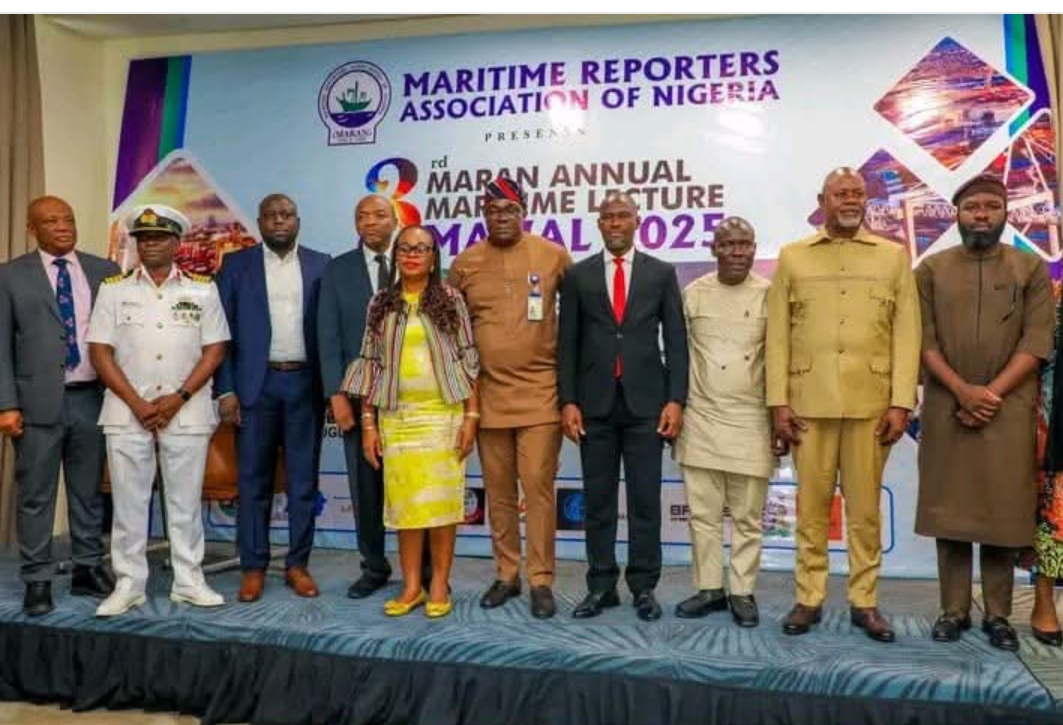
 Nigeria is intensifying its push for the removal of war risk insurance (WRI) surcharges on vessels calling at its ports, with the Minister of Marine and Blue Economy, Adegboyega Oyetola, CON, and the Nigerian Shippers’ Council (NSC) leading a high-level campaign to end what they describe as an “outdated and unjust” levy.
Speaking at the Maritime Reporters’ Association of Nigeria’s (MARAN) 3rd Annual Maritime Lecture in Lagos, Oyetola, represented by his media aide, Dr. Bolaji Akinola, declared that the surcharge no longer reflects Nigeria’s security realities. He pointed to the landmark achievement of four years without piracy incidents under the Deep Blue Project, which has repositioned Nigeria as one of the safest maritime zones in the Gulf of Guinea.
“The surcharge is a relic of the past that continues to drain our economy. With the progress we’ve made, Nigeria deserves to be delisted from high-risk classifications,” Oyetola said.
The Minister also listed milestones under his ministry since 2023, including resolving the perennial Apapa gridlock, launching Africa’s first blue economy policy, port modernization, unlocking the long-delayed Cabotage Vessel Financing Fund (CVFF), and doubling revenues from maritime agencies.
Echoing the Minister’s call, the NSC Executive Secretary, Dr. Akutah Pius—represented by Mrs. Margaret Ogbonna, Director of Regulatory Services—stressed that Nigerian shippers and consumers have shouldered billions of naira in unnecessary costs caused by inflated insurance premiums.
“Despite the security improvements, Nigeria still pays billions in premiums that distort trade costs and erode competitiveness. It is time the international community acknowledges this progress and acts accordingly,” Ogbonna said.
International Perspectives and Parallels
Industry analysts argue that Nigeria’s call is consistent with global precedents.
- Somalia / Indian Ocean Case: Following a prolonged decline in piracy, the International Maritime Bureau (IMB) removed the Indian Ocean from its High Risk Area (HRA) in early 2023. This delisting directly reduced war risk surcharges, providing significant relief for shippers.
- Ukraine / Black Sea Example: Amid the ongoing conflict, Ukraine worked with international insurers, brokers like Marsh, and state banks to establish a risk-sharing fund that moderated soaring premiums, ensuring maritime trade continuity.
- Nigeria’s Current Status: Like Somalia, Nigeria has been recognized globally for eradicating piracy in the Gulf of Guinea. In fact, both the IMB and the International Bargaining Forum (IBF) have delisted Nigerian waters from the world’s piracy-prone areas. Yet, insurers continue to apply war risk premiums, creating what stakeholders see as a mismatch between reality and perception.
A London-based marine risk consultant noted: “Insurance markets must recalibrate when the data clearly shows sustained improvement in maritime safety. Otherwise, premiums become a penalty, not a risk measure.”
Economic Stakes for Nigeria
Experts warn that continuing the surcharge could undermine Nigeria’s competitiveness in global trade. According to shipping economists, eliminating the WRI could save the country more than ₦400 billion annually in inflated freight costs, ease the burden on importers and exporters, and encourage higher vessel traffic into Nigerian ports.
“This is not just about fairness; it is about unlocking Nigeria’s trade potential,” said one analyst. “Lower shipping costs could ripple through the economy, reducing consumer prices and attracting greater foreign investment.”
The Road Ahead
With the Ministry of Marine and Blue Economy, the NSC, and international observers aligned, the next step lies in sustained diplomatic engagement with insurers, shipping alliances, and global regulatory bodies like the International Maritime Organization (IMO).
For Nigeria, the message is clear: its maritime corridor is no longer a war zone, and global insurers must update their books to reflect that reality.
Discover more from Ameh News
Subscribe to get the latest posts sent to your email.