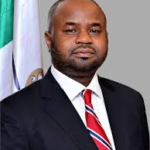
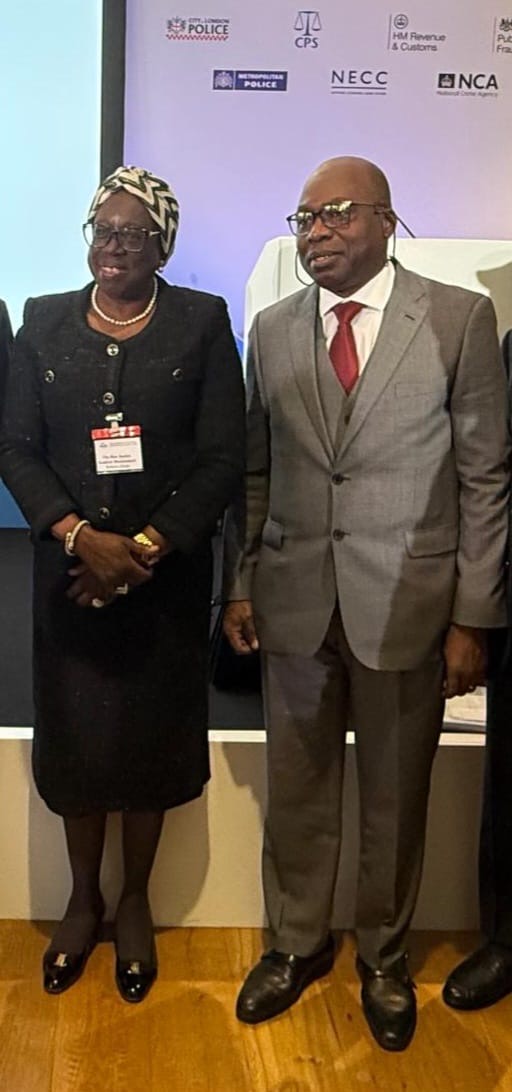
 Chief Justice of Nigeria, Honourable Justice Kudirat Kekere-Ekun (left), with Professor Bolaji Owasanoye, representative of the FIRS Chairman and Coordinating Director of Proceeds of Crime Management and Illicit Financial Flows, at the opening of the 42nd Cambridge International Symposium on Economic Crime (CIDOEC), Jesus College, University of Cambridge, on Monday, 1st September 2025.
Chairman of the Federal Inland Revenue Service (FIRS), Dr. Zacch Adedeji, has urged world leaders to strengthen collective efforts against cross-border economic crimes, warning that tax evasion, profit shifting, and illicit financial flows (IFFs) are eroding fiscal stability and undermining global development.
Adedeji issued the call while delivering a keynote address at the 42nd Cambridge International Symposium on Economic Crimes (CIDOEC), hosted at Jesus College, University of Cambridge, United Kingdom. He was represented by Professor Bolaji Owasanoye, Coordinating Director of Proceeds of Crime Management and Illicit Financial Flows at FIRS and former Chairman of the Independent Corrupt Practices and Other Related Offences Commission (ICPC).
The symposium, one of the world’s most influential forums on tackling economic crime, brought together more than 1,000 participants from over 100 countries—including legislators, regulators, compliance professionals, intelligence personnel, and academics.
Adedeji warned that cross-border tax crimes had become increasingly complex in an interconnected economy where “capital moves faster than law enforcement, and digital arbitrage outpaces regulation.”
“When individuals hide assets offshore or when multinationals engage in abusive transfer pricing and profit shifting, they do not only undermine fiscal aspirations—they distort fair competition, penalise compliant businesses, and erode public trust,” he said.
Nigeria’s Domestic Reforms: Action, Not Aspiration
Against this global backdrop, Adedeji highlighted Nigeria’s sweeping fiscal reforms under President Bola Ahmed Tinubu’s Renewed Hope Agenda, aimed at closing leakages, strengthening revenue mobilisation, and aligning with international standards.
On June 26, 2025, Tinubu signed into law four landmark tax reform bills, introducing over 400 specific amendments to Nigeria’s tax laws. These reforms, Adedeji explained, are not merely aspirational but “actionable measures to modernise our system, enhance transparency, and strengthen enforcement.”
A central element of the reform agenda is the restructuring of FIRS into the Nigeria Revenue Service (NRS) from January 2026, expanding its role beyond tax collection into fiscal crime prevention and intelligence sharing—making it a key pillar of national security and economic development.
To back these reforms, Nigeria is investing heavily in technology. Key innovations include:
- A National Tax Data Warehouse consolidating information from banks, customs, and payment gateways.
- AI-powered anomaly detection to flag suspicious activity in real-time.
- Big data analytics and machine learning to forecast revenue and predict risks.
- Automation and e-invoicing tools to simplify compliance while curbing fraud.
“These tools make compliance easier for honest taxpayers while making evasion increasingly difficult for offenders,” Adedeji said.

Nigeria’s bold reforms drew praise from experts at the symposium, who emphasised their potential impact beyond Nigeria’s borders.
Dr. Maria Fernandez of the OECD’s Centre for Tax Policy and Administration described the reforms as “an important signal to the international community.”
“When a major emerging economy like Nigeria aligns with global tax standards, it strengthens the collective fight against illicit financial flows and shows that reform is possible even in challenging contexts,” she noted.
Professor James Walker, a financial crimes researcher at King’s College London, commended Nigeria’s decision to transform FIRS into a fiscal crime intelligence agency.
“This reflects a growing global trend where tax authorities are evolving into hybrid institutions—not just revenue collectors, but protectors of fiscal sovereignty and national security,” he said.
From an African perspective, Dr. Amina Yusuf, an economist based in South Africa, stressed that Nigeria’s reforms could inspire peer nations across the continent.
“Africa loses an estimated $88 billion annually to illicit financial flows. If Nigeria can demonstrate success with its technology-driven reforms, it could create a blueprint for other African countries to follow,” Yusuf argued.
Call for Stronger International Cooperation
While outlining Nigeria’s domestic progress, Adedeji reiterated that the fight against cross-border crimes cannot be won in isolation. He urged for deeper collaboration through information-sharing between tax authorities, stricter oversight of secrecy jurisdictions, and stronger enforcement of global tax rules.
“Just as criminals exploit global networks, governments must collaborate across borders to protect public resources,” he said. “The ultimate goal is not only to secure revenues but to build fairer economies where citizens know that everyone contributes their fair share.”
Key Takeaways from Nigeria’s Tax Reforms
- 400+ Amendments: Landmark bills modernising Nigeria’s tax laws signed into law on June 26, 2025.
- Nigeria Revenue Service (NRS): FIRS to be rebranded in January 2026 with an expanded intelligence and crime-prevention mandate.
- Tech-Driven System: Introduction of AI, big data, and automation to detect tax evasion and simplify compliance.
- Alignment with Global Standards: Reforms benchmarked against international best practices to enhance transparency and attract investment.
The Global Cost of Illicit Financial Flows
- $1 trillion lost annually worldwide through illicit financial flows, tax evasion, and profit shifting (UN estimate).
- $88 billion annually drained from Africa alone due to IFFs, undermining infrastructure, healthcare, and education spending.
- Developing countries are disproportionately affected, losing more through IFFs than they receive in foreign aid.
- Multinationals often exploit transfer pricing and low-tax jurisdictions to shift profits out of high-tax economies.
Dr. Adedeji’s intervention at Cambridge underscored the delicate balance between domestic reform and international cooperation in fighting cross-border economic crimes. While Nigeria pushes ahead with its ambitious Renewed Hope Agenda, experts agree that the real test lies in sustaining implementation and building stronger global alliances.
For Nigeria, the reforms represent a renewed bid to safeguard fiscal sovereignty and mobilise resources for development. For the world, they signal that the battle against illicit financial flows requires not just local determination but global solidarity.
Discover more from Ameh News
Subscribe to get the latest posts sent to your email.