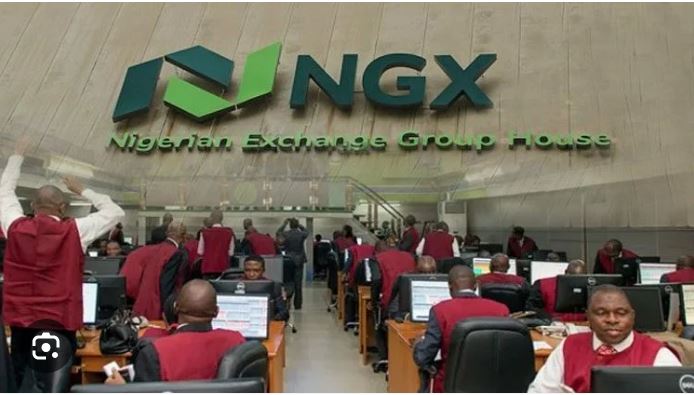
 Between September 8 and 12, 2025, the Nigerian Exchange Limited (NGX) released its Broker Performance Report, spotlighting the firms that shaped the market during the trading week. The numbers told a compelling story: the market remains firmly in the hands of a few major players.
On the volume chart, CSL Stockbrokers Limited emerged as the clear leader, executing 1.37 billion units of shares, representing 21.49% of the total market volume. CardinalStone Securities Limited followed with 571.4 million shares (8.96%), while Kedari Capital Ltd came third with 325.8 million shares (5.11%). In total, the top 10 brokers accounted for 58.86% of total traded volume, underscoring their dominance.
By value, the dynamics shifted. CardinalStone Securities Limited recorded a commanding ₦50.01 billion (25.07%), cementing its leadership in high-value transactions. Capital Assets Limited followed with ₦25.87 billion (12.97%), while Stanbic IBTC Stockbrokers Limited secured third with ₦21.11 billion (10.59%). CSL, despite its volume supremacy, ranked fourth in value with ₦18.33 billion (9.19%). Altogether, the top 10 firms accounted for ₦144.7 billion, representing 72.57% of the week’s total trading value.
Market Reflections
The data illustrates a persistent trend: a market heavily concentrated in the hands of a few brokers. Despite over 200 licensed brokerage firms in Nigeria, only a small circle continues to dominate trading flows, raising concerns about inclusivity and market access for smaller players.
Industry watchers link this dominance to large institutional mandates, block transactions, and the increasing role of foreign portfolio inflows, all of which are typically captured by well-capitalized firms with strong networks.
Expert Reactions
Financial market experts and stockbrokers offered mixed but thought-provoking perspectives on the implications of the NGX report.
A capital market analyst, argued that the concentration reflects efficiency rather than distortion.
“What this data shows is that Nigeria’s capital market is maturing. Institutional investors tend to trust larger brokers because of their track records, infrastructure, and risk management systems. While it looks like concentration, it is also a sign that the big players are doing something right.”
However, some brokers called for greater support for mid-tier and smaller firms.
The Managing Director of a mid-sized brokerage firm, noted:
“It is worrying that 10 brokers are controlling close to 60% of market volume and more than 70% of value. This squeezes smaller players out of the system. Regulators must think about policies that encourage broader participation, otherwise, the industry will consolidate into a few giants.”
From a regulatory standpoint, experts believe the trend should spark conversation about liquidity distribution.
John Eze, investment strategist at a Lagos-based firm, explained:
“If the market is to deepen, we need more diversity in transaction flows. The NGX can look at ways to incentivize smaller brokers, perhaps through lower fees for retail-focused transactions or capacity-building programs. Market depth is not just about turnover; it’s about ensuring no single group dominates access.”
The Bigger Picture
For investors, the report is both a mirror and a compass—reflecting the market’s current dynamics while pointing toward its structural challenges. While CSL’s volume leadership highlights its strength in retail aggregation, CardinalStone’s dominance in value underscores its influence in institutional transactions.
As Nigeria aims to deepen its capital market and attract more global investors, expert warn that balancing concentration with inclusivity will be key. Ensuring that smaller firms thrive alongside giants will not only expand liquidity but also build resilience in a market that aspires to be a hub for Africa’s investment flows.
Discover more from Ameh News
Subscribe to get the latest posts sent to your email.