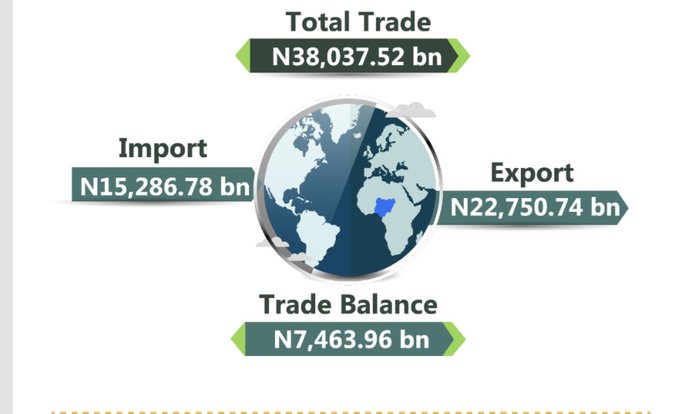
 Nigeria’s trade performance posted a major rebound in the second quarter of 2025, with the National Bureau of Statistics (NBS) reporting a 44.31% surge in the nation’s trade surplus. According to fresh figures, the merchandise trade balance stood at ₦7.46 trillion, significantly higher than the ₦5.17 trillion recorded in the previous quarter.
Presidential media spokesperson Bayo Onanuga (@aonanuga1956) drew public attention to the figures on his verified Twitter/X handle, stressing that the results underscored Nigeria’s strengthening external trade position. He highlighted the report as evidence of “positive economic momentum under President Bola Tinubu’s administration,” urging Nigerians to view the surplus as a signal of progress in stabilizing the economy.
The NBS data showed that Nigeria’s total merchandise trade rose to ₦38.03 trillion in Q2 2025, reflecting a 20.05% increase year-on-year from ₦31.68 trillion in the same quarter of 2024, and a 5.59% rise compared to the first quarter of 2025.
Exports accounted for 59.81% (₦22.75 trillion) of total trade, representing a 28.43% jump year-on-year. Imports stood at ₦15.28 trillion (40.19%), a modest 9.43% increase from Q2 2024, but slightly lower than the ₦15.43 trillion recorded in Q1 2025.
Crude oil exports remained the main driver, valued at ₦11.97 trillion (52.6%), while non-crude oil exports totaled ₦10.78 trillion (47.4%), including ₦3.05 trillion from non-oil products such as agriculture, manufactured goods, and solid minerals.
The Long Road from Deficits to Surpluses
Nigeria’s trade balance has not always looked this healthy. In 2019, the country enjoyed a modest surplus, but by 2020 the oil price crash triggered by the COVID-19 pandemic plunged trade into deficit. Imports of refined petroleum, machinery, and manufactured goods far outweighed exports, underscoring the dangers of overdependence on crude oil.
Even in 2021 and 2022, occasional surpluses were quickly erased by volatility in oil prices and the rising cost of imports. By comparison, the current numbers suggest a stronger footing—driven not only by oil revenues but also by incremental growth in non-oil exports, which policymakers have championed for decades.
Opportunities and Warnings
Onanuga’s emphasis on the surplus fits into the government’s broader narrative of building a $1 trillion economy. Analysts say the figures could improve Nigeria’s foreign reserves, stabilize the naira, and provide much-needed fiscal breathing space.
However, experts also caution that the overreliance on crude oil—still accounting for more than half of total exports—remains risky. A sudden dip in global oil prices or disruptions in domestic production could reverse the gains.
The growth in non-oil exports, though encouraging, is still too small to fundamentally transform Nigeria’s trade structure. Industry stakeholders insist that investments in manufacturing, agro-processing, and value-added exports are critical if Nigeria is to sustain surpluses beyond oil cycles.
For now, the numbers offer a rare bright spot in Nigeria’s economic story—a narrative Onanuga was quick to spotlight as a win for the administration.
Discover more from Ameh News
Subscribe to get the latest posts sent to your email.