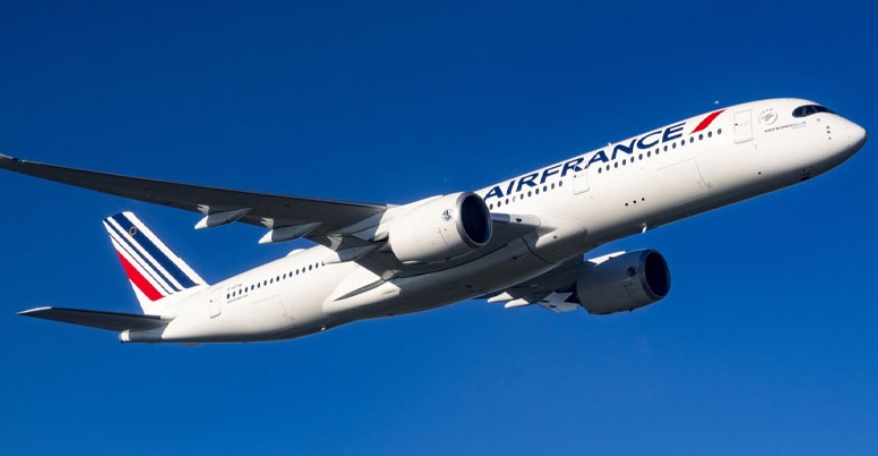
 Air France flight AF954, a Boeing 777-200, en route from Paris Charles de Gaulle Airport (CDG) to Yaoundé Nsimalen International Airport (NSI) in Cameroon, made an emergency landing back at its departure airport on Saturday evening after a mid-air emergency forced the crew to take immediate action.
The flight, scheduled to arrive in Yaoundé at 7:20 PM local time, experienced an unexpected technical or medical situation shortly after passing Bordeaux. The aircraft transmitted a squawk 7700, a universal emergency code signaling a serious onboard problem requiring immediate attention. Upon receiving the alert, air traffic control (ATC) in Paris responded immediately, coordinating with Air France operations and airport emergency services to secure a safe landing.
Passengers and Crew Safe
Passengers onboard were informed promptly by cabin crew, and all safety protocols were executed efficiently. Evacuation procedures were carried out smoothly once the aircraft landed at Charles de Gaulle Airport, and no injuries were reported. Emergency services, including paramedics and fire response teams, were on standby to ensure the situation remained under control.
Air France spokesperson confirmed that while the exact cause of the emergency has not been publicly disclosed, the airline prioritized passenger safety above all else. “Our crews are trained to manage a wide range of emergency scenarios, and the swift landing at CDG reflects the effectiveness of these protocols,” the spokesperson said.
Understanding Squawk 7700
Squawk codes are four-digit transponder signals used by aircraft to communicate specific conditions to air traffic controllers. The codes play a vital role in aviation safety:
- 7700: General emergency
- 7500: Hijacking in progress
- 7600: Communication failure
When a plane signals 7700, ATC responds immediately, offering guidance for diversion and coordinating ground services. In the case of AF954, the code indicated a serious emergency requiring the flight to return to Paris rather than continue to its destination.
Emergency Preparedness in Aviation
Modern airlines invest heavily in ensuring the safety of passengers through comprehensive crew training, aircraft redundancies, and well-coordinated emergency procedures. Pilots and cabin crews regularly undergo simulations for emergencies such as engine malfunctions, medical crises, or cabin depressurization. Aircraft like the Boeing 777 are equipped with multiple safety systems designed to handle unexpected failures and maintain flight integrity.
Ground teams also play a crucial role. In an emergency, airport fire and rescue services, paramedics, and operational staff work in unison with ATC to ensure a smooth landing and immediate post-landing assessment. Clear communication with passengers during emergencies is equally important, as it helps maintain order and reduces panic.
A Reminder of Aviation Safety Excellence
While incidents like the diversion of Flight AF954 are rare, they highlight the critical importance of emergency preparedness in the aviation industry. Airlines like Air France follow strict safety protocols, ensuring that every scenario—no matter how unlikely—is accounted for.
Experts say that such events reinforce public confidence in air travel. “Airline emergencies, though unsettling, are managed through well-defined procedures that prioritize human life. Every squawk 7700 signals the combined efficiency of pilots, cabin crew, air traffic controllers, and ground emergency teams,” said aviation safety consultant Dr. Claire Fontaine.
The incident also serves as a reminder that despite delays and disruptions, passengers’ safety remains the ultimate priority. Air France’s handling of the AF954 emergency demonstrates the aviation sector’s commitment to maintaining high safety standards, even when unexpected events occur mid-flight.
Passengers are expected to be accommodated on alternative flights to Yaoundé, and the airline has pledged full transparency as investigations into the emergency continue.
Discover more from Ameh News
Subscribe to get the latest posts sent to your email.