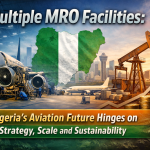
 Nigeria’s aviation sector is entering a new chapter, one that could redefine its place in the global and regional air transport industry. At the heart of this unfolding story is a race to establish world-class Maintenance, Repair, and Overhaul (MRO) facilities that will save billions in foreign exchange, create jobs, and finally position Nigeria as the aviation hub of West and Central Africa.
Three players stand out in this push: Dr. Abdullahi Umar Ganduje, Chairman of the Federal Airports Authority of Nigeria (FAAN); Allen Onyema, Chairman of Air Peace; and Onedot Aviation, a private-sector investor with eyes set on building modern MRO capacity. Their roles, though distinct, converge around one goal—breaking Nigeria’s dependence on overseas aircraft maintenance.
The Missing Link in Nigeria’s Aviation Story
For decades, Nigerian airlines have relied on foreign facilities for major aircraft checks such as C-Checks and D-Checks, often in Europe, the Middle East, or South Africa. These routine maintenance procedures cost local carriers millions of dollars annually, draining scarce foreign reserves and putting operators under financial strain.
Industry leaders have long argued that without domestic MRO infrastructure, Nigerian aviation will remain stunted. As far back as 2023, Air Peace Chairman Allen Onyema repeatedly warned that the absence of robust MRO services was “the biggest threat to the survival of Nigerian airlines.”
That warning now resonates even more strongly as the federal government under President Bola Ahmed Tinubu embeds MRO development into its Renewed Hope agenda for aviation.
Ganduje and FAAN’s Public-Sector Vision
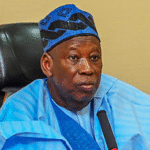
Appointed as FAAN’s Board Chairman in 2024, Dr. Abdullahi Umar Ganduje brings years of political and administrative experience to the job. Under his watch, FAAN has unveiled an ambitious plan to establish state-backed MRO hangars across Nigeria’s six geopolitical zones and the Federal Capital Territory.
The vision is clear: cut down on the billions spent annually on foreign maintenance, boost local technical capacity, and attract airlines from neighbouring countries to use Nigerian facilities.
“President Tinubu is determined to transform aviation into a growth engine,” Ganduje remarked during a recent industry forum. “The MRO project will not only save costs but also establish Nigeria as the heartbeat of West and Central Africa’s aviation industry.”
Onyema and Air Peace: The Airline Perspective
As Nigeria’s largest carrier, Air Peace is both a driver of demand and a voice of urgency in the MRO conversation. Its chairman, Allen Onyema, has been vocal about the need for domestic capacity to sustain airline operations.
Air Peace currently performs line maintenance locally but still ferries aircraft abroad for heavy checks—a practice Onyema has described as unsustainable.
“For Nigerian airlines to compete globally, we need MRO services at home. It will reduce costs, improve turnaround times, and allow us to expand without being crippled by maintenance expenses,” Onyema told aviation correspondents earlier this year.
Onedot Aviation: The Private Sector’s Bet
While government and airlines set the stage, Onedot Aviation is making a bold private-sector play. The company has invested heavily in establishing its own MRO facilities, positioning itself as a flexible and efficient alternative.
Industry insiders suggest that Onedot’s move could disrupt the market by offering airlines quicker access to affordable services, without the bureaucracy that often slows government projects.
“Onedot is the dark horse in this race,” said aviation analyst Ifeanyi Agbo. “If their facilities come online quickly, they could dominate Nigeria’s MRO space before FAAN’s hangars are even ready.”
A Race or a Partnership?
The overlapping initiatives raise an important question—will Nigeria’s MRO future be defined by cooperation or competition?
If FAAN, Air Peace, and Onedot align their efforts, the synergy could create an aviation ecosystem strong enough to rival Ethiopia in the east and Dubai in the Middle East. But if rivalry takes precedence, duplication of efforts and wasted resources could undermine progress.
Aviation experts point to Singapore’s Changi Airport and Dubai International Airport as case studies where collaboration between government, airlines, and private investors created globally competitive hubs. Nigeria, they argue, must take the same path.
The Stakes Are High
The benefits of building robust MRO facilities in Nigeria extend beyond airlines. Thousands of jobs for engineers, technicians, and ancillary service providers could be created, boosting the economy.
Additionally, local MRO capabilities could attract foreign carriers from neighbouring countries—turning Nigeria into a service hub for the sub-region and cementing its status as Africa’s aviation giant.
Still, challenges remain: land acquisition disputes, infrastructure readiness, regulatory frameworks, and the need for inter-ministerial cooperation. Without addressing these, the lofty MRO dream could falter.
A Defining Moment for Nigerian Aviation
The MRO race unfolding in Nigeria is more than a competition between FAAN, Air Peace, and Onedot—it is a test of the country’s ability to align vision, resources, and execution in pursuit of a transformative goal.
If successful, the initiative could go down as one of President Tinubu’s most enduring aviation legacies, with Ganduje, Onyema, and Onedot etched into history as the drivers of Nigeria’s aviation rebirth.
But if it fails, it may become another tale of “much ado” about an opportunity missed.
Discover more from Ameh News
Subscribe to get the latest posts sent to your email.