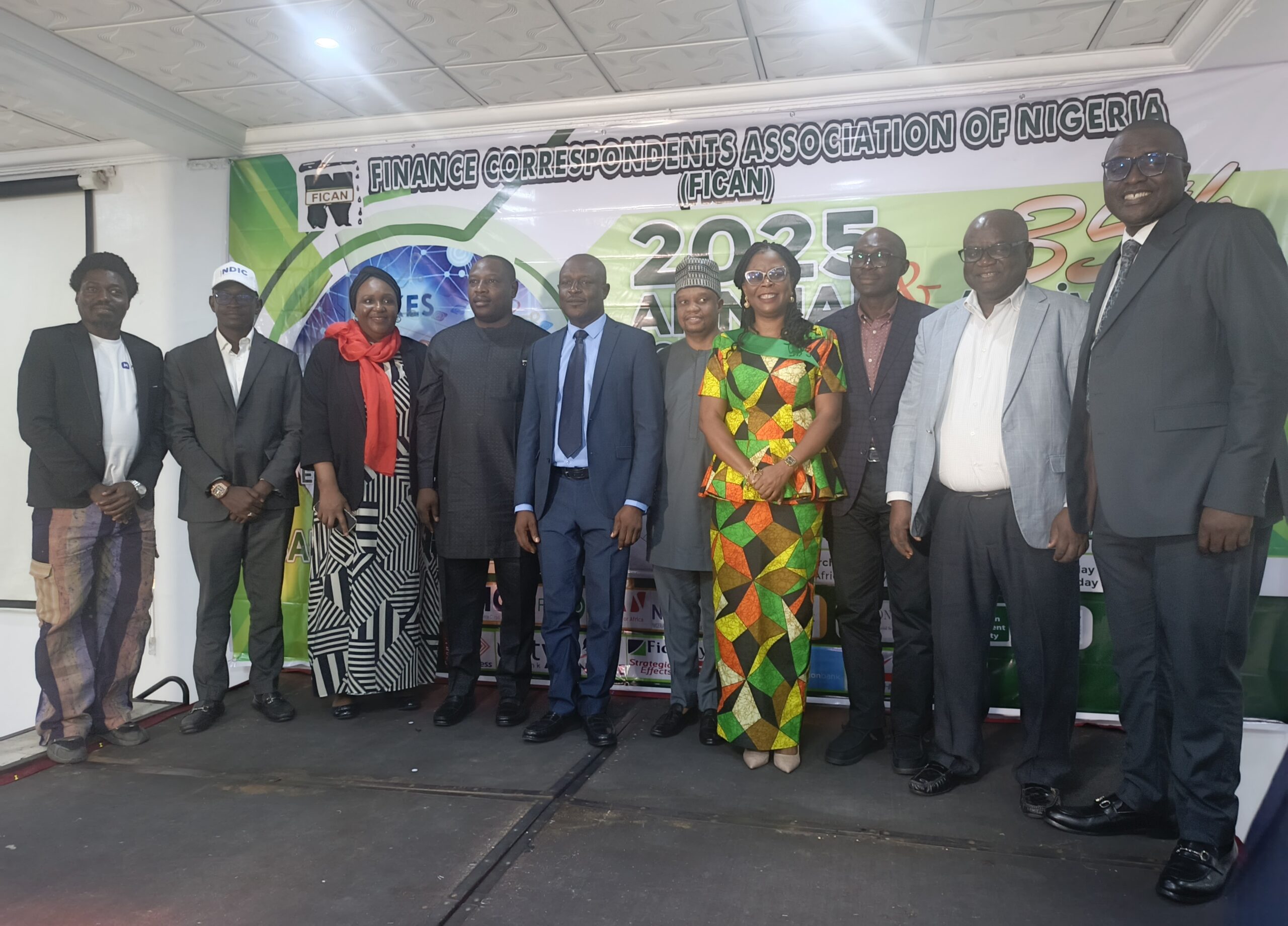
This charge came on Saturday, September 20, 2025, as the association celebrated its 35th anniversary conference at Orchid Hotels, Lekki, Lagos, under the theme: “Bracing for the Digital Economy – Taxation, Banking, and Finance.”
In his welcome address, Mr. Chima Titus Nwokoji, National Chairman of FICAN, reflected on the association’s journey as the voice of financial journalism and its role in shaping critical national conversations around banking, taxation, and digital transformation.
Looking Back to Look Forward
Nwokoji reminded participants that last year’s edition of the annual conference had focused on “Nigeria’s Journey Towards a $1 Trillion Economy: Impacts of Banks’ Recapitalization for Fintechs and the Real Sector.” That discussion, he noted, highlighted how stronger banks and innovative fintechs could accelerate growth and insulate the economy from external shocks.
This year’s focus, however, marked a deeper dive into the realities of digital transformation. According to Nwokoji, the digital economy is no longer a choice but an inevitable reality, demanding reforms in taxation, banking, and financial policy to ensure inclusivity and growth.
FICAN Chairman further observed that the digital economy is no longer a promise but a present reality, reshaping growth and competitiveness. He posed a critical challenge: would Nigeria remain a passive consumer of imported technologies, or rise to claim its place in the global value chain? Using the example of smartphone packaging from Nigeria’s wood resources, he argued for a mindset shift towards local value creation, however modest the first steps may seem.
The statistics, he said, speak volumes. In Q2 2025, ICT contributed 18.3% to Nigeria’s GDP. Digital payment transactions exceeded ₦600 trillion in just six months, while mobile money users hit 73 million, spreading financial inclusion to rural communities once excluded. Complementing these gains, the Central Bank of Nigeria (CBN) unveiled its Payments System Vision 2028, introducing artificial intelligence, blockchain settlements, and AfCFTA-enabled cross-border payment systems — a true blueprint for Nigeria’s digital future.
Taxation, however, emerged as a defining test of this digital age. Nwokoji pointed to the ₦600 billion in VAT collected in 2025 from global digital giants like Meta, Amazon, Netflix, and Google. For him, the milestone underscored Nigeria’s seriousness in plugging leakages while proving that fair taxation of global tech players is achievable without stifling innovation. Yet, he warned of unresolved challenges: smaller firms buckling under heavy burdens, the threat of double taxation, and Africa’s lack of harmonized digital tax rules. He urged Nigeria to remain active in OECD and ATAF engagements to secure a balanced, fair framework.

On banking and fintechs, Nwokoji acknowledged their resilience and rapid digital adoption but flagged persistent trust deficits. In the first half of 2025 alone, the Federal Competition and Consumer Protection Commission (FCCPC) received over 9,000 consumer complaints, most of them linked to banking, fintech, and fast-moving consumer goods. Cybersecurity risks added further strain, with incidents rising 32% in 2025, costing businesses billions. “Innovation cannot thrive without consumer confidence,” he cautioned, urging banks and fintechs to increase investment in cyber-defence and customer protection.
Aligning with CBN’s PSV 2028
The conference’s message resonated with the Central Bank of Nigeria’s Payments System Vision 2028 (PSV 2028), unveiled recently to chart the future of Nigeria’s financial ecosystem. Building on PSV 2020 and PSV 2025, the new roadmap seeks to expand financial access, deepen interoperability, and enhance payment security.
More importantly, PSV 2028 aims to position Nigeria as a globally competitive digital economy, but its success depends on collaboration. The CBN has emphasized that regulators, banks, fintechs, and private sector players must all contribute to this transformation.
Journalism as a Bridge
For FICAN, the anniversary was also a reminder of its role as a bridge between policy and the people. Nwokoji stressed that financial correspondents are not just reporters, but watchdogs and educators, tasked with ensuring Nigerians understand how reforms, like PSV 2028—translate into real economic opportunities.
Reflection and the Road Ahead
The 35th anniversary was both a milestone and a call to action. The digital economy is already shaping global finance, and Nigeria cannot afford to remain reactive. FICAN’s message was clear: policies must be proactive, taxation must be reformed to support rather than stifle innovation, and banking systems must integrate seamlessly with fintechs.
Ultimately, Nigeria’s future prosperity depends on its ability to leverage digital transformation. The 35-year journey of FICAN, coupled with the urgency of PSV 2028, underscores the need for bold leadership and sustained public-private collaboration to position the nation as a true digital powerhouse.
At its 35th anniversary conference in Lagos, the Finance Correspondents Association of Nigeria (FICAN) urged bold steps to secure Nigeria’s digital economy future. With CBN’s PSV 2028 as a roadmap, experts say collaboration in taxation, banking, and fintech is crucial for global competitiveness.
@2025 The Ameh News: All Rights Reserved
Discover more from Ameh News
Subscribe to get the latest posts sent to your email.