The Nigerian Customs Service (NCS) is on the verge of a historic leap in trade facilitation as the Apapa Area Command prepares to deploy state-of-the-art fixed cargo scanners, capable of processing 200 containers per hour.
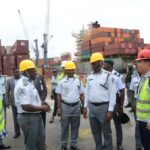
Customs Area Controller (CAC) of Apapa Port, Comptroller Oluwadare Oshoba, made this known after inspecting the installation sites of three newly acquired scanners at the port. He described the project as a “game-changing milestone” in the ongoing customs modernization drive under the leadership of Comptroller-General of Customs, Bashir Adewale Adeniyi.
According to Oshoba, the scanners, strategically located close to the quayside berths, will ensure that “no consignment escapes high-tech, non-intrusive inspection.” This innovation, he said, will not only fast-track cargo clearance but also eliminate concealment, false declarations, and smuggling attempts.
“Apapa Command is ready to surpass expectations. These scanners will reinforce our position as Nigeria’s busiest and most efficient port, saving time, enhancing revenue, boosting national security, and promoting legitimate trade,” Oshoba declared.
The CAC further urged importers, exporters, and agents to embrace transparency and sincere declarations as technology would expose all infractions. He also charged customs officers to prepare for intensive “train-the-trainer” sessions and urged ICT teams to scale up capacity for both tier-one and tier-two maintenance of the scanners — the first of their kind in West and Central Africa.
Expressing gratitude, Oshoba applauded the CGC’s commitment to the modernization agenda and praised the Trade Modernisation Project (TMP) for ensuring that installation, expected to last 45 days, is executed with precision. He confirmed that two scanners are being delivered by TMP, while an additional unit is provided by APM Terminals, with a mobile scanner promised as backup support.
SC Tunde Ayagbalo, Public Relations Officer for Apapa Command, emphasized that “all hands must be on deck to realize this dream,” stressing that the project will strengthen Nigeria’s capacity to detect contraband, prevent port-related crimes, and improve trade competitiveness from the first point of entry.
Adding technical context, Aliyu Suleiman, TMP Team Leader at the site, disclosed that the scanners, manufactured by China’s Nuctech, are the NUCTECH FS6000 series — high-throughput, drive-through X-ray systems designed for fast-paced cargo environments.
“These scanners can inspect trucks and containers in a single pass at speeds of up to 15 km/h, delivering detailed images that reveal concealed contraband and hazardous materials. Their modular design also enables integration with systems like License Plate Recognition (LPR) and Radio Frequency Identification (RFID),” Suleiman explained.
With this breakthrough, stakeholders are optimistic that Apapa Port is set to become a model of efficiency, security, and transparency — positioning Nigeria firmly on the path of seamless international trade.
Discover more from Ameh News
Subscribe to get the latest posts sent to your email.