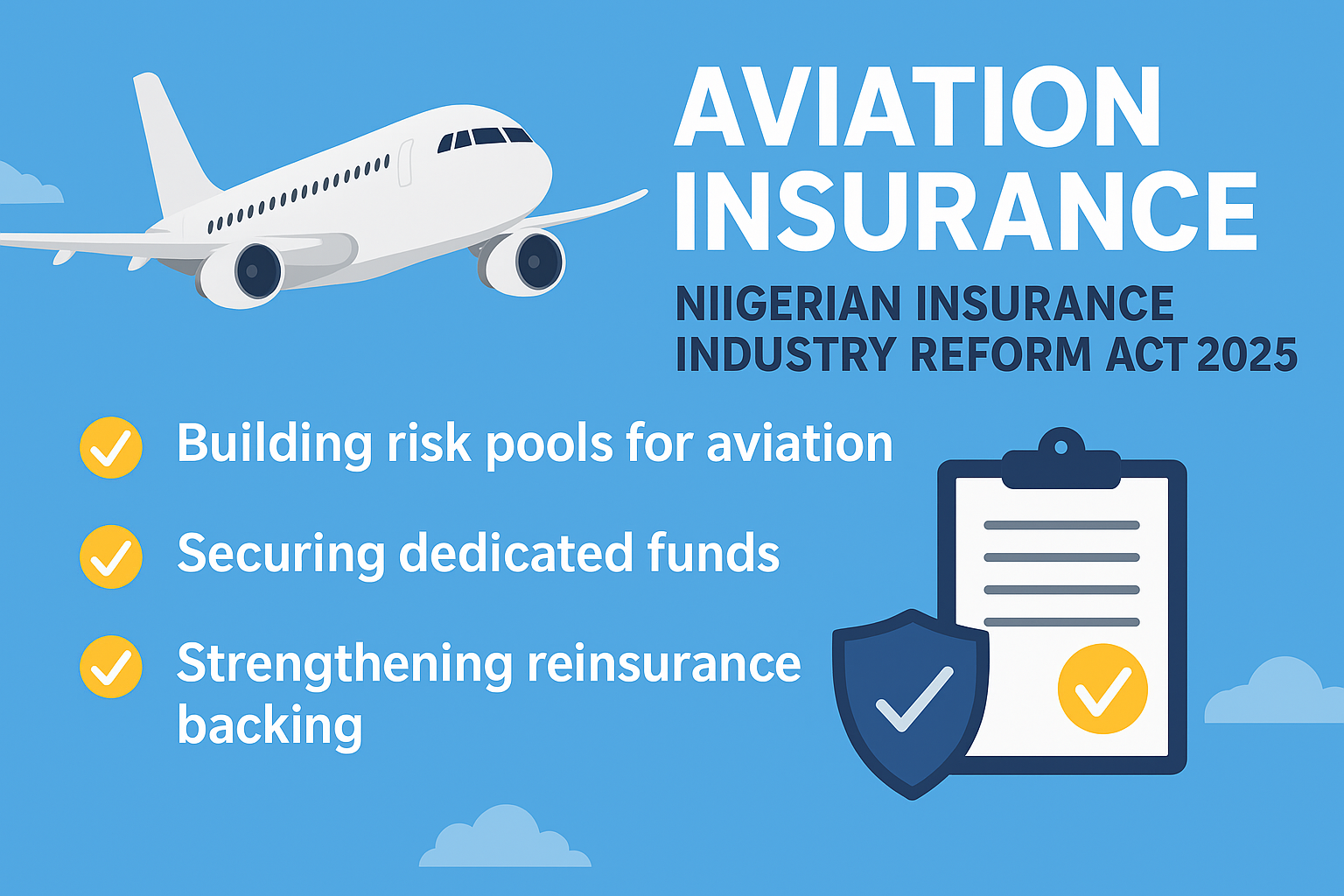
 For decades, Nigeria’s aviation industry has flown under the weight of a persistent challenge, insurance. High-value aviation risks, capital-intensive operations, and international regulatory standards meant that local insurers were often unable to meet coverage demands. Airlines and operators, from national carriers to ground handling companies, were forced to turn abroad, spending millions of dollars annually on foreign reinsurance. The result was not only capital flight but also delayed access to cover, leaving local operators at the mercy of international markets.
The story is changing. With the passage of the Nigerian Insurance Industry Reform Act 2025 (NIIRA), the era of limited local capacity may finally be coming to an end.
Looking Back: The Struggles Before NIIRA
Before NIIRA, Nigeria’s insurers were constrained by undercapitalization and fragmented risk management structures. Aviation policies were too big for any single insurer to shoulder, forcing piecemeal arrangements and heavy dependence on facultative reinsurance. Many times, Nigerian airlines had to pay a premium not just in money but in credibility, as global lessors and financiers often doubted the strength of Nigeria-backed insurance covers.
According to aviation experts,
“For years, Nigerian airlines struggled to secure the kind of insurance coverage that met the standards of international lessors and regulators. NIIRA 2025 is a step in the right direction, as it strengthens the ability of local insurers to provide more credible cover.”
The NIIRA Difference
The Nigerian Insurance Industry Reform Act 2025 introduces sweeping changes designed to strengthen the funding capacity of local insurers. With its provisions for higher capitalization, risk pooling, and sector-specific insurance funds, NIIRA enables insurers to collectively underwrite large aviation policies.
This means Nigerian carriers and aviation service providers now have quicker, more reliable access to cover without being overly dependent on foreign markets.
Insurance insiders note that,
“NIIRA provides the legal backbone we have been waiting for. It ensures that aviation risks, which were once considered too large for local insurers, can now be shared and retained within Nigeria. This is not only beneficial for operators but also for the wider economy.”
Building a Future of Confidence
By empowering insurers to negotiate stronger treaty arrangements with global reinsurers, NIIRA reduces costs for operators and enhances coverage terms. More importantly, it sends a message of confidence to international partners, signaling that Nigeria’s insurance market is now robust enough to meet global aviation standards.
The Act’s push for digital adoption and insurtech innovation also equips insurers with tools to better price risks using flight data, predictive maintenance records, and safety audits. This not only reduces claims volatility but positions Nigeria as a competitive player in global aviation risk management.
As one reinsurance expert put it,
“For the first time, we have legislation that aligns Nigeria with international best practices. This will help Nigerian insurers gain better acceptance and negotiate treaties on stronger terms.”
A Turning Point in History
What once seemed like a perennial weakness for Nigeria’s aviation industry is now being rewritten into a story of resilience and reform. NIIRA 2025 stands as a legislative milestone—a pivot from decades of dependency to an era of local strength.
If effectively implemented, NIIRA will not just transform aviation insurance. It will help Nigeria’s aviation sector retain more value at home, cut down capital flight, and provide airlines with the financial confidence they need to soar higher on the global stage.
Nigeria’s aviation industry once struggled with limited insurance capacity and costly foreign reinsurance. With the Nigerian Insurance Industry Reform Act 2025 (NIIRA), industry experts say a new dawn is here—bringing stronger funding, reduced capital flight, and renewed global confidence.
Discover more from Ameh News
Subscribe to get the latest posts sent to your email.