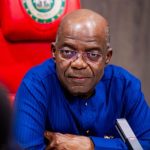
 The Nigeria Civil Aviation Authority (NCAA) has firmly dismissed the recent allegations made by Senator Orji Uzor Kalu on the floor of the National Assembly regarding alleged lapses in pilot training, substance abuse among flight crew, and perceived weaknesses in the Authority’s regulatory oversight.
According to excerpts shared via the Nigeria Civil Aviation Authority’s (NCAA) official social media handles on Wednesday, the regulatory body has firmly refuted allegations made by Senator Orji Uzor Kalu regarding supposed lapses in pilot training, substance abuse among flight crew, and weaknesses in regulatory oversight.
In a strongly worded statement issued on Wednesday, the NCAA expressed “deep concern” over the Senator’s remarks, describing them as misleading, unsubstantiated, and potentially damaging to the reputation of Nigeria’s globally recognized aviation system.
The Authority clarified that its certification and medical evaluation systems remain globally compliant and strictly enforced, emphasizing that “no pilot operates in Nigeria without a valid licence and up-to-date medical clearance.”
“While the Authority holds the Distinguished Senator and the National Assembly in the highest esteem, it is necessary to provide factual clarifications in the public interest,” the NCAA stated.
According to the regulatory agency, Nigeria operates one of the most stringent aviation safety oversight systems on the African continent, aligning fully with the International Civil Aviation Organization (ICAO) Standards and Recommended Practices (SARPs). The Authority emphasized that it has zero tolerance for misconduct or medical negligence among licensed personnel and continues to enforce global standards in pilot certification and flight operations.
NCAA’s Stringent Medical Certification Process
Clarifying its process, the NCAA reaffirmed that no pilot operating in Nigeria’s airspace is allowed to fly without possessing a valid pilot licence and an up-to-date medical certificate, as mandated under the Nigeria Civil Aviation Regulations (Nig. CARs) Part 8.4.1.4.
For Commercial Pilot Licence (CPL) and Airline Transport Pilot Licence (ATPL) holders, the regulations—Nig. CARs 2.3.5.1 and 2.3.7.1—specifically require a Class 1 Medical Certificate before they can be authorized to operate.
These medical certificates are not issued lightly. Every licensed pilot undergoes comprehensive aero-medical evaluations conducted by NCAA-certified Authorized Aviation Medical Examiners (AAMEs). The resulting reports are then subjected to a second layer of scrutiny and approval by NCAA’s in-house Aero-Medical Assessors before final certification.
Thorough and Continuous Health Screening
The NCAA further explained that its medical examinations cover a wide range of physical and psychological areas, including cardiovascular, neurological, metabolic, respiratory, and visual assessments. These evaluations are designed to ensure that every pilot in command of a Nigerian-registered aircraft meets the highest standards of mental and physical fitness.
Beyond initial certification, the Authority conducts routine and random drug and alcohol testing for all flight crew in accordance with ICAO’s Annex 1 and NCAA’s Drug and Alcohol Testing Regulations. Infractions attract swift and severe penalties, ranging from suspension to revocation of licences.
“The safety and integrity of Nigeria’s aviation system remain non-negotiable. We maintain zero tolerance for substance abuse or any infraction that compromises flight safety,” the Authority reiterated.
Commitment to Transparency and Global Best Practice
The NCAA noted that its operations have been consistently audited and certified by ICAO, leading to Nigeria’s retention of the Category 1 FAA Safety Status, a recognition that attests to the robustness of its safety oversight system.
The Authority also pointed out that its continuous improvement culture is driven by collaboration with international partners such as ICAO, the Federal Aviation Administration (FAA), and the International Air Transport Association (IATA).
While reaffirming its respect for the legislature, the NCAA urged public officials to verify information through the appropriate channels before making public statements that could erode public confidence in the aviation sector — a sector that has recorded remarkable progress in safety performance, training standards, and operational compliance over the past decade.
“Nigeria’s aviation sector remains a benchmark in Africa, with a strong safety culture, continuous training, and modern oversight technology. Our commitment to protecting passengers and maintaining professional excellence is unwavering,” the statement concluded.
The NCAA’s latest clarification not only reinforces its credibility as Nigeria’s foremost aviation regulator but also serves as a reminder of the high standards underpinning the nation’s air transport system.
Nigeria Civil Aviation Authority (NCAA) dismisses Senator Orji Uzor Kalu’s allegations on pilot substance abuse and oversight lapses, reaffirming strict medical screening, international safety compliance, and zero tolerance for misconduct in Nigeria’s aviation industry.
Discover more from Ameh News
Subscribe to get the latest posts sent to your email.