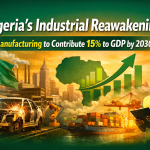
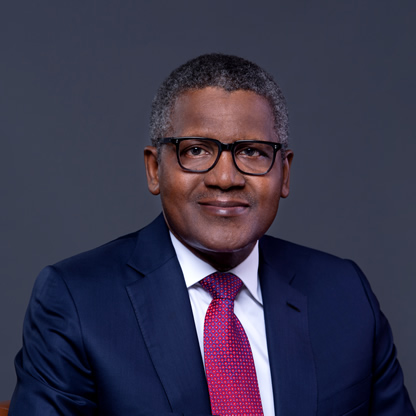
 Africa’s richest man and President of the Dangote Group, Aliko Dangote, has called for the urgent implementation of a “Nigeria First” industrial policy designed to prioritize local manufacturing, job creation, and economic self-reliance. He stated that every naira invested in local manufacturing circulates over 200 percent within the domestic economy — a multiplier effect that can transform Nigeria’s economic base if effectively harnessed.
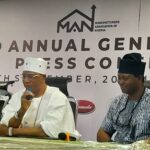
Dangote made this call during the 5th Adeola Odutola Lecture, organized by the Manufacturers Association of Nigeria (MAN) as part of its 53rd Annual General Meeting (AGM) in Lagos, where he presented a compelling case for a sustainable national industrial framework rooted in policy consistency and patriotic production.
Global Models: U.S., China, and India Show the Way
Dangote cited the United States, China, and India as shining examples of how deliberate industrial policies can transform economies into manufacturing powerhouses.
He referenced three landmark initiatives that have reshaped their economic fortunes:
- The Buy American Act (U.S.) — mandates domestic sourcing for federal projects and is monitored by the Made in America Office.
- Made in China 2025 (China) — enforces at least 70% local content in strategic sectors through coordinated industrial planning.
- Atmanirbhar Bharat (India) — promotes self-reliance with over $24 billion in incentives to domestic producers and innovators.
According to Dangote, these measures demonstrate the importance of policy discipline, institutional coordination, and industrial patriotism, which together account for nearly 49% of global manufacturing output, based on United Nations data.
“If these nations can design and enforce systems that prioritize domestic production, there’s no reason Nigeria cannot adapt similar models for our own industrial success,” he said.
Nigeria First: The Economic Multiplier
Dangote emphasized that adopting a ‘Nigeria First’ industrial approach will empower domestic producers, deepen value chains, and strengthen the local currency.
“Each naira spent on local manufacturing circulates up to two times within the economy, far exceeding the impact of imports,” he explained.
“The ‘Nigeria First’ policy calls for a deliberate shift toward national industrial development, ensuring that Nigerian products, talent, and industries take priority in procurement and trade decisions.”
He added that such a strategy would boost GDP, reduce import dependence, generate sustainable jobs, and stabilize the macroeconomic environment.
Lessons from the Textile Collapse
Reflecting on Nigeria’s industrial decline, Dangote described the collapse of the once-thriving textile industry as a warning sign.
“Once a vibrant sector employing over 500,000 people across 180 mills, the textile industry was crippled by unchecked importation, policy inconsistency, and lack of affordable financing,” he lamented.
“As cheap imports flooded the market, local factories shut down and jobs were lost.”
He urged policymakers to see the sector’s downfall as a lesson on the dangers of neglecting domestic manufacturing.
Charting the Path Forward
Dangote proposed a multi-pronged recovery strategy to restore Nigeria’s industrial competitiveness and safeguard its economic sovereignty:
- Invest in infrastructure and energy to lower production costs.
- Improve access to finance and credit facilities for manufacturers.
- Enforce local content laws and compliance mechanisms across all sectors.
- Support technology adoption and skills development to enhance productivity.
- Ensure policy stability to attract long-term investments.
“Revitalizing our manufacturing sector requires strategic investment, not just protectionism,” he said.
“We must modernize, innovate, and empower Nigerian producers to compete globally.”

Expert Perspective — Celestine Ukpong Backs ‘Nigeria First’ Policy
Adding his voice to the debate, Celestine Ukpong, a Lagos-based economist and investment strategist, supported Dangote’s call, describing the ‘Nigeria First’ approach as “a necessary paradigm shift to rescue Nigeria’s productive economy from decades of dependency.”
Ukpong argued that Nigeria’s economic structure has long favored consumption over production and that reversing this trend is crucial to achieving lasting growth.
“For too long, Nigeria’s economy has rewarded importation and speculation rather than production,” Ukpong observed.
“By refocusing on local manufacturing, infrastructure, and industrial technology, we can stabilize the naira and drive inclusive growth.”
He outlined key “going forward” actions for the government and private sector:
- Institutionalize local content performance benchmarks across industries.
- Reform fiscal incentives to reward investment in domestic value chains.
- Develop industrial clusters and innovation hubs to enhance regional manufacturing.
- Expand access to transparent, long-term financing to attract committed investors.
Ukpong concluded that the success of ‘Nigeria First’ depends on political will, disciplined execution, and measurable impact, urging leaders to move beyond slogans into actionable policy.
“Nigeria has the human capital, the market, and the resources,” he said.
“What remains is the courage to prioritize Nigerian productivity over imported convenience.”
Turning Policy into Productivity
Dangote’s and Ukpong’s shared message underscores a vital truth — industrial growth is engineered, not accidental.
At a time when Nigeria spends over ₦3.5 trillion annually on raw material imports, both experts insist that a strong local manufacturing base is the only path toward economic sovereignty and sustainable job creation.
Their combined voices have reignited national conversation around the balance between global competitiveness and domestic industrial protection, echoing a common refrain:
“No nation grows by importing what it can produce.”
At the Adeola Odutola Lecture, Aliko Dangote and economist Celestine Ukpong called for full implementation of Nigeria’s ‘Nigeria First’ policy, citing the U.S., China, and India as models for industrial success and urging strategic investments to revive local manufacturing.
Discover more from Ameh News
Subscribe to get the latest posts sent to your email.