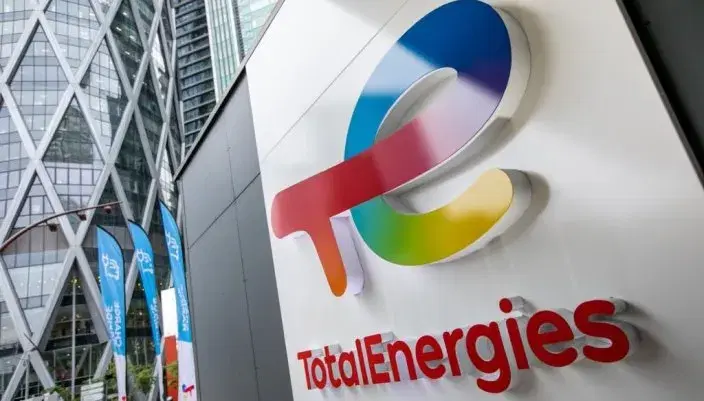
 In what analysts describe as a defining moment for Nigeria’s downstream oil and gas sector, TotalEnergies Marketing Nigeria Plc (TOTAL) has reported one of its steepest quarterly losses in recent years — a ₦11.25 billion loss after tax for the third quarter (Q3) of 2025, compared to a profit of ₦6.85 billion recorded during the same period last year.
The company’s unaudited Q3-2025 financial results released on Thursday reveal a loss per share of ₦33.13, a reversal from ₦20.19 earnings per share (EPS) in Q3-2024. Cumulatively, for the first nine months of 2025, TOTAL posted a loss per share of ₦41.54, a sharp contrast to ₦80.77 EPS achieved in the same period of 2024.
Revenue Collapse Amid Growing Market Pressure
The report shows that TOTAL’s Q3 revenue fell by 38% year-on-year (y/y), reflecting a sharp downturn across its key business segments — Network (-38%), General Trade (-38%), and Aviation (-38%). For the nine-month period, revenue also dipped by 26% y/y, underscoring the growing strain on the company’s core operations.
According to industry analysts, this slump is primarily linked to shrinking sales volumes resulting from intensifying market competition, particularly from the newly active Dangote Refinery and its trading partners.
The entry of the Dangote Refinery into full-scale domestic fuel distribution has been a game-changer, offering cheaper refined products that are now dominating the market. Analysts note that Dangote’s localized supply chain has significantly reduced import dependence, eroding the market share of established multinationals like TOTAL.
Despite an increase in pump prices for key products — Premium Motor Spirit (PMS) up 33%, Automotive Gas Oil (AGO) up 29.7%, and Dual Purpose Kerosene (DPK) up 24.1% — the volume decline outweighed price gains, resulting in a net revenue contraction of 19.1% quarter-on-quarter (q/q).
Margins Under Pressure Despite Cost Cuts
Although TotalEnergies’ cost of sales fell by 37.6% y/y, the relief was short-lived. The company’s gross margin contracted by 53 basis points (bps) to 10.6% in Q3-25, compared to 11.1% in the same period of 2024.
This was largely due to declining expenditures on lubricants, greases, refined products (-37.0% y/y), and transportation (-74.4% y/y). However, the reduction in costs failed to keep pace with the steep fall in revenue, leaving profitability deeply strained.
At the same time, operating expenses rose by 14% y/y, reflecting rising inflationary pressures, higher logistics costs, and increased energy prices — all of which further weighed down profitability.
Consequently, the company’s EBITDA and EBIT margins turned negative, sliding by 880bps and 962bps to -1.2% and -2.8%, respectively. For the nine-month period, EBITDA and EBIT also dropped to 2.1% and 1.0%, showing consistent margin erosion throughout the year.
Finance Costs Decline but Losses Deepen
On the finance side, there was a brief respite as net finance costs decreased by 15.7% y/y to ₦5.57 billion, driven by reduced finance expenses (-20.1% y/y), a 77.4% cut in interest on lease liabilities, and the elimination of import loan interest, which previously stood at ₦2.82 billion in Q3-24.
However, for the nine-month period, net finance costs climbed by 59.2% to ₦17.57 billion, showing that the company’s overall financial burden remains heavy despite short-term cost management efforts.
At the bottom line, TotalEnergies recorded a pre-tax loss of ₦10.23 billion (compared to a ₦11.28 billion profit in Q3-24), while post-tax losses surged to ₦11.25 billion, reversing the ₦6.85 billion profit recorded a year earlier.
Analysts: TotalEnergies Faces Structural Threats
Energy market observers say the latest results are a reflection of deep-seated structural shifts in Nigeria’s downstream petroleum sector.
“TotalEnergies’ weak performance is not just a blip — it’s a sign of a market in transformation,” said Celestine Ukpong, a Lagos-based economist and energy analyst. “With Dangote Refinery now setting new price benchmarks and localizing supply, foreign oil marketers are losing their import-led advantage. Unless they re-strategize around domestic refining partnerships and cost efficiency, recovery will remain out of reach.”
Experts also note that the competitive pricing pressure from Dangote Refinery, coupled with Nigeria’s volatile foreign exchange regime and persistently high inflation, will continue to weigh heavily on the performance of multinational downstream operators.
Outlook: A Challenging Road Ahead
Looking ahead, analysts warn that TotalEnergies’ performance is unlikely to improve significantly in the short term. The company faces a double-edged challenge — fierce domestic competition and rising operational costs amid subdued fuel demand growth.
The firm’s leadership has yet to announce new strategies to regain its lost ground, but industry watchers suggest that increased localization, digital supply chain optimization, and stronger partnerships with domestic refiners could help cushion the impact going forward.
For now, TotalEnergies Nigeria’s Q3-25 results serve as a sobering indicator of the new market reality — one where refining capacity, price flexibility, and local logistics efficiency now determine survival in Africa’s largest oil market.
TotalEnergies Marketing Nigeria Plc reports ₦11.25bn Q3 loss as revenue plunges 38% amid fierce competition from Dangote Refinery, rising costs, and shrinking market share, signaling a structural shift in Nigeria’s downstream oil market.
Discover more from Ameh News
Subscribe to get the latest posts sent to your email.