 The Federal Government has unveiled an ambitious plan to revolutionize operations at Nigeria’s seaports through the full implementation of the National Single Window (NSW) system by 2026, a policy designed to harmonize documentation, minimize human interference, and boost transparency across all trade processes.
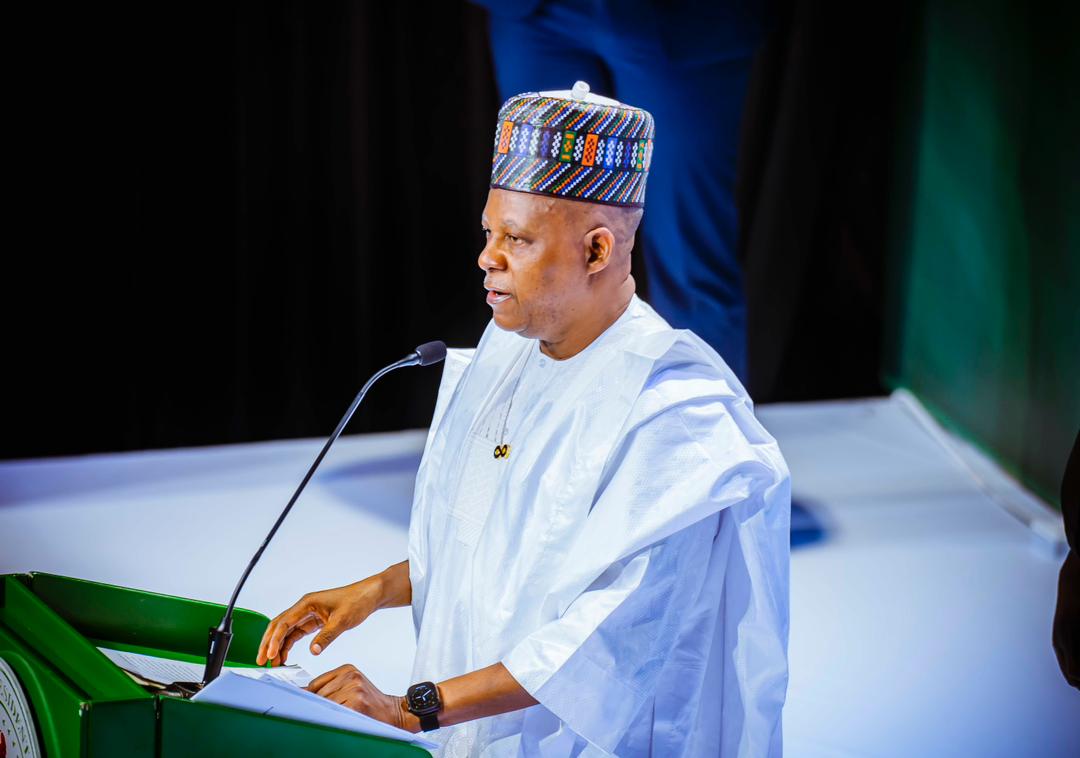
Vice President Kashim Shettima made this announcement on Thursday during the second meeting of the Ports and Customs Efficiency Committee held at the Presidential Villa, Abuja. He emphasized that the initiative represents a critical step in the government’s broader agenda to enhance trade efficiency, competitiveness, and economic growth.
According to the report, Shettima said, the reform aims to reduce the average cargo clearance time from 21 days to less than seven days by the end of 2026, a move that would place Nigeria’s ports among the top three most efficient trade gateways in Africa.
“By the end of 2026, we aim to reduce average cargo clearance time in Nigeria to under seven days and position our ports among the top three most efficient trade gateways on the continent. The forthcoming National Single Window implementation will be a game changer,” the Vice President stated.
Ports Reform: Ending Delays and Boosting Transparency
The National Single Window, set for rollout in the first quarter of 2026, will serve as a digital one-stop platform that connects all government agencies and private operators involved in import and export clearance. The system will harmonize procedures, reduce bottlenecks, and eliminate overlapping regulatory functions that have historically slowed down Nigeria’s trade processes.
Shettima decried the inefficiency at Nigerian ports, noting that the current cargo dwell time averages between 18 and 21 days, compared to five to seven days in Ghana and four days in Cotonou, Benin Republic.
“The cost of clearing goods in Nigeria is 30 percent higher than in many of our regional peers,” he lamented.
“These inefficiencies are not just statistics; they represent an economic ailment that drains investments, increases consumer prices, and undermines export competitiveness.”
He said the Federal Government will rely on synergy among agencies such as the Nigerian Ports Authority (NPA), Nigeria Customs Service (NCS), NAFDAC, SON, and Nigeria Immigration Service (NIS) to achieve the reform goals.
“The era of siloed operations must end. Every agency must see itself as part of an integrated value chain. We are only as efficient as our collaboration allows,” Shettima added.
Executive Order and Roadmap for Reform
The Vice President revealed that an Executive Order on Joint Physical Inspection, currently before President Bola Ahmed Tinubu, will further enhance collaboration among port agencies and reduce bureaucratic bottlenecks. The order is expected to create a unified process for cargo inspection and clearance, cutting down delays that currently frustrate port users.
Shettima also directed the NPA, NCS, and other relevant regulatory bodies to design a comprehensive roadmap for improving Nigeria’s weights and measures framework to meet international best practices.
He reaffirmed the administration’s commitment to creating predictability, transparency, and speed in port operations to attract both domestic and foreign investors.
Stakeholders Call for Collaboration and Technology Adoption
Speaking at the meeting, Zahrah Audu, Director-General of the Presidential Enabling Business Environment Council (PEBEC), highlighted the direct impact of port inefficiency on Nigeria’s Ease of Doing Business Index. She called for a renewed sense of urgency and collective action among agencies to address systemic inefficiencies.
“Every delay at the ports translates into increased logistics costs and lost opportunities. This reform is not just a technical upgrade — it’s an economic imperative,” Audu said.
The Managing Director of the Nigerian Ports Authority (NPA), Dr. Abubakar Dantsoho, echoed similar sentiments, stressing that collaboration, digitalization, and infrastructure improvement remain critical to port modernization.
He revealed that the Customs and Ports Efficiency Committee, established by the NPA, has already recorded progress through joint inspection and digital cargo tracking initiatives, which are gradually reducing clearance time and improving coordination among agencies.
“Until there is collaboration and partnership, we cannot achieve efficiency. Technology, training, and infrastructure must work together to make Nigerian ports competitive,” Dantsoho affirmed.
Decades of Port Inefficiency
Nigeria’s port system has long suffered from delays, duplication of duties, and poor inter-agency coordination. Despite the 2006 port concession reforms, cargo clearance remains painfully slow, forcing importers and exporters to divert business to neighboring countries.
Experts estimate that Nigeria loses billions of naira annually due to inefficiencies that inflate operational costs and weaken its position in the global logistics chain.
However, stakeholders believe that if properly executed, the National Single Window will mark the most significant reform since port concessioning, potentially restoring investor confidence and enhancing Nigeria’s role as a West African maritime hub.
2026 as a Turning Point
Analysts see the year 2026 as a defining moment for Nigeria’s maritime industry. The success of the National Single Window will depend on sustained government commitment, agency discipline, and technological readiness.
If achieved, the reform could transform Nigeria’s ports into transparent, competitive, and investor-friendly trade corridors, contributing significantly to President Tinubu’s broader economic diversification and growth agenda.
Nigeria’s Federal Government has set 2026 as the target year for full implementation of the National Single Window system to cut cargo clearance time to under seven days and position Nigerian ports among Africa’s top three trade gateways, according to Vice President Kashim Shettima.
Discover more from Ameh News
Subscribe to get the latest posts sent to your email.