…Chiejina Applauds Tinubu’s Tariff Policy, Warns Against Fuel Dumping as Refinery Guarantees Uninterrupted Supply Nationwide
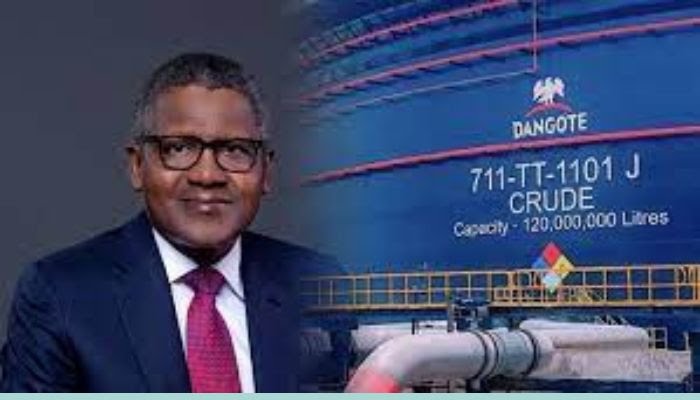 In a major boost to Nigeria’s energy security and economic stability, the Dangote Petroleum Refinery has reaffirmed its unwavering commitment to the steady supply of Premium Motor Spirit (PMS), popularly known as petrol, and Automotive Gas Oil (AGO), also known as diesel, across the country.
According to Mr. Anthony Chiejina, Group Chief Branding and Communications Officer of Dangote Industries Limited (DIL), the state-of-the-art refinery currently produces and loads over 45 million litres of petrol and 25 million litres of diesel daily, effectively meeting and surpassing Nigeria’s daily consumption demand.
“Our refinery is producing enough to serve the entire nation and even create a surplus,” Chiejina said. “We are collaborating closely with regulators and distribution partners to ensure efficient delivery nationwide. Dangote Industries remains resolute in its mission to sustain energy stability, build consumer confidence, and enhance Nigeria’s self-sufficiency in refined petroleum products.”
Boosting the Naira and Reducing Import Dependence
Chiejina noted that the ramped-up local refining capacity has directly contributed to stabilising the naira, reducing pressure on foreign exchange, and saving billions of dollars previously spent on fuel imports.
“The reduction in foreign exchange outflows from fuel imports is a significant win for the economy,” he said. “Our local production supports the value of the naira, enhances forex inflows, and contributes to overall economic resilience.”
The refinery’s consistent output is also reshaping Nigeria’s energy landscape — eliminating periodic scarcity, stabilising pump prices, and promoting price transparency in the downstream sector.
Tariff Policy as a Shield for Local Industries
Chiejina commended President Bola Ahmed Tinubu’s approval of a new tariff regime designed to protect local industries from unfair dumping and unhealthy competition, describing it as a “bold step toward sustainable industrialisation.”
“Dumping has historically destroyed industries, created unemployment, and drained national revenue,” he explained. “This policy is a corrective measure that ensures Nigerian manufacturers are not undermined by foreign imports sold below cost.”
He further urged government agencies to strengthen monitoring and enforcement mechanisms to prevent the importation of substandard and adulterated fuel products into Nigeria’s market, a practice that, he said, “undermines investor confidence and compromises consumer safety.”
“Across the world, governments protect domestic industries to secure jobs and wealth creation. Nigeria must do the same,” Chiejina stressed. “The era of allowing unpatriotic profiteers to flood our market with substandard products must end.”
Tinubu’s Economic Vision Restoring Confidence
Describing President Tinubu as “a courageous reformer,” Chiejina applauded the administration’s business-friendly policies that continue to attract both local and foreign investment into the downstream sector.
“President Tinubu’s leadership embodies hope and economic transformation,” he noted. “His commitment to bold reforms is reshaping the downstream oil and gas sector, unlocking opportunities for industrial growth, and building investor confidence. The new tariff policy stands as one of his most transformative steps toward securing Nigeria’s energy future.”
He also warned that failure to protect domestic producers could expose Nigeria to a wave of fuel dumping from Asia and Europe, threatening the survival of local refineries and reversing recent gains in industrial capacity.
Dangote Refinery’s Impact on Fuel Prices
Since the commencement of petrol production in September 2024, the Dangote Refinery has emerged as a stabilising force in Nigeria’s downstream market.
Official data shows that the average pump price of petrol has dropped from ₦1,030 per litre in September 2024 to between ₦841 and ₦851 per litre in September 2025 under the Dangote Direct Delivery Scheme. Similarly, the average diesel price has fallen from between ₦1,400 and ₦1,700 per litre (depending on the region) to about ₦1,020 per litre, cutting logistics costs and easing inflationary pressures.

In comparison, petrol prices across neighbouring West African countries range between $1.20 and $2.00 per litre, while Nigeria’s current average stands around $0.60 per litre, a testament to the refinery’s massive contribution to affordability and energy security.
A Festive Season Without Fuel Anxiety
In a separate statement, Alhaji Aliko Dangote, President of Dangote Industries Limited, assured Nigerians that the refinery would maintain uninterrupted supply during the ember months, despite global price fluctuations.
“We are fully committed to ensuring Nigerians enjoy a Christmas and New Year free from fuel scarcity,” Dangote stated. “The refinery is producing optimally, and our distribution partners are ready to meet demand across the nation.”
Driving Nigeria Toward Energy Independence
Equipped with cutting-edge technology, massive storage capacity, and a robust logistics network, the Dangote Refinery is expected to eliminate Nigeria’s reliance on imported fuels while anchoring the country’s long-term industrialisation strategy.
The refinery’s success story reflects a broader national ambition, to transform Nigeria into a self-sufficient, energy-secure economy capable of powering its industries, creating jobs, and strengthening the naira.
As experts have observed, Dangote’s consistent performance marks “a turning point in Nigeria’s economic history,” positioning the country as a regional hub for refined petroleum exports and a symbol of African industrial excellence.
Dangote Refinery guarantees uninterrupted fuel supply with 70 million litres of petrol and diesel daily. The refinery boosts naira stability, supports Tinubu’s tariff reforms, and protects Nigeria from fuel dumping, ensuring affordable energy and economic growth.
Discover more from Ameh News
Subscribe to get the latest posts sent to your email.