Africa’s economic leaders have called for the deepening of Islamic finance as a strategic tool for inclusive growth and sustainable development across the continent.
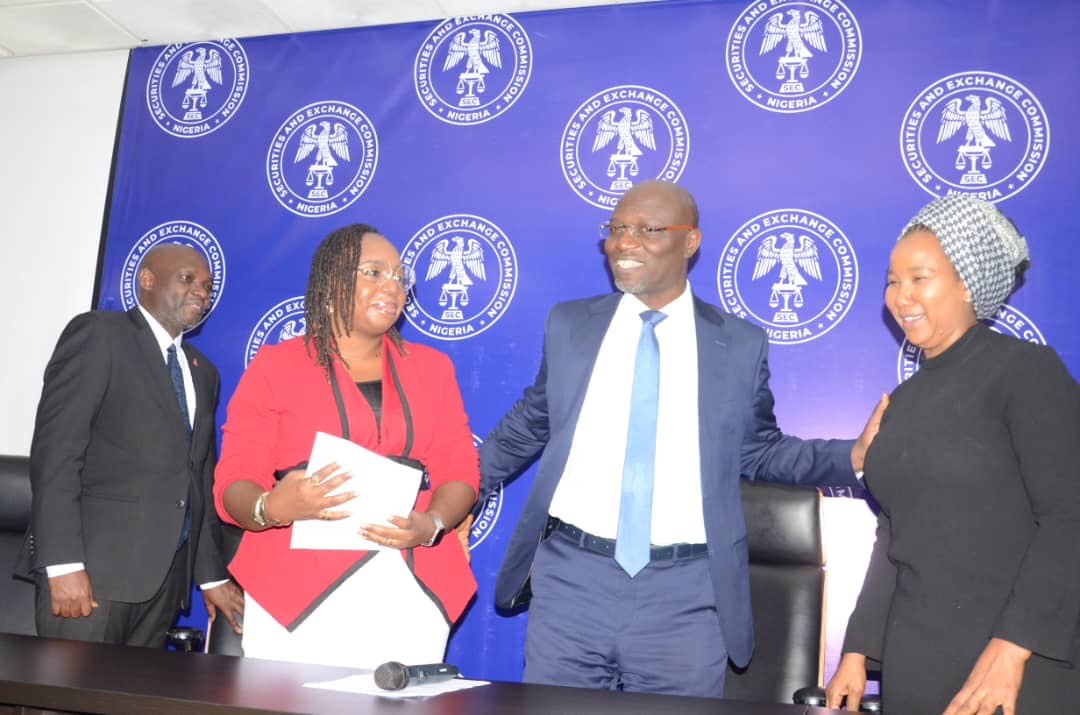
Vice President Kashim Shettima, represented by Dr. Tope Fasua, Special Adviser to the President on Economic Matters, made the call at the 7th African International Conference on Islamic Finance (AICIF) held in Lagos. The event, themed “Africa Emerging: A Prosperous and Inclusive Outlook,” was organised by Metropolitan Law and Metropolitan Skills Ltd in collaboration with the Securities and Exchange Commission (SEC).
Shettima said the time has come for African nations to adopt innovative financial frameworks rooted in ethics, fairness, and shared prosperity, adding that “the continent’s success will not be judged by economic growth alone but by how inclusive that growth becomes.”
He noted that Nigeria’s ongoing reforms under President Bola Ahmed Tinubu’s Renewed Hope Agenda, including exchange rate unification, subsidy rationalisation, and tax system modernisation—are boosting investor confidence and stabilising the economy.
“Nigeria’s foreign reserves have climbed above $40 billion, and our reform agenda has earned favourable ratings from Fitch and Moody’s,” Shettima said. “These outcomes reaffirm Nigeria’s position as an anchor of the AfCFTA’s $3.4 trillion market and a key driver of Africa’s growth.”
The Vice President highlighted Nigeria’s leadership in non-interest finance, noting that the country’s sukuk bonds have funded more than 120 major road projects covering nearly 6,000 kilometres. He said takaful insurance and waqf endowments are also extending access to financial services, protecting low-income families, and supporting schools, hospitals, and small businesses.
“Islamic finance aligns with our conviction that enterprise must serve humanity and that wealth must circulate to uplift communities,” Shettima added.
He urged African governments to adopt similar non-interest models, citing examples from Egypt, Senegal, Kenya, and South Africa, which are advancing Islamic banking and green sukuk frameworks. By 2030, Shettima projected that Africa’s share of the global Islamic finance market will expand significantly.
“Africa’s future must be financed from within, through principles of justice, inclusion, and sustainability,” he said.
Experts Weigh In
In her opening remarks, Ms. Ummahani Ahmad Amin, Chairperson of AICIF, said the conference was designed to foster collaboration and knowledge sharing in Islamic finance as a sustainable funding mechanism for Africa’s development.
She noted that while global Islamic finance assets reached $3.88 trillion in 2024, Africa still lags behind in harnessing its full potential to bridge the continent’s annual $170 billion infrastructure financing gap.
“Artificial intelligence is reshaping finance—from automating compliance to personalising ethical investments, and we must ensure that ethical guardrails guide its use,” she stated.
Mr. Mairiga Katuka, Chairman of the Securities and Exchange Commission (SEC), highlighted that Nigeria’s non-interest capital market has recorded remarkable growth under the Capital Market Masterplan (2015–2025). According to him, sovereign sukuk issuances have raised over ₦1.4 trillion, funding 124 key road projects across the country.
“Nigeria now has 19 registered halal mutual funds managing over ₦112 billion in assets, compared to just one in 2008,” Katuka revealed, assuring that the SEC will continue to evolve policies that support innovation, tokenisation, and blockchain transparency.
Sanusi: Finance Must Reach the Grassroots
Delivering a special address, Emir of Kano and former Central Bank Governor, Alhaji Sanusi Lamido Sanusi, challenged Islamic finance institutions in Africa to focus on financing small and medium enterprises (SMEs) and underserved communities.
“I would be happier to see Islamic banks that are ambitious enough to grow markets delivering real value to people,” Sanusi said. “Finance must serve the small people, not just the powerful.”
He urged financial institutions to break social and cultural barriers limiting access to finance, particularly for women, adding that “the empowerment of women is what will contribute to prosperity in Africa.”
Sanusi concluded that Africa’s journey toward economic transformation must be anchored on inclusive finance principles—equity, risk-sharing, and social responsibility—to create a just and prosperous continent.
The two-day AICIF also featured a startup pitch competition supporting innovation in ethical technology and social impact, as well as an awards ceremony honouring individuals and institutions shaping the future of Islamic finance in Africa.
At the 7th African International Conference on Islamic Finance (AICIF) in Lagos, Vice President Kashim Shettima, Emir Sanusi, and top financial experts urged African nations to embrace Islamic finance as a pathway to inclusive growth, sustainable development, and poverty reduction.
Discover more from Ameh News
Subscribe to get the latest posts sent to your email.